The Brood
The Brood Is What Happens When the Shadow Learns to Give Birth
Directed by David Cronenberg
Cronenberg made this during his own divorce and custody battle, and he has said it is his most personal film. It is a horror movie about a woman whose rage grows children.
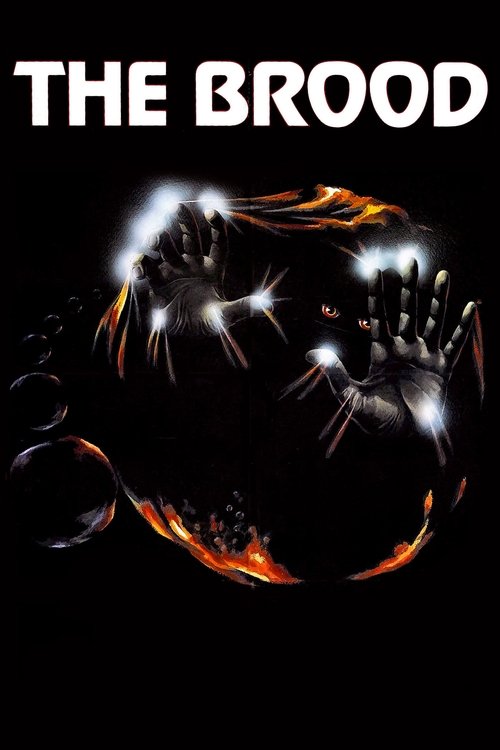
The murders are not the horror. The horror is the mechanism. Nola Carveth is in treatment with Dr. Hal Raglan, whose "psychoplasmics" method encourages patients to let their psychological wounds express themselves through the body, to grow their emotions as physical form. Most patients grow sores, welts, tumors. Nola, whose fury runs deeper than anyone's, grows a brood: dwarfish, faceless children who form outside her body in a fleshy external womb and who go out to kill whoever her rage has selected. Her mother. Her father. The teacher she suspects. The film's clinical surface is a lie the way all Cronenberg surfaces are lies. This is not about a fringe therapy gone wrong. It is a diagram of what happens when a psyche is taught to externalize its darkest content instead of integrating it, and the content, given a body, does exactly what the psyche secretly wanted done.
Jungian Reading: The Autonomous Complex Made Flesh
Jung described the complex as a splinter psyche, a cluster of charged material that can break off from conscious control and act with a will of its own. Under enough pressure a complex becomes autonomous. It possesses. It acts through you and later you do not recognize the act as yours. The brood is the autonomous complex given literal autonomy: children of pure affect, no faces because a complex has no individuality, only a charge and a direction. They kill the people Nola cannot consciously admit she wants dead, and she is genuinely horrified when she learns of the deaths, because the conscious Nola and the complex that spawned the killers are no longer the same self. The film's cruelest stroke is generational. Nola was abused, and her rage reproduces as a swarm of wounded children who threaten her own daughter, Candice. This is the shadow's inheritance made visible: the unintegrated wound does not stay in one person, it breeds, it reaches for the next child in the line. Raglan's fatal error is the therapist's temptation. He gave the shadow a stage instead of a mirror, and the shadow, invited to perform, gave birth.
Alchemical Reading: The Vessel Broken, the Work Aborted
Alchemy insists the transformation happens inside the sealed vessel, under heat, over time, so that the base matter is refined rather than merely released. Psychoplasmics is alchemy with the vessel deliberately shattered. Raglan takes the prima materia of Nola's suffering, the black rot of childhood abuse, and instead of containing it for transmutation he opens the alembic and lets the nigredo walk out on two legs. The external womb sac that Nola tears open with her teeth in the film's notorious final act is the anti-vessel: a crucible that produces not gold but only more raw wound, a birth that is the opposite of refinement. Real alchemy would have held her rage in relationship with her until it changed state, until the black became white became something a daughter could inherit safely. Cronenberg shows the shortcut and its cost. Matter that is expelled rather than transformed does not disappear. It takes a form and comes looking for the rest of the family.
Other Cronenberg films where the psyche insists on becoming flesh: Videodrome (the body grows an organ to receive what the mind has been fed), Dead Ringers (one psyche split into two bodies and destroyed by the split), Crimes of the Future (the body evolves new organs the law cannot classify).
Questions this film answers
What is the deeper meaning of The Brood?
The murders are not the horror. The horror is the mechanism. Nola Carveth is in treatment with Dr. Hal Raglan, whose "psychoplasmics" method encourages patients to let their psychological wounds express themselves through the body, to grow their emotions as physical form. Most patients grow sores, welts, tumors. Nola, whose fury runs deeper than anyone's, grows a brood: dwarfish, faceless children who form outside her body in a fleshy external womb and who go out to kill whoever her rage has selected. Her mother. Her father. The teacher she suspects. The film's clinical surface is a lie the way all Cronenberg surfaces are lies. This is not about a fringe therapy gone wrong. It is a diagram of what happens when a psyche is taught to externalize its darkest content instead of integrating it, and the content, given a body, does exactly what the psyche secretly wanted done.
What is the hidden symbolism in The Brood?
Jung described the complex as a splinter psyche, a cluster of charged material that can break off from conscious control and act with a will of its own. Under enough pressure a complex becomes autonomous. It possesses. It acts through you and later you do not recognize the act as yours. The brood is the autonomous complex given literal autonomy: children of pure affect, no faces because a complex has no individuality, only a charge and a direction. They kill the people Nola cannot consciously admit she wants dead, and she is genuinely horrified when she learns of the deaths, because the conscious Nola and the complex that spawned the killers are no longer the same self. The film's cruelest stroke is generational. Nola was abused, and her rage reproduces as a swarm of wounded children who threaten her own daughter, Candice. This is the shadow's inheritance made visible: the unintegrated wound does not stay in one person, it breeds, it reaches for the next child in the line. Raglan's fatal error is the therapist's temptation. He gave the shadow a stage instead of a mirror, and the shadow, invited to perform, gave birth.
What esoteric traditions appear in The Brood?
The Brood draws from Jungian, Alchemy traditions. Cronenberg made this during his own divorce and custody battle, and he has said it is his most personal film. It is a horror movie about a woman whose rage grows children.
Is The Brood worth watching for spiritual seekers?
The Brood (1979) directed by David Cronenberg is essential viewing for those interested in Jungian, Alchemy. The Brood Is What Happens When the Shadow Learns to Give Birth. It rewards multiple viewings and contemplation.
Rewatch With New Eyes
Now that you've seen the architecture, experience it again. The same film becomes a different film when you know what to watch for.
This time, watch for:
- Meet the shadow: what is rejected, projected, and finally integrated
- Track the stages: blackening, whitening, reddening — death before rebirth
Links may include affiliate partnerships that support Media Revelations