Scanners
Scanners Is a War Between Two Sons of the Same Father Over What the Gift Is For
Directed by David Cronenberg
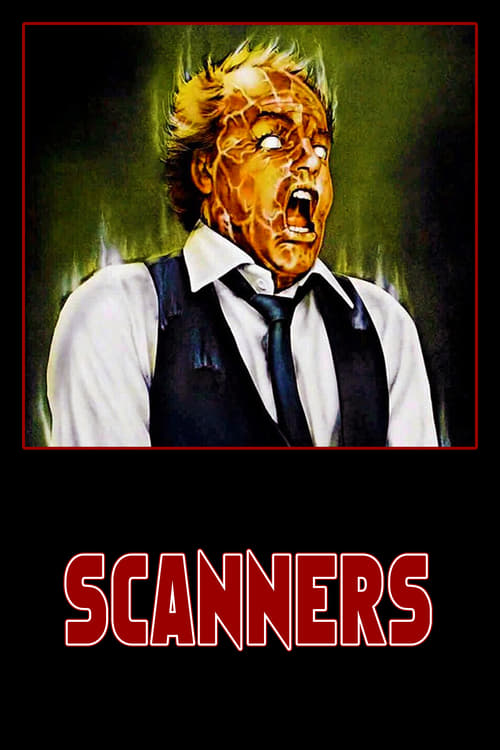
Cronenberg gives you the exploding head in the first ten minutes so you stop watching for shocks and start watching for the real subject: a power that has no natural container.
Cameron Vale is a derelict when we meet him, homeless and tormented, hearing every mind in the food court at once. He does not know what he is. The rogue corporation ConSec knows. The renegade Darryl Revok knows. Both want to weaponize him. The surface film is a thriller about telepaths hunting telepaths. The actual film is about a faculty that arrived in a generation with no lineage to hold it, and the two answers that emerge when the gift has no teacher. Revok drills a hole in his own forehead to let the voices out and concludes the gift is for domination, for building an army, for merging the world into one obedient signal. Vale, taken in by Dr. Ruth and taught to still himself, moves toward integration. The revelation waiting at the end is that they are brothers, both children of the drug Ephemerol that Dr. Ruth fed to pregnant mothers. The war pits no hero against a villain, only two verdicts on the same inheritance, fought in the only bodies equipped to render them.
Gnostic Reading: A Pneumatic Who Does Not Know He Is Divine
The Gnostic pneumatic carries a divine spark trapped in a body, suffering because he has the faculty of the higher world but no knowledge of what he is. This is Cameron Vale exactly, in the opening scenes: agonized, scavenging, flooded with a perception he cannot name or govern. His torment is undeveloped gnosis, a divinity misfiling itself as illness. The scene where Dr. Ruth teaches him to enter another nervous system, to "scan," is a Gnostic awakening staged as science. Vale learns that the noise was never the problem. The problem was that no one had told him what he was. Revok is the counter-figure, the pneumatic who awakens to his power and turns it toward the Demiurge's project of a single controlled order, a telepathic empire. Cronenberg stages the difference in the bodies themselves. Revok's forehead bears the self-inflicted hole, the man who broke the vessel to release the light. Vale keeps his intact until the final battle, when awakening arrives another way.
Kabbalistic Reading: The Vessel That Shatters to Hold the Light
Kabbalah teaches shevirat ha-kelim, the shattering of the vessels: the divine light poured into creation was too intense, and the containers broke, scattering sparks into the world that must be gathered and repaired. Scanners is this myth written in nervous tissue. The scanners are vessels made to hold a light their bodies were never built for, and Cronenberg shows us what the pressure does. Heads detonate. Blood vessels rupture on command. Bodies burn from inside during the climactic duel. The exploding head in the boardroom is not gore. It is a vessel failing to hold what was poured into it. The final confrontation between the brothers is the film's tikkun, its attempted repair, but Cronenberg refuses the clean version. Vale wins by pouring himself entirely into Revok, and what survives is neither brother intact but a fusion, Vale's consciousness looking out of Revok's ruined body. The repair happens, but the vessel is still a wreck. Cronenberg's Kabbalah is honest about the cost of holding the light: something breaks, and the mending wears the scar.
Questions this film answers
What is the deeper meaning of Scanners?
Cameron Vale is a derelict when we meet him, homeless and tormented, hearing every mind in the food court at once. He does not know what he is. The rogue corporation ConSec knows. The renegade Darryl Revok knows. Both want to weaponize him. The surface film is a thriller about telepaths hunting telepaths. The actual film is about a faculty that arrived in a generation with no lineage to hold it, and the two answers that emerge when the gift has no teacher. Revok drills a hole in his own forehead to let the voices out and concludes the gift is for domination, for building an army, for merging the world into one obedient signal. Vale, taken in by Dr. Ruth and taught to still himself, moves toward integration. The revelation waiting at the end is that they are brothers, both children of the drug Ephemerol that Dr. Ruth fed to pregnant mothers. The war pits no hero against a villain, only two verdicts on the same inheritance, fought in the only bodies equipped to render them.
What is the hidden symbolism in Scanners?
The Gnostic pneumatic carries a divine spark trapped in a body, suffering because he has the faculty of the higher world but no knowledge of what he is. This is Cameron Vale exactly, in the opening scenes: agonized, scavenging, flooded with a perception he cannot name or govern. His torment is undeveloped gnosis, a divinity misfiling itself as illness. The scene where Dr. Ruth teaches him to enter another nervous system, to "scan," is a Gnostic awakening staged as science. Vale learns that the noise was never the problem. The problem was that no one had told him what he was. Revok is the counter-figure, the pneumatic who awakens to his power and turns it toward the Demiurge's project of a single controlled order, a telepathic empire. Cronenberg stages the difference in the bodies themselves. Revok's forehead bears the self-inflicted hole, the man who broke the vessel to release the light. Vale keeps his intact until the final battle, when awakening arrives another way.
What esoteric traditions appear in Scanners?
Scanners draws from Gnosticism, Kabbalah traditions. Cronenberg gives you the exploding head in the first ten minutes so you stop watching for shocks and start watching for the real subject: a power that has no natural container.
Is Scanners worth watching for spiritual seekers?
Scanners (1981) directed by David Cronenberg is essential viewing for those interested in Gnosticism, Kabbalah. Scanners Is a War Between Two Sons of the Same Father Over What the Gift Is For. It rewards multiple viewings and contemplation.
Rewatch With New Eyes
Now that you've seen the architecture, experience it again. The same film becomes a different film when you know what to watch for.
This time, watch for:
- Watch for the false world vs. the real — who is asleep, who awakens
- Notice the vessels: what contains, what shatters, what repairs
Links may include affiliate partnerships that support Media Revelations