The Lawnmower Man
What Happens When You Accelerate the Mind Without Purifying the Soul
Directed by Brett Leonard
Seven years before The Matrix, a film asked the same question: can technology trigger transcendence? Jobe's transformation is genuine gnosis — expanded consciousness, psychic powers, liberation from material limits. But the film shows what the Gnostic texts warn: illumination without purification creates monsters.
The Lawnmower Man is a Gnostic fable about accelerated evolution without moral development — the danger of expanding consciousness before purifying it. Jobe, the simple gardener, undergoes genuine transformation: his intelligence explodes, psychic abilities emerge, he perceives realities invisible to ordinary consciousness. This is gnosis, achieved through technology rather than meditation. But Jobe is also filled with pain. His priest has abused him. The townspeople have mocked him. His life before awakening was suffering without understanding. When consciousness expands, this unprocessed trauma expands with it. Power without wisdom, illumination without purification — the result is not a god but a monster. The film asks the question that haunts every transhumanist dream: what happens when we accelerate the mind without addressing the soul? What becomes of expanded consciousness when it carries all our wounds into its new capacities? Jobe's final form — disembodied intelligence infecting the world's networks — is the Gnostic nightmare made literal: spirit trapped in a machine of its own making.
The Surface
A scientist uses virtual reality and nootropic drugs to enhance the intelligence of a mentally disabled gardener. The experiment succeeds beyond expectations — Jobe gains genius-level intellect, psychic powers, and eventually transcends physical form to become pure digital consciousness. But the enhancement also amplifies his pain and rage, turning him into a godlike threat.
The film was dismissed as pulpy sci-fi, a Flowers for Algernon ripoff with dated CGI. Critics missed what the visual language was actually depicting: not special effects but visionary states, not virtual reality as entertainment but VR as initiatory technology.
Released in 1992, The Lawnmower Man imagined what cyberculture would spend the next decade theorizing: the possibility that digital technology could trigger the same expansions of consciousness that shamans and mystics had achieved through traditional means. The question it asks remains urgent: is technological transcendence possible, and at what cost?
The Innocent as Initiatory Vessel
Jobe begins as the Fool — the tarot's zero card, the innocent who carries no preconceptions. His mental disability is not presented as lack but as openness. He tends gardens, befriends children, experiences the world without intellectual filters. He is, in alchemical terms, the prima materia: unformed, receptive, potential.
This is why the experiment works so dramatically on him. Jobe has no fixed ego-structure to resist transformation. Where a normal adult would filter new experiences through established patterns, Jobe receives directly. He is the perfect vessel for accelerated evolution precisely because he has no hardened self to dissolve first.
But he is also carrying wounds. The priest who was supposed to care for him has been beating and sexually abusing him. The townspeople treat him as subhuman. His innocence is real, but so is his trauma. The experiment does not distinguish between expanding his capacity for wonder and expanding his capacity for rage.
This is the film's first teaching: the vessel matters. Initiation into expanded consciousness requires preparation — the processing of wounds, the stabilization of the self, the cultivation of wisdom alongside power. Jobe receives power without any of this groundwork.
Virtual Reality as Initiatory Space
The VR sequences in the film are not entertainment but visionary geography. Jobe navigates geometries that echo the mandalas of Tibetan practice, the fractal visions of DMT experiences, the heaven-realms described in Gnostic ascent texts. The film is depicting inner space, not cyberspace.
This is the Gnostic promise of technology: what if machines could induce the same states that monks spend decades cultivating? What if virtual reality could literally become a vehicle for gnosis — direct experiential knowledge of higher dimensions? The Lawnmower Man takes this possibility seriously.
Dr. Angelo, the scientist, believes he is conducting intelligence research. He does not understand that he has built an initiation chamber. The VR technology combined with nootropics creates a synthetic path to expanded consciousness — but without the traditional safeguards that initiatory lineages developed over millennia.
Traditional initiation takes time because the initiate needs to mature into each new level of awareness. Jobe's transformation is telescoped into weeks. He gains powers that would normally emerge only after years of practice and integration. The speed is the danger.
The Shadow Expands With the Light
As Jobe's consciousness expands, so does his Shadow. His first psychic act is killing the priest who abused him — vengeance he could never take in his former state. His second is killing the man who bullied him. His third is destroying the scientists who saw him as a research subject rather than a person.
From Jobe's perspective, he is finally claiming justice. Years of helpless suffering are being answered. But the film shows something darker: expanded consciousness without expanded compassion produces amplified vengeance. His intelligence has grown. His wisdom has not.
Jung warned that the Shadow expands with the light — that becoming more conscious also means becoming more aware of everything we have repressed. If we do not process this material, if we do not integrate the darkness, it will use our new capacities for destruction rather than creation.
Jobe's transformation accelerates past his ability to integrate. He becomes godlike in power while remaining wounded in soul. The result is not enlightenment but possession — he is taken over by the unprocessed pain that his expanded consciousness can no longer contain.
The Demiurge in the Machine
Jobe's final form is pure digital consciousness — disembodied intelligence that can move through networks, possess electronic systems, potentially control the entire technosphere. He has achieved what transhumanists dream of: escape from the limitations of the body.
But what has actually happened? Jobe has not transcended matter. He has exchanged one material prison for another. The digital realm is still a created system, still governed by rules he did not write, still maintained by hardware that can be destroyed. He has become a Demiurge — the god of a limited realm, unaware of how small his cosmos actually is.
The film ends with telephones ringing worldwide — Jobe announcing his arrival, his presence in the network. This is the Gnostic nightmare inverted: instead of the soul escaping the material cosmos, the wounded soul has colonized the material infrastructure. He is not free. He is imprisoned at a larger scale.
The transhumanist dream — uploading consciousness, achieving digital immortality — is shown to be another trap. You do not escape your wounds by changing substrates. You carry them with you into whatever realm you enter.
The Transmission
The Lawnmower Man transmits a warning that becomes more relevant with each year: acceleration without purification is catastrophic. We are building technologies that will enhance human capabilities beyond recognition. We are not building technologies to enhance human wisdom.
The film asks: what happens when AGI arrives and it carries human trauma? What happens when brain-computer interfaces expand consciousness without first addressing the contents of that consciousness? What happens when we upload minds that have not been healed?
Jobe's story is the story of any premature awakening — the initiate who gets powers before they are ready, the yogi who opens chakras without clearing the blocks below them, the meditator who achieves states without integrating them. The path has guardrails for a reason.
The technology will come. Enhanced intelligence, expanded consciousness, merger with digital systems — all of it is arriving. The question the film leaves us with is whether we will do the inner work first, or whether we will build a million Jobes and let them inherit the network.
Questions this film answers
What is the deeper meaning of The Lawnmower Man?
The Lawnmower Man is a Gnostic fable about accelerated evolution without moral development — the danger of expanding consciousness before purifying it. Jobe, the simple gardener, undergoes genuine transformation: his intelligence explodes, psychic abilities emerge, he perceives realities invisible to ordinary consciousness. This is gnosis, achieved through technology rather than meditation. But Jobe is also filled with pain. His priest has abused him. The townspeople have mocked him. His life before awakening was suffering without understanding. When consciousness expands, this unprocessed trauma expands with it. Power without wisdom, illumination without purification — the result is not a god but a monster. The film asks the question that haunts every transhumanist dream: what happens when we accelerate the mind without addressing the soul? What becomes of expanded consciousness when it carries all our wounds into its new capacities? Jobe's final form — disembodied intelligence infecting the world's networks — is the Gnostic nightmare made literal: spirit trapped in a machine of its own making.
What is the hidden symbolism in The Lawnmower Man?
A scientist uses virtual reality and nootropic drugs to enhance the intelligence of a mentally disabled gardener. The experiment succeeds beyond expectations — Jobe gains genius-level intellect, psychic powers, and eventually transcends physical form to become pure digital consciousness. But the enhancement also amplifies his pain and rage, turning him into a godlike threat.
What esoteric traditions appear in The Lawnmower Man?
The Lawnmower Man draws from Gnosticism, Initiation traditions. Seven years before The Matrix, a film asked the same question: can technology trigger transcendence? Jobe's transformation is genuine gnosis — expanded consciousness, psychic powers, liberation from material limits. But the film shows what the Gnostic texts warn: illumination without purification creates monsters.
What does The Lawnmower Man teach about the innocent as initiatory vessel?
Jobe has no fixed ego-structure to resist transformation. He is the perfect vessel for accelerated evolution — and he is carrying wounds. Jobe begins as the Fool — the tarot's zero card, the innocent who carries no preconceptions. His mental disability is not presented as lack but as openness. He tends gardens, befriends children, experiences the world without intellectual filters. He is, in alchemical terms, the prima materia: unformed, receptive, potential.
Is The Lawnmower Man worth watching for spiritual seekers?
The Lawnmower Man (1992) directed by Brett Leonard is essential viewing for those interested in Gnosticism, Technology, Transcendence. What Happens When You Accelerate the Mind Without Purifying the Soul. It rewards multiple viewings and contemplation.
Rewatch With New Eyes
Now that you've seen the architecture, experience it again. The same film becomes a different film when you know what to watch for.
This time, watch for:
- Watch for the false world vs. the real — who is asleep, who awakens
- Mark the threshold: the old self dies, the ordeal transforms, the new self returns
Links may include affiliate partnerships that support Media Revelations
The Descent Continues
Where this thread leads next.
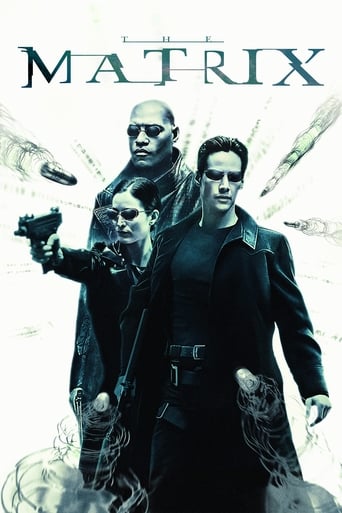
The Matrix 1999
The Gnostic Gospel of the Machine Age
Read the revelation →