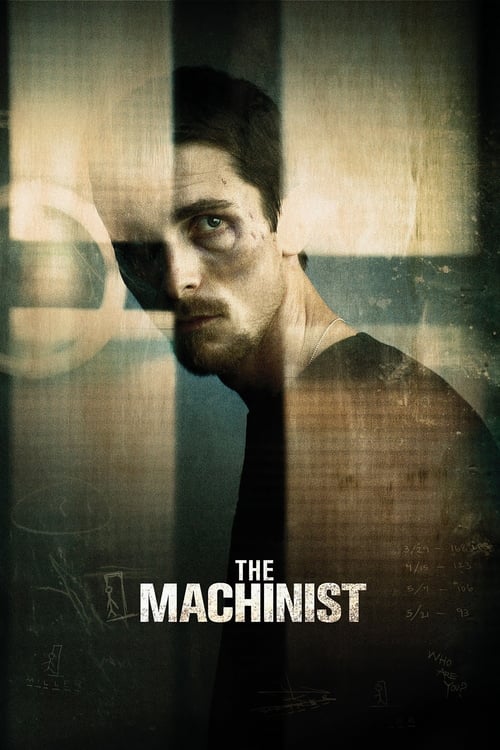
The Machinist
The Machinist Is a Man Being Devoured by a Debt He Refuses to Name
Directed by Brad Anderson
Trevor Reznik has not slept in a year. Brad Anderson makes you understand that sleep is not the thing he lost.
Trevor is a skeleton who still goes to work. He weighs a hundred and twenty pounds, his skin hangs off him, and he cannot explain the insomnia that is eating him alive. A man named Ivan appears at his factory, a grinning stranger nobody else can see, and Trevor's paranoia costs a coworker his arm. Post-it notes on his refrigerator spell out a hangman game whose answer he refuses to solve. The film is structured as a mystery, but the solution is not a twist. Trevor killed a boy in a hit-and-run a year ago and drove away, and every symptom since is his own psyche prosecuting the case he will not bring himself. His body is wasting because it is paying, in the only currency he has left, a debt his conscious mind has declared bankrupt.
Jungian Reading: Ivan Is the Shadow Come to Collect
Jung's shadow is everything the ego refuses to own, the disowned material that does not disappear but organizes itself into an autonomous figure and returns. Ivan is the shadow made flesh. He is bald, fat, grinning, everything the emaciated ascetic Trevor is not, and he is the only one who knows what Trevor did. Notice that Ivan drives the same car, wears the same guilt, exists only where Trevor's repression is thinnest. He is not a hallucination Trevor suffers. He is the part of Trevor that never agreed to the cover-up, personified and patient.
The whole film is the shadow's slow campaign to force integration. Ivan leaves the notes, stages the accident, drives Trevor toward the highway where it happened. Jung said the shadow, when refused, comes back as fate. Trevor experiences his own conscience as an external persecutor, a stalker, a conspiracy, precisely because he will not recognize it as himself. The moment he finally turns himself in to the police is the moment the shadow is reabsorbed. Ivan vanishes. Trevor lies down in a cell and, for the first time in a year, sleeps. The persecution ends the instant the disowned thing is owned.
Kabbalistic Reading: The Body as the Ledger of an Unbalanced Debt
Kabbalah holds that the cosmos runs on exact accounting, that every act enters a ledger and imbalance demands repair, tikkun, before wholeness returns. The Zohar teaches that debts unpaid in the soul become debts inscribed in the flesh. Trevor's starvation is literal tzimtzum, a self-contraction, a man withdrawing his own life force because he cannot bear the fullness he no longer feels entitled to. His weight loss is a ledger written on the ribs.
The film's obsession with numbers underlines it. He fixates on the hangman puzzle, on the amount his change should be, on a scale that keeps registering less. He is trying to make the numbers reconcile because a boy's death has thrown the entire account into red. There is no rest, no restored sleep, no return to the balanced world, until the debt is confessed and the repair begun. Turning himself in is the first payment. The light that floods the final frame is not relief. It is the ledger, finally, closing.
Questions this film answers
What is the deeper meaning of The Machinist?
Trevor is a skeleton who still goes to work. He weighs a hundred and twenty pounds, his skin hangs off him, and he cannot explain the insomnia that is eating him alive. A man named Ivan appears at his factory, a grinning stranger nobody else can see, and Trevor's paranoia costs a coworker his arm. Post-it notes on his refrigerator spell out a hangman game whose answer he refuses to solve. The film is structured as a mystery, but the solution is not a twist. Trevor killed a boy in a hit-and-run a year ago and drove away, and every symptom since is his own psyche prosecuting the case he will not bring himself. His body is wasting because it is paying, in the only currency he has left, a debt his conscious mind has declared bankrupt.
What is the hidden symbolism in The Machinist?
Jung's shadow is everything the ego refuses to own, the disowned material that does not disappear but organizes itself into an autonomous figure and returns. Ivan is the shadow made flesh. He is bald, fat, grinning, everything the emaciated ascetic Trevor is not, and he is the only one who knows what Trevor did. Notice that Ivan drives the same car, wears the same guilt, exists only where Trevor's repression is thinnest. He is not a hallucination Trevor suffers. He is the part of Trevor that never agreed to the cover-up, personified and patient.
What esoteric traditions appear in The Machinist?
The Machinist draws from Jungian, Kabbalah traditions. Trevor Reznik has not slept in a year. Brad Anderson makes you understand that sleep is not the thing he lost.
Is The Machinist worth watching for spiritual seekers?
The Machinist (2004) directed by Brad Anderson is essential viewing for those interested in Jungian, Kabbalah. The Machinist Is a Man Being Devoured by a Debt He Refuses to Name. It rewards multiple viewings and contemplation.
Rewatch With New Eyes
Now that you've seen the architecture, experience it again. The same film becomes a different film when you know what to watch for.
This time, watch for:
- Meet the shadow: what is rejected, projected, and finally integrated
- Notice the vessels: what contains, what shatters, what repairs
Links may include affiliate partnerships that support Media Revelations