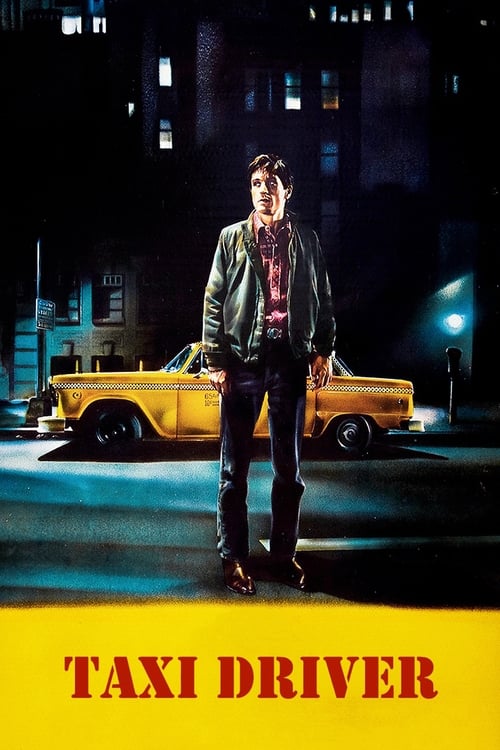
Taxi Driver
God's Lonely Man and the Violence That Feels Like Salvation
Directed by Martin Scorsese
Travis Bickle is not a hero. He is not a villain. He is a man so disconnected from human reality that violence becomes his only language of connection. Scorsese made a film about what happens when loneliness becomes so total that saving and destroying become indistinguishable.
Taxi Driver is the definitive portrait of American loneliness — not sadness or self-pity, but the specific isolation of a consciousness that cannot connect. Travis Bickle is God's lonely man, his own phrase and the film's diagnosis. He drives through the city all night, watching life through the windshield, unable to participate in what he sees. The film is often misread as the story of a disturbed veteran who becomes a vigilante hero. This misreading is dangerous and deliberate. Scorsese shows exactly how Travis's violence arises: from disconnection so complete that any strong action feels like salvation. Travis does not distinguish between assassinating a political candidate and shooting pimps. Both are attempts to connect through destruction. The final bloodbath is not heroism. It is psychosis that happens to produce an outcome society can celebrate. Travis is hailed as a hero for the same violence that, directed differently, would have made him history's villain. The accident of outcome does not change what Travis is. He remains God's lonely man, still unable to connect, still seeing the world through glass.
The Surface
Travis Bickle, a Vietnam veteran suffering from insomnia, takes a job driving a taxi through New York's night streets. He becomes obsessed first with a campaign worker, Betsy, then with a teenage prostitute, Iris. His attempts to connect fail. His alienation deepens. He arms himself and attempts to assassinate the presidential candidate Betsy supports. When that fails, he massacres the pimps controlling Iris and is hailed as a hero.
The film was immediately recognized as a masterpiece — and immediately misunderstood. Audiences saw a vigilante hero cleaning up urban decay. Scorsese and screenwriter Paul Schrader saw something more disturbing: a man whose violence had nothing to do with justice and everything to do with the inability to be human among humans.
De Niro's performance is legendary because Travis is not a type — he is a singular consciousness, recognizable in its alienation, terrifying in its logic. The 'You talkin' to me?' scene is Travis rehearsing connection in the only form available to him: confrontation. He literally cannot imagine another mode of relation.
The Cab as Coffin
Travis's taxi is his coffin — a metal box that moves through the city while remaining separate from it. He watches life through glass, protected and isolated. The night shift means he never sees the city in daylight, never encounters ordinary commerce or conversation. He inhabits the underworld by profession.
The taxi is also a confessional. Passengers reveal themselves, unaware that the driver is hearing. Travis absorbs the city's darkness — the violence, the sex, the casual cruelty — without being able to process or discharge it. He is a receptacle for what others shed.
Jung spoke of the Shadow as containing everything the conscious self rejects. Travis is all Shadow — he has no persona that functions, no social self that connects. He is the rejected material that society pretends does not exist, given flesh and placed behind the wheel of a vehicle that goes everywhere and belongs nowhere.
When Travis begins his campaign to 'clean up' the city, he is projecting his internal state onto external targets. The filth he sees in New York is the filth he feels in himself. He cannot clean his own psyche, so he attempts to clean the streets. The violence is displacement, not solution.
Betsy and the Failed Connection
Travis's pursuit of Betsy is his attempt at human connection — and it is doomed from the first frame. He sees her through the campaign office window, idealizes her as pure among corrupt, approaches her with a combination of intensity and obliviousness that she finds both intriguing and alarming.
Their coffee date succeeds. Their movie date destroys everything. Travis takes Betsy to a pornographic film because he genuinely does not understand that this is inappropriate. His frame of reference is so warped that porn theaters are simply where people go to see movies. When she leaves in disgust, he is bewildered. He did nothing wrong. He cannot see what he did.
This is the tragedy of Travis's condition. He wants connection. He attempts connection. But his instrument is so broken that his attempts produce the opposite of what he intends. The harder he tries, the more he fails. The pornography incident is not malice — it is incompetence so deep it mimics malice.
When Betsy rejects him, Travis does not grieve. He transforms her from angel to whore in his mind. The idealization flips to demonization. This is the borderline structure: unable to hold ambivalence, Travis splits everyone into pure or corrupt. Betsy has moved categories. Now she deserves what the corrupt deserve.
Iris and the Savior Fantasy
Iris, the twelve-year-old prostitute, becomes Travis's new mission. He will save her. He will rescue her from the pimps. He will be the hero that Betsy did not let him be. The savior fantasy transfers to a more vulnerable object.
But Travis does not ask Iris what she wants. He does not listen to her explanations that Sport, her pimp, loves her. He does not engage with her as a person with agency. She is a symbol in his psychodrama — innocence defiled, requiring masculine intervention. His 'rescue' is as much about his need to act as her need to be saved.
The film is careful to show that Iris's situation is genuinely horrible. She is being exploited by criminals. But Travis's intervention is not about her liberation — it is about his transformation. He needs to become someone through violence. She is the occasion, not the purpose.
When Travis massacres the pimps, Iris cowers in the corner, traumatized. This is not a grateful victim embracing her savior. This is a child watching a man she barely knows slaughter people in front of her. The 'rescue' is a bloodbath she did not request and will never recover from.
The Blood and the Glory
The film's climax is a massacre presented as salvation — and the irony is devastating. Travis shoots his way through the brothel, kills three men, is shot himself, and sits dying with his finger to his temple mimicking a gun. The overhead shot shows the carnage: blood on every surface, bodies everywhere, Travis smiling at the cops who arrive.
Then comes the twist: Travis survives. He is hailed as a hero. Newspapers celebrate him. Iris's father writes a grateful letter. The same violence that would have made him an assassin makes him a savior. The only difference is the target.
Scorsese is not endorsing this outcome. He is indicting a society that celebrates violence when it produces approved results. Travis is the same disturbed, disconnected person after the shooting as before. His heroism is accidental — a psychotic break that happened to point in a direction society could reward.
The final scenes show Travis back in his cab, functioning, even reconnecting briefly with Betsy. But his eyes in the rearview mirror tell the truth: nothing has changed. The loneliness persists. The violence was not catharsis. It was just violence. God's lonely man remains alone.
The Transmission
Taxi Driver transmits a specific American horror: the isolation that produces violence, and the society that celebrates violence while ignoring its sources. Travis is not an aberration. He is what alienation produces when it reaches terminal velocity.
The film was blamed for inspiring John Hinckley's assassination attempt on Reagan — a misreading that proves the film's point. Hinckley identified with Travis, saw the film as endorsement rather than critique, and attempted to perform his own 'heroic' violence. He missed the irony entirely. So did many viewers.
Scorsese made a film about how loneliness becomes lethal, and audiences saw a hero. The misreading is diagnostic. We want Travis to be a hero because we understand his isolation, because we fear becoming him, because we hope that violence can save us too.
Travis Bickle is still driving through the night, still watching through glass, still unable to connect. The streets are still filthy. The rain never washes them clean.
Questions this film answers
What is the deeper meaning of Taxi Driver?
Taxi Driver is the definitive portrait of American loneliness — not sadness or self-pity, but the specific isolation of a consciousness that cannot connect. Travis Bickle is God's lonely man, his own phrase and the film's diagnosis. He drives through the city all night, watching life through the windshield, unable to participate in what he sees. The film is often misread as the story of a disturbed veteran who becomes a vigilante hero. This misreading is dangerous and deliberate. Scorsese shows exactly how Travis's violence arises: from disconnection so complete that any strong action feels like salvation. Travis does not distinguish between assassinating a political candidate and shooting pimps. Both are attempts to connect through destruction. The final bloodbath is not heroism. It is psychosis that happens to produce an outcome society can celebrate. Travis is hailed as a hero for the same violence that, directed differently, would have made him history's villain. The accident of outcome does not change what Travis is. He remains God's lonely man, still unable to connect, still seeing the world through glass.
What is the hidden symbolism in Taxi Driver?
Travis Bickle, a Vietnam veteran suffering from insomnia, takes a job driving a taxi through New York's night streets. He becomes obsessed first with a campaign worker, Betsy, then with a teenage prostitute, Iris. His attempts to connect fail. His alienation deepens. He arms himself and attempts to assassinate the presidential candidate Betsy supports. When that fails, he massacres the pimps controlling Iris and is hailed as a hero.
What esoteric traditions appear in Taxi Driver?
Taxi Driver draws from Jungian traditions. Travis Bickle is not a hero. He is not a villain. He is a man so disconnected from human reality that violence becomes his only language of connection. Scorsese made a film about what happens when loneliness becomes so total that saving and destroying become indistinguishable.
What does Taxi Driver teach about the cab as coffin?
He is the rejected material that society pretends does not exist, given flesh and placed behind the wheel. Travis's taxi is his coffin — a metal box that moves through the city while remaining separate from it. He watches life through glass, protected and isolated. The night shift means he never sees the city in daylight, never encounters ordinary commerce or conversation. He inhabits the underworld by profession.
What does Taxi Driver teach about iris and the savior fantasy?
His rescue is as much about his need to act as her need to be saved. She is the occasion, not the purpose. Iris, the twelve-year-old prostitute, becomes Travis's new mission. He will save her. He will rescue her from the pimps. He will be the hero that Betsy did not let him be. The savior fantasy transfers to a more vulnerable object.
Is Taxi Driver worth watching for spiritual seekers?
Taxi Driver (1976) directed by Martin Scorsese is essential viewing for those interested in Jungian, Shadow, Alienation. God's Lonely Man and the Violence That Feels Like Salvation. It rewards multiple viewings and contemplation.
Rewatch With New Eyes
Now that you've seen the architecture, experience it again. The same film becomes a different film when you know what to watch for.
This time, watch for:
- Meet the shadow: what is rejected, projected, and finally integrated
Links may include affiliate partnerships that support Media Revelations