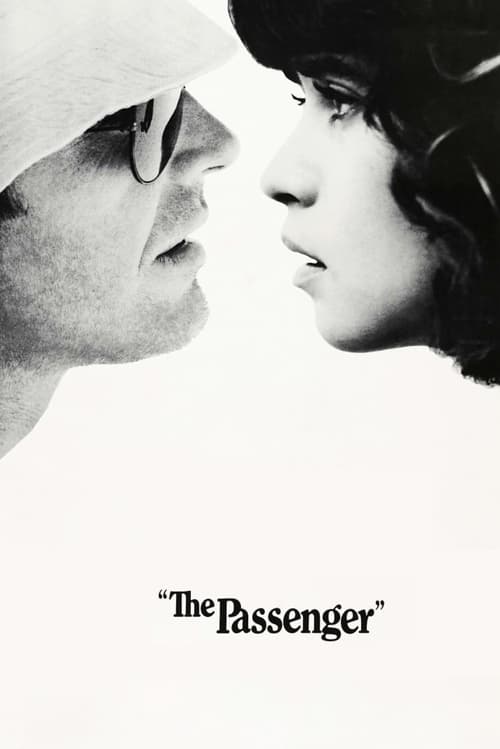
The Passenger
The Camera Outlives David Locke. Antonioni Knew What That Means.
Directed by Michelangelo Antonioni
A man steals a dead man's identity and discovers he was always the passenger, consciousness riding a self it never owned.
David Locke is a journalist with no story left to tell, least of all his own. When he finds fellow traveler Robertson dead in a Saharan hotel room, he doesn't grieve. He switches passports, plants his own corpse on the bed, and walks into someone else's life. The film treats this decision with total calm. No horror, no dramatic pivot. Locke just does it. Antonioni's camera watches with the same detached patience it will turn on a corpse at the end, and this equivalence is everything. The Passenger is not about escape. Every tradition that has worked with the dissolution of self, from Zen to the Tibetan Book of the Dead to the Jungian individuation process, agrees on one thing: you cannot flee consciousness by changing circumstance. You carry the witness with you. Robertson's appointments arrive, his arms contacts materialize, and Locke keeps every one. He is living a dead man's life and finding it no less imprisoning than his own. The trap was never the name on the passport.
The Shadow Becomes the Man: Jungian Reading
Robertson is David Locke's shadow made literal. Jung's shadow is the disowned self, the unlived life, everything the ego repressed to remain coherent. Locke is a man of surfaces: a journalist who documents others, professionally neutral, personally hollowed out. Robertson was running guns for African insurgents, living in raw material consequence rather than recorded observation. He was everything Locke watched and never was.
The swap functions as forced shadow integration. By becoming Robertson, Locke can no longer observe from behind the camera. He is inside the story, not reporting on it. The Girl who attaches herself to him sees it clearly: "I knew a man like you once. You gave me this feeling of distance." She sees the observer. Locke can see it now too, from the outside. The scene where he rewinds a cassette tape of his last interview and watches himself failing to penetrate his subject mirrors back his whole life, a man who asked the questions and then stopped listening. Becoming Robertson doesn't free him from this. It makes it visible.
The Bardo and the Wandering Camera: Buddhist Reading
The Passenger's final seven minutes are the film's revelation and they arrive with no dialogue, no music, no explanation. The camera rests on Locke lying on his bed in the hotel room, then drifts through the barred window into the empty courtyard outside. It completes a slow 360-degree turn while, off-screen, Locke presumably dies. When it settles back to face the room, he is dead. Witnesses arrive. Life continues.
This is the bardo. In Tibetan teaching the bardo thodol describes consciousness wandering free of its body, observing without a container to return to. Antonioni's camera performs this state literally: awareness moving through space, unclaimed, witnessing without an owner. The barred window is the threshold between the dying self and what persists. The camera crosses it; Locke does not. What the shot transmits is that consciousness survives the transaction even when the ego doesn't. The passenger was never the man in the seat.
For the grammar of Antonioni's disappearing subjects, see Blow-Up and L'Avventura. For identity dissolving into another person from within, Persona is the companion text.
Questions this film answers
What is the deeper meaning of The Passenger?
David Locke is a journalist with no story left to tell, least of all his own. When he finds fellow traveler Robertson dead in a Saharan hotel room, he doesn't grieve. He switches passports, plants his own corpse on the bed, and walks into someone else's life. The film treats this decision with total calm. No horror, no dramatic pivot. Locke just does it. Antonioni's camera watches with the same detached patience it will turn on a corpse at the end, and this equivalence is everything. The Passenger is not about escape. Every tradition that has worked with the dissolution of self, from Zen to the Tibetan Book of the Dead to the Jungian individuation process, agrees on one thing: you cannot flee consciousness by changing circumstance. You carry the witness with you. Robertson's appointments arrive, his arms contacts materialize, and Locke keeps every one. He is living a dead man's life and finding it no less imprisoning than his own. The trap was never the name on the passport.
What is the hidden symbolism in The Passenger?
Robertson is David Locke's shadow made literal. Jung's shadow is the disowned self, the unlived life, everything the ego repressed to remain coherent. Locke is a man of surfaces: a journalist who documents others, professionally neutral, personally hollowed out. Robertson was running guns for African insurgents, living in raw material consequence rather than recorded observation. He was everything Locke watched and never was.
What esoteric traditions appear in The Passenger?
The Passenger draws from Jungian, Buddhism traditions. A man steals a dead man's identity and discovers he was always the passenger, consciousness riding a self it never owned.
Is The Passenger worth watching for spiritual seekers?
The Passenger (1975) directed by Michelangelo Antonioni is essential viewing for those interested in Jungian, Buddhism. The Camera Outlives David Locke. Antonioni Knew What That Means.. It rewards multiple viewings and contemplation.
Rewatch With New Eyes
Now that you've seen the architecture, experience it again. The same film becomes a different film when you know what to watch for.
This time, watch for:
- Meet the shadow: what is rejected, projected, and finally integrated
- See impermanence: what clings, what releases, what remains
Links may include affiliate partnerships that support Media Revelations