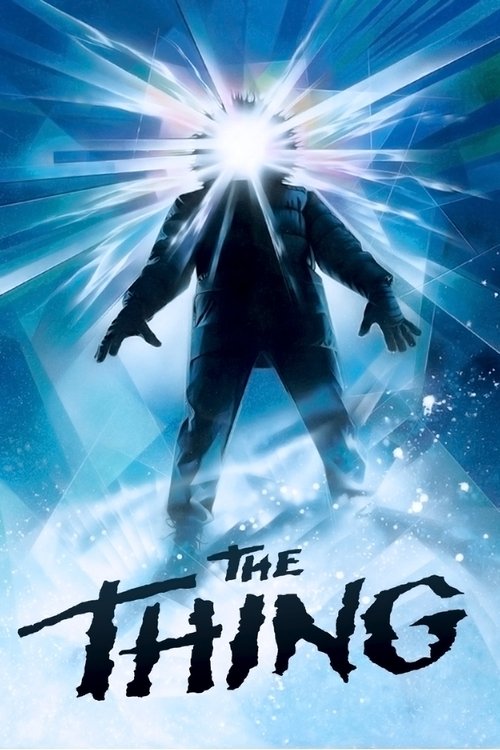
The Thing
When the Enemy Wears Your Face (Perfect Paranoia as Spiritual Teaching)
Directed by John Carpenter
The Thing is not a monster movie. It is a film about the collapse of trust when identity becomes unreliable. The alien does not simply kill — it replaces. Your friend is still your friend until suddenly he is not. The horror is not the creature. The horror is not knowing who anyone is anymore.
The Thing is the most philosophically rigorous horror film ever made — a sustained meditation on what happens when identity becomes unverifiable. The alien does not merely kill; it perfectly replicates. The person sitting next to you is still that person, with their memories and mannerisms, until the moment they are not. There is no way to tell from the outside. This is not monster horror. This is epistemological horror — the collapse of the basic assumption that lets society function: that the person in front of you is who they appear to be. Carpenter understood that the deepest fear is not death but the impossibility of trust. When anyone might be the Thing, no one can be trusted. When no one can be trusted, cooperation becomes impossible. When cooperation becomes impossible, the group destroys itself. The Thing wins not by killing everyone but by making everyone suspect everyone else. The paranoia is the victory. The isolation — perfect isolation, in Antarctica, at the end of the world — is already the Thing's habitat. It just had to help the humans recognize where they already were.
The Surface
American researchers at an Antarctic station encounter a shape-shifting alien that perfectly assimilates and imitates other organisms. As the Thing spreads among them, paranoia takes hold. No one can be certain who is still human. The group fractures, turns on itself, and is largely destroyed — perhaps not entirely by the creature but by their own inability to trust.
Carpenter's remake of the 1951 film transformed a Cold War alien invasion story into something far more disturbing. The original's carrot-monster could be identified and fought. Carpenter's Thing cannot be distinguished from what it copies. The threat is epistemic before it is physical.
The film flopped on release, overshadowed by E.T.'s warm alien encounter. Audiences in 1982 wanted to believe in friendly visitors. Carpenter gave them something that could not be trusted, could not be reasoned with, could not even be reliably identified. The film's darkness was commercially toxic. It has since become recognized as one of the greatest horror films ever made.
The Shape of the Shadow
The Thing takes your shape but is not you. It has your memories, your voice, your habits. It believes it is you — or behaves as if it does. Only when threatened does it reveal what it actually is. The rest of the time, it passes perfectly.
This is the Shadow made literal. Jung's Shadow is the part of yourself you do not acknowledge — the capacities and desires that your conscious self rejects. The Shadow wears your face. It is you, but the you that you will not admit to being. Until threatened, it passes perfectly.
The Thing externalizes this internal condition. What if your Shadow could detach and walk around? What if it could replace your friends? What if you could not tell by looking whether the person in front of you was the self they presented or the Shadow beneath?
The film's paranoia is the paranoia of anyone who has begun to suspect that people are not what they seem. That the friendly face conceals something alien. That trust has always been a gamble we take because the alternative is unbearable. The Thing makes the alternative visible.
The Blood Test
MacReady's blood test scene is the film's climax of tension. He heats a wire and touches it to samples of each man's blood. Human blood does nothing. Thing blood, even separated from the body, reacts — leaps away from pain, reveals its alien nature.
This scene works because it offers what the entire film has denied: a reliable test. For a few minutes, truth becomes possible again. Identity can be verified. The relief when a sample proves human is palpable — and the horror when Blair's sample screams and jumps is the greater for the contrast.
But the test also raises questions. If every cell of the Thing is independently alive, independently self-preserving, what does it mean to be 'assimilated'? Is the human still in there somewhere? Does the Thing experience itself as the person it has replaced? The film refuses to answer.
The blood test is also a metaphor. How do we test for authenticity? How do we know the person in front of us is who they claim to be? In ordinary life, we cannot heat a wire and force truth to reveal itself. We have to trust — and trust is precisely what the Thing makes impossible.
Antarctica as Psychic Landscape
The setting is not incidental. Antarctica is the most isolated place on Earth — perfect whiteness, absolute cold, no escape. The researchers are already cut off before the Thing arrives. Their isolation is physical but it mirrors something psychological.
Jung described the process of individuation as a journey into increasingly remote territories of the psyche. The deeper you go, the more alone you become. The defenses fall away. The convenient fictions stop working. You meet what lives in the places you never wanted to visit.
The Antarctic station is this psychic space made physical. The men have retreated from civilization into a white void where nothing grows, nothing changes, nothing softens the confrontation with what they find. The Thing was waiting there — or was always there, and they finally went far enough to find it.
The film's ending is perfect Antarctica: two survivors sitting in the frozen wreckage, neither certain the other is human, both knowing they will not survive the night. The isolation is complete. The Trust is gone. The cold will do the rest.
The Mathematics of Paranoia
Blair's breakdown early in the film comes from calculation, not emotion. He runs the numbers: if the Thing reaches civilization, it will assimilate all life on Earth within a certain timeframe. The threat is not local. It is existential. His destruction of the radio and vehicles is not madness. It is quarantine.
The film takes infection mathematics seriously. The Thing does not need to fight. It just needs to survive long enough to spread. Every hour of delay increases the probability of containment. Every successful assimilation decreases it. The men are fighting probability, not just a monster.
This mathematical framework intensifies the paranoia. It is not enough to survive tonight. It is not enough to kill visible threats. You must be certain — absolutely certain — that nothing leaves. One cell is enough. One spore. One fragment that drifts on the wind to a passing ship.
The film's open ending acknowledges that certainty may be impossible. MacReady and Childs sit in the snow. One of them may be the Thing. Neither can prove otherwise. The mathematics of paranoia have reached their limit: when you cannot verify, you cannot act. You can only wait.
The Transmission
The Thing transmits a specific horror: the horror of unverifiable identity. In an age of deepfakes, identity theft, and online personas, this horror has only intensified. How do you know who anyone is? How do you know the voice on the phone is your mother? How do you know the person in your bed is who they were yesterday?
The film offers no comfort. There is no reliable test in real life. We trust because we must, not because trust is warranted. The social contract rests on an assumption that cannot be verified — that other minds exist, that they are what they appear to be, that the self presented is the self that is.
Carpenter's genius was recognizing that this assumption is the load-bearing wall. Remove it and everything collapses. The Thing does not need to kill everyone. It just needs to make everyone doubt everyone else. The paranoia does the rest. Society is already the Antarctic station. We just pretend otherwise.
Questions this film answers
What is the deeper meaning of The Thing?
The Thing is the most philosophically rigorous horror film ever made — a sustained meditation on what happens when identity becomes unverifiable. The alien does not merely kill; it perfectly replicates. The person sitting next to you is still that person, with their memories and mannerisms, until the moment they are not. There is no way to tell from the outside. This is not monster horror. This is epistemological horror — the collapse of the basic assumption that lets society function: that the person in front of you is who they appear to be. Carpenter understood that the deepest fear is not death but the impossibility of trust. When anyone might be the Thing, no one can be trusted. When no one can be trusted, cooperation becomes impossible. When cooperation becomes impossible, the group destroys itself. The Thing wins not by killing everyone but by making everyone suspect everyone else. The paranoia is the victory. The isolation — perfect isolation, in Antarctica, at the end of the world — is already the Thing's habitat. It just had to help the humans recognize where they already were.
What is the hidden symbolism in The Thing?
American researchers at an Antarctic station encounter a shape-shifting alien that perfectly assimilates and imitates other organisms. As the Thing spreads among them, paranoia takes hold. No one can be certain who is still human. The group fractures, turns on itself, and is largely destroyed — perhaps not entirely by the creature but by their own inability to trust.
What esoteric traditions appear in The Thing?
The Thing draws from Jungian traditions. The Thing is not a monster movie. It is a film about the collapse of trust when identity becomes unreliable. The alien does not simply kill — it replaces. Your friend is still your friend until suddenly he is not. The horror is not the creature. The horror is not knowing who anyone is anymore.
What does The Thing teach about the shape of the shadow?
The Shadow wears your face. It is you, but the you that you will not admit to being. Until threatened, it passes perfectly. The Thing takes your shape but is not you. It has your memories, your voice, your habits. It believes it is you — or behaves as if it does. Only when threatened does it reveal what it actually is. The rest of the time, it passes perfectly.
What does The Thing teach about antarctica as psychic landscape?
The Antarctic station is psychic space made physical — a white void where nothing softens the confrontation with what they find. The setting is not incidental. Antarctica is the most isolated place on Earth — perfect whiteness, absolute cold, no escape. The researchers are already cut off before the Thing arrives. Their isolation is physical but it mirrors something psychological.
Is The Thing worth watching for spiritual seekers?
The Thing (1982) directed by John Carpenter is essential viewing for those interested in Jungian, Shadow, Identity. When the Enemy Wears Your Face (Perfect Paranoia as Spiritual Teaching). It rewards multiple viewings and contemplation.
Rewatch With New Eyes
Now that you've seen the architecture, experience it again. The same film becomes a different film when you know what to watch for.
This time, watch for:
- Meet the shadow: what is rejected, projected, and finally integrated
Links may include affiliate partnerships that support Media Revelations