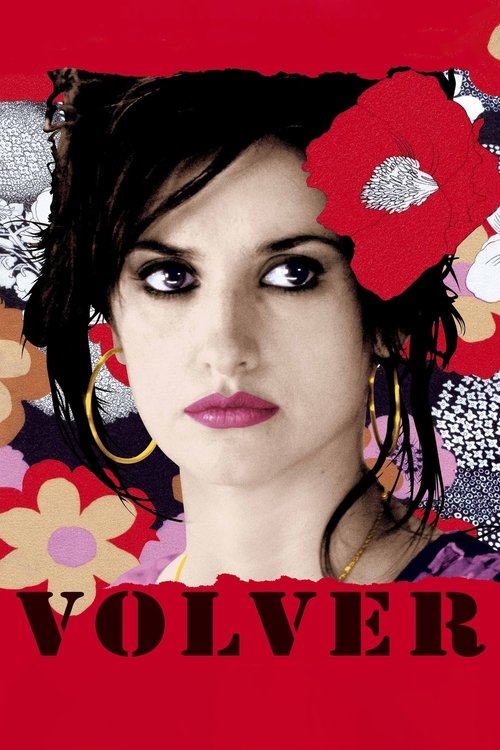
Volver
Volver Is a Ghost Story Where the Dead Come Back to Do the Dishes
Directed by Pedro Almodóvar
A mother returns from the grave and hides under her daughter's bed. She has not come to haunt. She has come to apologize, to cook, and to finish the mothering that death interrupted.
The film opens on a village in La Mancha where the women scrub their family tombstones clean while still alive, tending their own future graves in the fierce east wind that locals say drives people mad. Raimunda covers up a killing: her teenage daughter has stabbed the stepfather who tried to assault her, and Raimunda mops the blood, hides the body in a freezer, and carries on running an improvised restaurant as if nothing happened. Meanwhile her dead mother, Irene, supposedly burned to death years ago, materializes at Raimunda's sister's house, at first taken for a ghost, then revealed to have been alive and hidden all along, though the film never lets go of the sense that she genuinely came back from the dead. Almodóvar built a story where the border between living and dead is a domestic threshold, crossed by women carrying secrets that only other women can absolve.
Shamanism Reading: The Women Are the Ones Who Tend the Dead
In shamanic cultures, death is not an exit but a relationship that continues to require tending, and it is very often the women who keep it, who wash the corpse, feed the ancestors, and mediate between the village of the living and the village of the dead. Volver is set entirely inside this cosmology, transposed to modern Spain. The opening image of women polishing graves in the wind is not metaphor. It is the literal ongoing labor of maintaining a bond with the dead that the culture assumes will be maintained.
Irene's return is a shamanic homecoming disguised as a farce about a woman hiding under a bed. She comes back not to frighten but to complete unfinished care: to nurse a dying neighbor, to reconcile with the daughter who believes she was abandoned, to confess the fire she set. In this world the dead do not want peace. They want to finish the work love left undone. The men are absent, buried, or murdered offscreen. It is the women who move freely across the threshold, because in shamanic terms they were always the ones standing in the doorway.
Jungian Reading: The Return of the Mother Line and Its Buried Crime
Jung named the mother complex as the deepest structuring force in the psyche, and taught that healing requires descending into the ancestral wound rather than fleeing it. Volver is a film about three generations of women bound by a single unspoken crime, and the crime repeats down the line until it is finally spoken. Raimunda was violated by her own father as a girl and bore his child, a fact buried so deep she has locked her mother out of her heart for failing to protect her.
The same violation nearly repeats in the next generation with the stepfather, and this time the girl kills before the wound can be inherited. Irene's reappearance is the return of the repressed made flesh, the mother coming back so the truth can finally surface between them. The reconciliation scene, mother and daughter weeping in a doorway after decades of silence, is the integration of the mother archetype, the buried feminine restored to the living so the daughters can stop dying of the secret.
Questions this film answers
What is the deeper meaning of Volver?
The film opens on a village in La Mancha where the women scrub their family tombstones clean while still alive, tending their own future graves in the fierce east wind that locals say drives people mad. Raimunda covers up a killing: her teenage daughter has stabbed the stepfather who tried to assault her, and Raimunda mops the blood, hides the body in a freezer, and carries on running an improvised restaurant as if nothing happened. Meanwhile her dead mother, Irene, supposedly burned to death years ago, materializes at Raimunda's sister's house, at first taken for a ghost, then revealed to have been alive and hidden all along, though the film never lets go of the sense that she genuinely came back from the dead. Almodóvar built a story where the border between living and dead is a domestic threshold, crossed by women carrying secrets that only other women can absolve.
What is the hidden symbolism in Volver?
In shamanic cultures, death is not an exit but a relationship that continues to require tending, and it is very often the women who keep it, who wash the corpse, feed the ancestors, and mediate between the village of the living and the village of the dead. Volver is set entirely inside this cosmology, transposed to modern Spain. The opening image of women polishing graves in the wind is not metaphor. It is the literal ongoing labor of maintaining a bond with the dead that the culture assumes will be maintained.
What esoteric traditions appear in Volver?
Volver draws from Shamanism, Jungian traditions. A mother returns from the grave and hides under her daughter's bed. She has not come to haunt. She has come to apologize, to cook, and to finish the mothering that death interrupted.
Is Volver worth watching for spiritual seekers?
Volver (2006) directed by Pedro Almodóvar is essential viewing for those interested in Shamanism, Jungian. Volver Is a Ghost Story Where the Dead Come Back to Do the Dishes. It rewards multiple viewings and contemplation.
Rewatch With New Eyes
Now that you've seen the architecture, experience it again. The same film becomes a different film when you know what to watch for.
This time, watch for:
- Follow the descent: what dies, what guides, what returns transformed
- Meet the shadow: what is rejected, projected, and finally integrated
Links may include affiliate partnerships that support Media Revelations
The Descent Continues
Where this thread leads next.
All About My Mother 1999
All About My Mother Rebuilds a Family Out of Everyone Society Threw Away
Read the revelation →