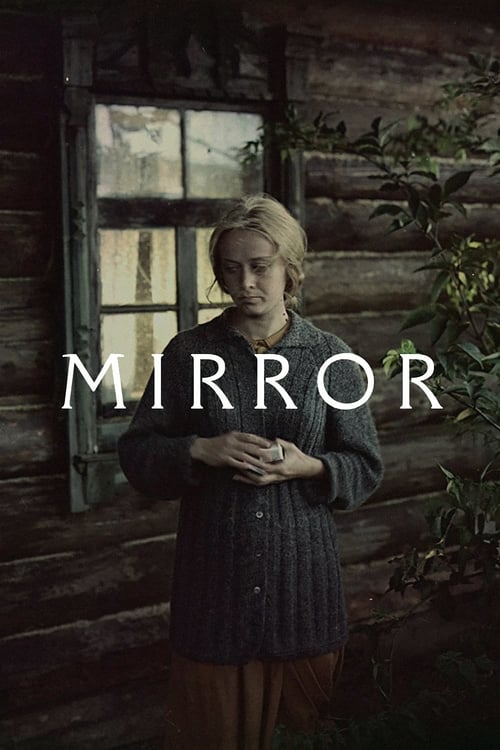
Tarkovsky filmed the structure of consciousness itself — memory, dream, and history collapsing into a single luminous present. The dying narrator we never see is the soul reviewing its life. Each image is a prayer.
Mirror is not a memoir. It is the structure of a dying man's consciousness rendered as cinema. The unseen narrator is reviewing his life from a position outside time — childhood, war, marriage, mother and wife collapsing into the same face, decades superimposing. Tarkovsky filmed what mystics have described for centuries: the moment the soul faces what it lived. Every image is weighted because in this state every image is weighted. The film does not have a plot because consciousness at the threshold does not have a plot. It has only the totality of what was loved and what was missed.
The Surface
A dying man in his forties — never shown, only heard — drifts through memories of his mother, his childhood evacuation during the war, his estranged wife, his son. Newsreel footage of Soviet history interleaves with private remembrance. The same actress plays the mother and the wife. Time does not move forward.
Critics on release found the film impossible to follow. Tarkovsky was forbidden to use the title 'White, White Day,' was reassigned editors, was nearly removed from the project. He prevailed. The film that exists is structurally unique in cinema: not autobiography, not stream of consciousness, but a precise depiction of what memory does when there is no longer time to organize it.
Watch it not as story. Watch it as you would sit by a dying person who is saying everything they remember in the order it arrives. There is no plot because that is not the form. The form is a soul looking at its own life.
Memory as Soul-Review
Many traditions describe a moment at the end of life when consciousness reviews everything that occurred — the panoramic life review of near-death reports, the bardo experiences of Tibetan Buddhism, the judgment scenes of Christian iconography. The review is not chronological. It is total. Every loved face, every wound given and received, every small moment of beauty — all present simultaneously, all weighted by the love or absence-of-love that accompanied it.
Mirror is filmed in this register. The wind in the field where the boy waits for his father. The mother washing her hair while the ceiling collapses around her. The barn burning while a child watches a stranger walk away. These are not flashbacks. They are the panorama. Tarkovsky said he was trying to film the texture of memory itself, and the texture of memory is exactly the texture of soul-review.
Notice that the camera lingers on details that have no narrative purpose: rain on a windowsill, a hand reaching to catch a falling bottle, light moving across a wall. These are the details that matter when nothing else matters. Tarkovsky is showing what becomes important in the final accounting. Not the events. The presences.
The film is a teaching. It is showing you, while you are still alive, what your dying mind will eventually do with the moments you are not currently noticing.
Mother and Wife as One
Margarita Terekhova plays both the narrator's mother in his childhood and his wife in his adult life. This is not casting convenience. It is the central revelation of the film. The man's inability to leave his mother and his inability to be married are the same incapacity.
This is the Anima problem at full intensity. The narrator never separated his mother from his image of the feminine. His wife inherited the unfinished project. He could not see her as her own being because the mother-image had not been integrated and withdrawn. The film is the recognition of this — the dying mind finally seeing that the two women he failed to fully meet were carrying the same projection.
Tarkovsky refuses to make the protagonist sympathetic on this point. The wife's accusations are real. The mother's exhaustion is real. The narrator's failure is real. The film does not let him off. The soul-review includes the harm done, and the harm done was structural — he could not see her because he had never finished seeing the first her.
This is one of the most precise depictions of a particular masculine wound ever committed to film. Tarkovsky does not name it. He just shows it operating across decades, in one face, with one actress.
History as Personal Body
Tarkovsky cuts repeatedly into archival footage: the Spanish Civil War, the Sino-Soviet border conflict, Soviet troops crossing Lake Sivash. These are not historical context. They are presented at the same emotional weight as the narrator's childhood memories.
The mystical claim is that there is no real distinction. The soul that incarnated in this century carries the century in its body. The wars that happened during your lifetime are not external to your life. They are weather you breathed. The newsreel footage is as personal as the family footage because the body that watched both was one body.
This is a Russian Orthodox sensibility. The individual is not separable from history. The soul is not portable to some other time. You are this person, in this time, marked by what your country did and what was done to it. The soul-review at the end therefore includes the public material. You do not get to claim a private interior that floated above the century.
Tarkovsky is making the case that the narrator's failure as son and husband and his country's failures during the war are connected at a level deeper than analogy. The same wound. The same inheritance. The same impossibility of looking directly at what was happening.
The Transmission
Mirror does not transmit information. It transmits a state of consciousness. By an hour into the film, your normal sense of narrative has dissolved. You stop trying to figure out which woman is which, which year is which, whose face you are seeing. You start watching the way you watch your own memories — accepting whatever arrives, attending to what feels weighted, allowing the meaning to emerge from accumulation rather than sequence.
This is the state Tarkovsky is teaching you to enter. Once you can enter it for a film, you can begin to enter it for your own life. You can begin to see your years the way the dying narrator sees his: weighted by presence rather than event, the wind in the field as important as the divorce, your mother's hands as important as your career.
The film does not console. It does not redeem the narrator's failures. It does something rarer. It teaches the viewer to watch their own life from the position the narrator has reached, while there is still time to do something with what is seen. This is why people who love Mirror return to it for decades. It is not a film. It is a practice.
Questions this film answers
What is the deeper meaning of Mirror?
Mirror is not a memoir. It is the structure of a dying man's consciousness rendered as cinema. The unseen narrator is reviewing his life from a position outside time — childhood, war, marriage, mother and wife collapsing into the same face, decades superimposing. Tarkovsky filmed what mystics have described for centuries: the moment the soul faces what it lived. Every image is weighted because in this state every image is weighted. The film does not have a plot because consciousness at the threshold does not have a plot. It has only the totality of what was loved and what was missed.
What is the hidden symbolism in Mirror?
A dying man in his forties — never shown, only heard — drifts through memories of his mother, his childhood evacuation during the war, his estranged wife, his son. Newsreel footage of Soviet history interleaves with private remembrance. The same actress plays the mother and the wife. Time does not move forward.
What esoteric traditions appear in Mirror?
Mirror draws from Buddhism, Jungian, Initiation traditions. Tarkovsky filmed the structure of consciousness itself — memory, dream, and history collapsing into a single luminous present. The dying narrator we never see is the soul reviewing its life. Each image is a prayer.
What does Mirror teach about memory as soul-review?
Tarkovsky is showing what becomes important in the final accounting. Not the events. The presences. Many traditions describe a moment at the end of life when consciousness reviews everything that occurred — the panoramic life review of near-death reports, the bardo experiences of Tibetan Buddhism, the judgment scenes of Christian iconography. The review is not chronological. It is total. Every loved face, every wound given and received, every small moment of beauty — all present simultaneously, all weighted by the love or absence-of-love that accompanied it.
What does Mirror teach about mother and wife as one?
His wife inherited his unfinished mother. The two failures were the same failure. Margarita Terekhova plays both the narrator's mother in his childhood and his wife in his adult life. This is not casting convenience. It is the central revelation of the film. The man's inability to leave his mother and his inability to be married are the same incapacity.
Is Mirror worth watching for spiritual seekers?
Mirror (1975) directed by Andrei Tarkovsky is essential viewing for those interested in Memory, Soul Review, Tarkovsky. Memory as Liturgy of the Soul. It rewards multiple viewings and contemplation.
Rewatch With New Eyes
Now that you've seen the architecture, experience it again. The same film becomes a different film when you know what to watch for.
This time, watch for:
- See impermanence: what clings, what releases, what remains
- Meet the shadow: what is rejected, projected, and finally integrated
- Mark the threshold: the old self dies, the ordeal transforms, the new self returns
Links may include affiliate partnerships that support Media Revelations