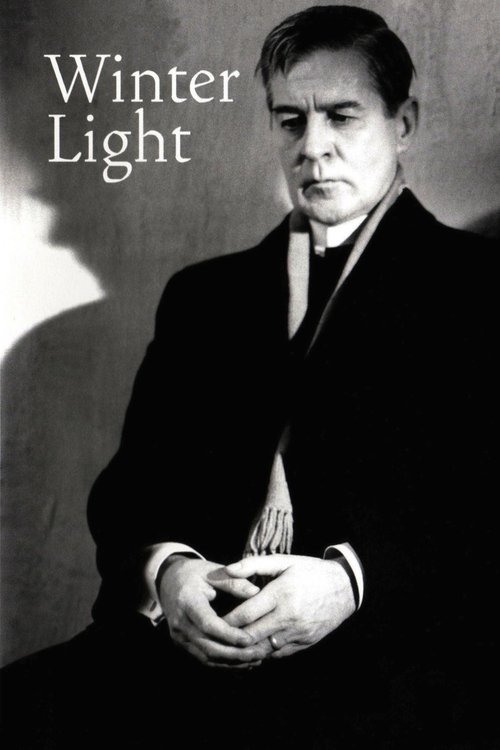
Winter Light
Winter Light Is About a Priest Who Discovers That the Silence of God and the Absence of God Feel Identical, and Preaches Anyway
Directed by Ingmar Bergman
A pastor loses his faith between the morning service and the afternoon one. Bergman films the exact hours of the collapse and refuses to resolve it.
Ingmar Bergman confines Winter Light to a few grey hours in a rural Swedish parish. Pastor Tomas Ericsson conducts communion for a nearly empty church while his own belief drains out of him. A fisherman named Jonas, terrified by news that China may build an atomic bomb, comes to Tomas for reassurance, and Tomas, unable to offer any, confesses instead his own spiritual emptiness, his "God who is silent," his suspicion that he has been praying to nothing his whole life. Jonas leaves and shoots himself. Märta, the schoolteacher who loves Tomas, offers him a real and human love, and he answers her with cruelty because he cannot forgive her for not being the God he has lost. The film is the anatomy of a man discovering that the silence he took for God's presence might just be silence, and then climbing the pulpit to preach the evening service anyway.
Gnosticism Reading: Tomas Confronts the Absent God and Cannot Tell Absence From Concealment
Gnostic thought lives in the gap between the false god who administers the world and the true God hidden beyond it, unreachable and silent to those still trapped below. Tomas stands in that gap without the Gnostic's consolation. He has served a God he now suspects was always a projection, "an echo-god," a spider-god of his own fear, and he cannot determine whether the silence he receives is the hidden true God withholding Himself or simply the void confirming there was never anyone there. This is the Gnostic crisis stripped of its mythology and left as raw experience: the divine has gone silent, and the seeker cannot tell concealment from nonexistence.
Bergman gives this crisis a face in the crippled sexton Algot, who near the film's end offers Tomas a reading of Christ's passion: that the true suffering of Christ was not the physical torture but the moment on the cross when God fell silent and Christ cried out that he had been forsaken. Algot suggests the silence Tomas suffers is the same silence Christ suffered, that abandonment by God is not proof of God's absence but the deepest station of faith. Whether Tomas believes this, Bergman never says. He only shows the pastor rising to preach to a church of one.
Buddhism Reading: The Silence Tomas Fears Is the Emptiness He Was Never Taught to Sit With
Buddhism treats silence and emptiness not as loss but as the ground of what is real, and it teaches that suffering comes from grasping at forms that were always empty. Tomas suffers precisely because he grasps. He has clung to a God-image, a father in the sky who answers, and now that the image has dissolved he experiences its absence as catastrophe rather than as the falling-away of an illusion. What a contemplative tradition would call the door, Tomas experiences as the abyss.
The film's structure enacts a teaching Tomas cannot receive. Everything is taken from him: his faith, his certainty, and through his own coldness the love Märta offers. He is left with nothing, in an empty church, in the winter light of the title. Buddhism would call this stripping the beginning of the path, the point where a person finally stops clinging and can meet what actually is. Tomas cannot see it that way. He climbs the pulpit and begins the liturgy in front of empty pews, and Bergman lets the ambiguity stand: is this the reflex of a dead faith, or the first act of a faith with nothing left to defend?
Questions this film answers
What is the deeper meaning of Winter Light?
Ingmar Bergman confines Winter Light to a few grey hours in a rural Swedish parish. Pastor Tomas Ericsson conducts communion for a nearly empty church while his own belief drains out of him. A fisherman named Jonas, terrified by news that China may build an atomic bomb, comes to Tomas for reassurance, and Tomas, unable to offer any, confesses instead his own spiritual emptiness, his "God who is silent," his suspicion that he has been praying to nothing his whole life. Jonas leaves and shoots himself. Märta, the schoolteacher who loves Tomas, offers him a real and human love, and he answers her with cruelty because he cannot forgive her for not being the God he has lost. The film is the anatomy of a man discovering that the silence he took for God's presence might just be silence, and then climbing the pulpit to preach the evening service anyway.
What is the hidden symbolism in Winter Light?
Gnostic thought lives in the gap between the false god who administers the world and the true God hidden beyond it, unreachable and silent to those still trapped below. Tomas stands in that gap without the Gnostic's consolation. He has served a God he now suspects was always a projection, "an echo-god," a spider-god of his own fear, and he cannot determine whether the silence he receives is the hidden true God withholding Himself or simply the void confirming there was never anyone there. This is the Gnostic crisis stripped of its mythology and left as raw experience: the divine has gone silent, and the seeker cannot tell concealment from nonexistence.
What esoteric traditions appear in Winter Light?
Winter Light draws from Gnosticism, Buddhism traditions. A pastor loses his faith between the morning service and the afternoon one. Bergman films the exact hours of the collapse and refuses to resolve it.
Is Winter Light worth watching for spiritual seekers?
Winter Light (1963) directed by Ingmar Bergman is essential viewing for those interested in Gnosticism, Buddhism. Winter Light Is About a Priest Who Discovers That the Silence of God and the Absence of God Feel Identical, and Preaches Anyway. It rewards multiple viewings and contemplation.
Rewatch With New Eyes
Now that you've seen the architecture, experience it again. The same film becomes a different film when you know what to watch for.
This time, watch for:
- Watch for the false world vs. the real — who is asleep, who awakens
- See impermanence: what clings, what releases, what remains
Links may include affiliate partnerships that support Media Revelations
The Descent Continues
Where this thread leads next.
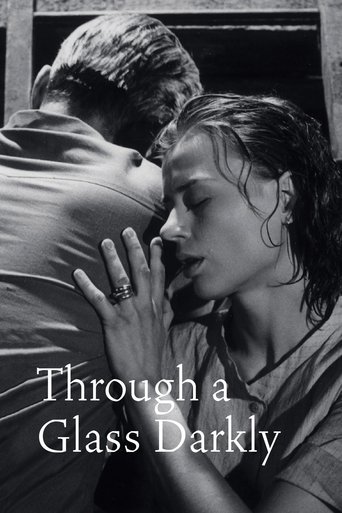
Through a Glass Darkly 1961
Through a Glass Darkly Is About the God Who Arrives, and Wears the Face of a Spider
Read the revelation →