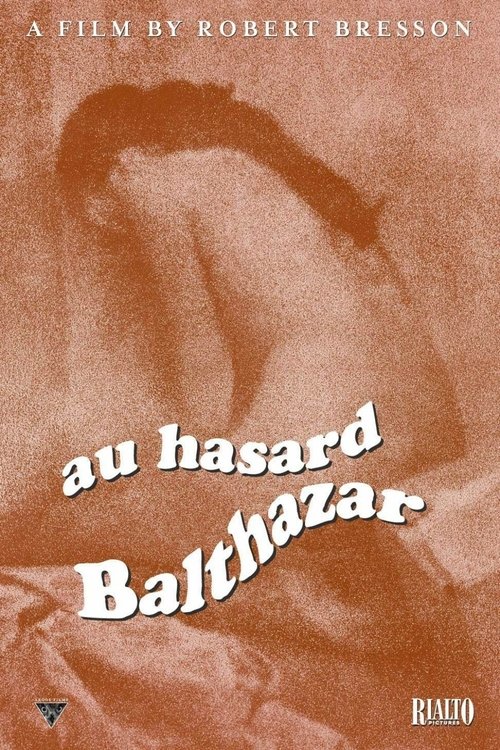
Au Hasard Balthazar
Au Hasard Balthazar Is a Passion Play Without Resurrection, Bresson Filmed the Saint Who Cannot Speak
Directed by Robert Bresson
A donkey passes through the hands of the cruel, the indifferent, and the briefly kind, and what Bresson films is not its suffering but its witness.
Balthazar sees everything. He watches a boy who loves him grow into a man who abandons him. He watches a girl he once carried be broken by a man who enjoys the breaking. He watches violence, greed, and small kindnesses with the same dark unblinking eyes. Bresson gives the donkey no interiority to explain, no reaction shot to curate the audience's sympathy. The animal simply passes through human experience the way light passes through a window, taking none of it, staining none of it, showing it all. This is the film's theological claim, stated in the opening scene and confirmed by its last: the innocent witness cannot be corrupted, but the innocent witness can be destroyed.
Christian Mysticism: The Stations of the Cross Without a Crown at the End
Bresson structures Balthazar's owners as a catalog of the seven deadly sins, the alcoholic farmer, the vain grain merchant, the greedy miller, Gerard's sloth and cruelty stacked in layers. Each handler inflicts a different wound, and the film moves through them the way a penitent moves through the stations: with grim inevitability, toward an ending that was always going to be exactly this. The final scene is among the most devastating in cinema. Balthazar, shot by smugglers during a border crossing, wanders onto a hillside and lies down in the grass while a flock of sheep surrounds him. Bells around their necks. His blood darkening the wool beneath him. He dies alone, encircled by animals that look like the extras in a nativity scene that arrived too late. Bresson films the lamb among lambs, the martyred innocent, the passion completed, with no resurrection following. The liturgy is performed, the sacrifice is made, and then the film ends. No grace descends. No stone rolls back.
Buddhism: The Being That Has No Story About Its Suffering
The Buddhist reading arrives through what Balthazar cannot do. He cannot accumulate a narrative of grievance. He cannot plan revenge against Gerard, cannot fantasize about a better life, cannot remember the boy who was kind and mourn the loss of him. Each moment of cruelty is simply the present moment, received and released without a self to wound. When Gerard beats him, Balthazar does not become a donkey who was beaten, he simply is a donkey, and then the beating is over, and then he is still a donkey. This is not resilience. It is the radical non-accumulation that Buddhist practice works to approximate across a human lifetime, and Balthazar was born into it. The humans surrounding him carry decades of unprocessed grief, jealousy, and rage. They make each other suffer across years. Balthazar, in his incapacity for story, enacts the liberation they cannot reach. The tragedy Bresson constructs is exquisite and cold: the freest being in the film is the one in chains.
Other Bresson films in the catalog: Pickpocket maps the same grace mechanics onto a thief's hands. Diary of a Country Priest gives the suffering witness a voice, and the voice changes nothing. For God's silence as the landscape of faith, Winter Light is the companion piece.
Questions this film answers
What is the deeper meaning of Au Hasard Balthazar?
Balthazar sees everything. He watches a boy who loves him grow into a man who abandons him. He watches a girl he once carried be broken by a man who enjoys the breaking. He watches violence, greed, and small kindnesses with the same dark unblinking eyes. Bresson gives the donkey no interiority to explain, no reaction shot to curate the audience's sympathy. The animal simply passes through human experience the way light passes through a window, taking none of it, staining none of it, showing it all. This is the film's theological claim, stated in the opening scene and confirmed by its last: the innocent witness cannot be corrupted, but the innocent witness can be destroyed.
What is the hidden symbolism in Au Hasard Balthazar?
Bresson structures Balthazar's owners as a catalog of the seven deadly sins, the alcoholic farmer, the vain grain merchant, the greedy miller, Gerard's sloth and cruelty stacked in layers. Each handler inflicts a different wound, and the film moves through them the way a penitent moves through the stations: with grim inevitability, toward an ending that was always going to be exactly this. The final scene is among the most devastating in cinema. Balthazar, shot by smugglers during a border crossing, wanders onto a hillside and lies down in the grass while a flock of sheep surrounds him. Bells around their necks. His blood darkening the wool beneath him. He dies alone, encircled by animals that look like the extras in a nativity scene that arrived too late. Bresson films the lamb among lambs, the martyred innocent, the passion completed, with no resurrection following. The liturgy is performed, the sacrifice is made, and then the film ends. No grace descends. No stone rolls back.
What esoteric traditions appear in Au Hasard Balthazar?
Au Hasard Balthazar draws from Buddhism traditions. A donkey passes through the hands of the cruel, the indifferent, and the briefly kind, and what Bresson films is not its suffering but its witness.
Is Au Hasard Balthazar worth watching for spiritual seekers?
Au Hasard Balthazar (1966) directed by Robert Bresson is essential viewing for those interested in Buddhism. Au Hasard Balthazar Is a Passion Play Without Resurrection, Bresson Filmed the Saint Who Cannot Speak. It rewards multiple viewings and contemplation.
Rewatch With New Eyes
Now that you've seen the architecture, experience it again. The same film becomes a different film when you know what to watch for.
This time, watch for:
- See impermanence: what clings, what releases, what remains
Links may include affiliate partnerships that support Media Revelations
The Descent Continues
Where this thread leads next.
Forrest Gump 1994
The Holy Fool and the Feather of Grace
Read the revelation →