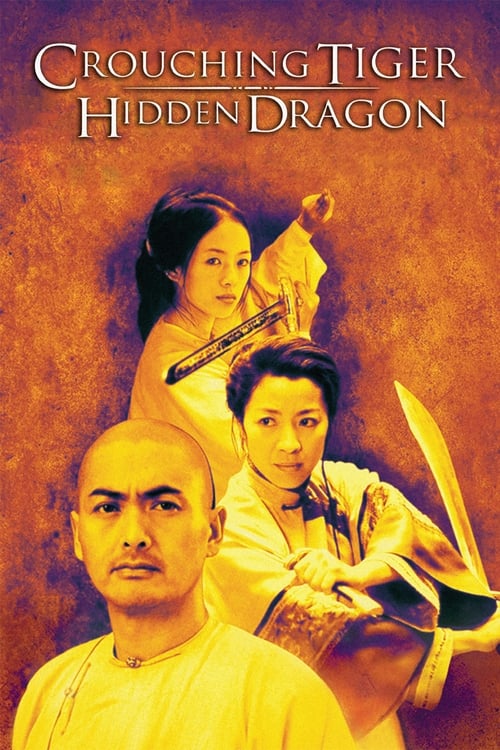
Crouching Tiger, Hidden Dragon
The Martial Artist Who Could Not Surrender
Directed by Ang Lee
The Green Destiny sword is not a weapon — it is a symbol of mastery that traps its holder in the warrior path. Li Mu Bai cannot put it down until he has defeated everything, including his own desire. The floating combat is not fantasy. It is what happens when the body becomes so trained that gravity releases its claim.
Crouching Tiger, Hidden Dragon is the definitive wuxia film because it is not about fighting. It is about what the warrior path costs and why masters cannot seem to stop walking it. Every major character is trapped — not by external force but by internal compulsion disguised as virtue. Li Mu Bai has reached the edge of enlightenment. In meditation, he touched the void — the place where self dissolves. He could not stay there. Why? Because he had unfinished business: revenge for his master's death, unexpressed love for Yu Shu Lien. He returned from the threshold of liberation to complete things that, by their nature, cannot be completed. The flying combat — fighters running up walls, leaping across rooftops, floating through bamboo — is not fantasy physics. It is the body liberated by discipline. When desire is sufficiently refined, gravity itself becomes negotiable. Ang Lee films martial arts as meditation made kinetic. The fights are not violence. They are prayers.
The Surface
Master Li Mu Bai, the greatest swordsman of his generation, decides to retire. He gives his legendary sword, the Green Destiny, to his friend Yu Shu Lien to deliver as a gift to a governor. The sword is stolen by a masked thief who turns out to be Jen Yu, the governor's sheltered daughter, secretly trained in the warrior arts by an outlaw named Jade Fox.
Li Mu Bai and Shu Lien pursue the sword, but Li has a deeper motive: Jade Fox killed his master, and he has sought her for decades. Jen is torn between her secret warrior identity and her arranged marriage. Her former lover, the bandit Lo, reappears to claim her. Four people bound by obligation, desire, and the warrior path that will not release any of them.
The film's action sequences — choreographed by Yuen Woo-ping at the height of his powers — show fighters defying gravity: running up walls, balancing on treetops, moving through the air like brush strokes. This is not wire-work showing off. This is wire-work as theology.
The Sword That Cannot Be Put Down
The Green Destiny is not just a sword. It is the symbol of mastery that locks its holder into the warrior path. Li Mu Bai cannot simply give it away. The giving itself becomes another test, another complication, another reason to remain a warrior.
In Buddhist terms, the sword is attachment in its most refined form: the attachment to non-attachment. Li has mastered every enemy. He has touched enlightenment. But he cannot let go of the last thread — the need to complete his master's legacy, to transmit his teaching, to find a worthy successor.
Jen steals the sword because she wants what it represents: freedom through mastery, escape from the arranged life. She does not understand that the sword is a trap. Whoever holds it must defend it. Whoever achieves its mastery must maintain it. The freedom it offers is another cage.
The film's Chinese title — 'Wo Hu Cang Long' — refers to a hidden dragon and crouching tiger: power concealed, waiting to spring. Every character in the film is hiding something powerful. The concealment itself becomes the prison.
Li Mu Bai and the Threshold
Li Mu Bai describes a meditation experience: 'I was surrounded by an endless sorrow. I couldn't feel the presence of the soul of my master. There was only the void.' He touched the place where self dissolves. He could not remain.
This is the crisis of the accomplished practitioner. The threshold is visible. Crossing it means releasing everything — including the beloved, including the unfinished business, including the self that wants to cross. Li saw the void and chose to return.
He returned because he could not leave Shu Lien without telling her he loved her. He returned because Jade Fox still breathed. He returned because a worthy successor might exist. Every reason is attachment. Every attachment is a link in the chain that pulls him back from liberation.
The film understands that this is tragedy, not nobility. Li's reasons for returning are human and sympathetic. They are also the bars of his cage. Enlightenment was available. He chose otherwise. He will die having chosen otherwise.
The Love That Cannot Be Spoken
Li Mu Bai and Yu Shu Lien have loved each other for years. Neither has spoken it. Why? Because Shu Lien was betrothed to Li's best friend, who died. Tradition forbids the match. Honor forbids the admission. Decades pass. The silence persists.
This is desire frozen into principle. They have transformed their wanting into discipline so completely that the wanting itself has become hidden. They fight side by side, entrust each other with their lives, and cannot touch. The sublimation is total.
When Li finally confesses — dying from Jade Fox's poison, with minutes left — the confession is tragic because it is too late. He had decades. He chose silence. The warrior code that made him great also prevented the one thing that might have freed him more than enlightenment: simple human love, accepted and returned.
Shu Lien's restraint is equally damaging. She loved him too. She also did not speak. Two people, in love, decades of silence, death the only trigger for truth. This is what mastery without surrender looks like.
Jen and the Wildness
Jen Yu is the film's wild element — the untrained force that disrupts all the careful balances. She steals the sword on impulse. She defeats warriors decades her senior through raw talent. She runs away from her wedding, joins bandits, returns, runs again.
Her wildness is what Li Mu Bai recognizes as his own unlived path. He was once undisciplined too. Discipline shaped him. He wants to shape her. But Jen will not be shaped. She does not want to inherit the Green Destiny tradition. She wants to use the sword for her own purposes — which she cannot name because she does not know them.
Her relationship with Lo, the desert bandit, is the film's only uncomplicated love. They want each other. They act on it. No codes, no restraints, no decades of silence. But Jen cannot fully commit to this either. She keeps returning to the arranged life, the noble family, the path she claims to reject.
Jen is trapped by her own freedom. She has no master and therefore no structure. She has escaped obligation and therefore has no ground. At the end, she leaps from the mountain — not suicide, but a final attempt at freedom from the self that cannot choose.
Flight as Liberation
The film's most iconic sequences show warriors flying — running across water, balancing on bamboo tips, falling through air with infinite slowness. Ang Lee insisted that these moments feel weightless, dreamlike, impossible.
This is the body liberated by practice. In Buddhist teaching, the siddhis — supernatural powers — arise naturally in advanced practitioners. Flight is among them. The martial artists of Crouching Tiger have practiced so deeply that their bodies have become light. Not metaphorically. Actually.
The bamboo forest fight is the film's purest moment: Li and Jen leaping from treetop to treetop, the bamboo bending beneath them, nothing solid anywhere. This is combat as meditation. Every move is spontaneous and perfect. The fighters are no longer controlling their bodies — the bodies are moving themselves.
When Jen leaps from Wudan Mountain at the end, she is finally achieving what the combat promised: freedom from gravity, from choice, from the self that could not choose. Lo's legend said that if you leap from the mountain with a true wish, it will be granted. Her wish is illegible. She becomes the wish.
The Transmission
Crouching Tiger, Hidden Dragon was the highest-grossing foreign-language film in American history. Audiences responded to something they could not articulate: a martial arts film that was not about winning fights but about the impossibility of winning the final fight — against one's own nature.
Every character fails by conventional measure. Li dies. Shu Lien loses him. Jen disappears. Jade Fox is killed but not before she kills Li. Nobody gets what they want. The sword ends up back where it started.
And yet the film does not feel like tragedy. It feels like truth. The cage of mastery, the prison of attachment, the impossibility of putting down the sword once you have picked it up — these are real problems. The film does not solve them. It honors them.
Ang Lee made a wuxia film for people who do not watch wuxia. He showed Western audiences what martial arts cinema could contain: Taoist emptiness, Buddhist non-attachment, the impossibility of authentic love in a world of obligations. The fights are the smallest part. The flight is the transmission.
Questions this film answers
What is the deeper meaning of Crouching Tiger, Hidden Dragon?
Crouching Tiger, Hidden Dragon is the definitive wuxia film because it is not about fighting. It is about what the warrior path costs and why masters cannot seem to stop walking it. Every major character is trapped — not by external force but by internal compulsion disguised as virtue. Li Mu Bai has reached the edge of enlightenment. In meditation, he touched the void — the place where self dissolves. He could not stay there. Why? Because he had unfinished business: revenge for his master's death, unexpressed love for Yu Shu Lien. He returned from the threshold of liberation to complete things that, by their nature, cannot be completed. The flying combat — fighters running up walls, leaping across rooftops, floating through bamboo — is not fantasy physics. It is the body liberated by discipline. When desire is sufficiently refined, gravity itself becomes negotiable. Ang Lee films martial arts as meditation made kinetic. The fights are not violence. They are prayers.
What is the hidden symbolism in Crouching Tiger, Hidden Dragon?
Master Li Mu Bai, the greatest swordsman of his generation, decides to retire. He gives his legendary sword, the Green Destiny, to his friend Yu Shu Lien to deliver as a gift to a governor. The sword is stolen by a masked thief who turns out to be Jen Yu, the governor's sheltered daughter, secretly trained in the warrior arts by an outlaw named Jade Fox.
What esoteric traditions appear in Crouching Tiger, Hidden Dragon?
Crouching Tiger, Hidden Dragon draws from Buddhism traditions. The Green Destiny sword is not a weapon — it is a symbol of mastery that traps its holder in the warrior path. Li Mu Bai cannot put it down until he has defeated everything, including his own desire. The floating combat is not fantasy. It is what happens when the body becomes so trained that gravity releases its claim.
What does Crouching Tiger, Hidden Dragon teach about flight as liberation?
The fighters are no longer controlling their bodies — the bodies are moving themselves. The film's most iconic sequences show warriors flying — running across water, balancing on bamboo tips, falling through air with infinite slowness. Ang Lee insisted that these moments feel weightless, dreamlike, impossible.
Is Crouching Tiger, Hidden Dragon worth watching for spiritual seekers?
Crouching Tiger, Hidden Dragon (2000) directed by Ang Lee is essential viewing for those interested in Taoism, Buddhism, Attachment. The Martial Artist Who Could Not Surrender. It rewards multiple viewings and contemplation.
Rewatch With New Eyes
Now that you've seen the architecture, experience it again. The same film becomes a different film when you know what to watch for.
This time, watch for:
- See impermanence: what clings, what releases, what remains
Links may include affiliate partnerships that support Media Revelations
The Descent Continues
Where this thread leads next.
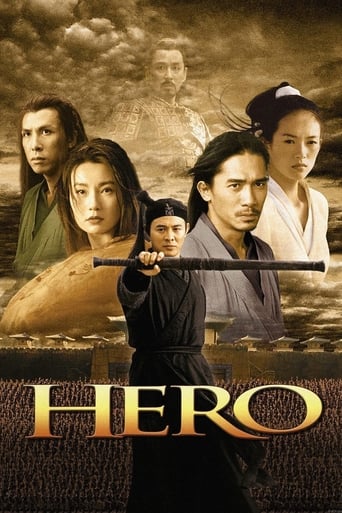
Hero 2002
Hero Is a Film About an Assassin Who Chooses Not to Kill and Calls It Enlightenment
Read the revelation →