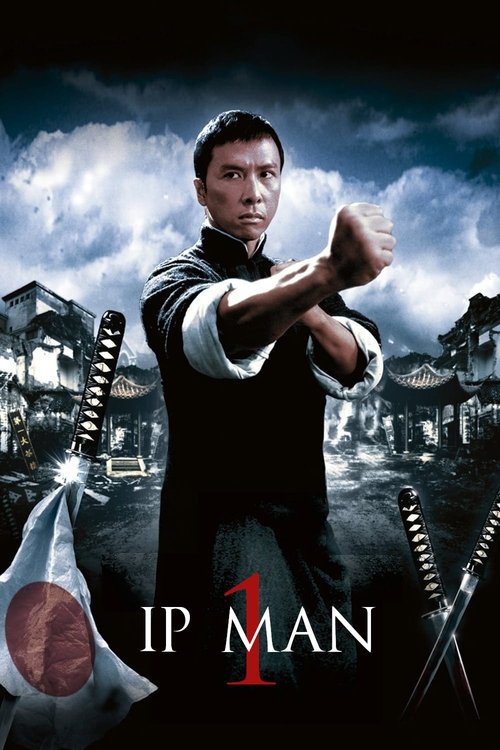
Ip Man
Ip Man Is a Film About a Master Whose Real Discipline Is Refusing to Fight Until Refusing Is No Longer Truthful
Directed by Wilson Yip
The fights are the least of it. The teaching is in every moment Ip Man declines to use what he has.
Foshan, southern China, before and during the Japanese occupation. Ip Man is the most skilled martial artist in a city full of martial artists, and he keeps this fact almost entirely private. He has no school, takes no students, hangs no sign. When challengers come to his home he defeats them quietly and asks them to tell no one. Then Japan invades, his wealth evaporates, and he takes work shoveling coal to feed his family. Only when the occupiers begin killing Chinese men in martial arts matches for bags of rice does Ip Man finally fight in public, taking on ten black belts at once after his friend is shot. The film is remembered for its combat. What it is actually about is restraint: a man of enormous power whose entire spiritual training is knowing when that power must stay sheathed and recognizing the exact moment it no longer can.
Buddhist Reading: Mastery as the Extinction of the Need to Win
Buddhism locates suffering in craving, and the martial world of Foshan is saturated with one particular craving: the hunger to be known as strongest. Master Liu wants the sign above his school; the northern boss Jin wants to humiliate the south; the challengers who come to Ip Man's door want reputation. Ip Man is free of it. He does not need to be seen as the best, which is precisely why he is. His non-attachment to victory is the film's quiet center, the still point around which every ego-driven fighter orbits and loses.
Watch the early duel with Master Jin. Ip Man wins decisively but insists it stay private, protecting the loser's face, refusing to convert his skill into status. That refusal is the practice. The Buddhist teaching is that right action is unattached action, force applied without the self feeding on it. When Ip Man finally fights the Japanese general Miura in public, his equanimity is unchanged. He is not fighting for glory or even for revenge. He fights because the moment demands truthful action, and a mind free of craving can simply do what is needed and stop.
Alchemical Reading: Pressure as the Furnace That Reveals the Gold
Alchemy transforms base matter into gold through heat and pressure applied to a sealed vessel. Ip Man begins the film as gold already, but hidden, unfired, a wealthy gentleman practicing in comfort with nothing testing what he is made of. The Japanese occupation is the furnace. It strips his wealth, his home, his ease, everything external, and reduces him to raw substance: a hungry man with a family and a skill.
Under that heat the gold declares itself. The comfortable master and the coal-shoveling laborer turn out to be the same metal, unchanged by the loss of everything around it. This is the alchemical proof, that the true substance is what remains when the vessel is broken and the fire is at its highest. Ip Man's dignity does not depend on his circumstances, which is the whole definition of gold. The occupation could take his money and his house. It could not touch what he was refined into long before it arrived.
Questions this film answers
What is the deeper meaning of Ip Man?
Foshan, southern China, before and during the Japanese occupation. Ip Man is the most skilled martial artist in a city full of martial artists, and he keeps this fact almost entirely private. He has no school, takes no students, hangs no sign. When challengers come to his home he defeats them quietly and asks them to tell no one. Then Japan invades, his wealth evaporates, and he takes work shoveling coal to feed his family. Only when the occupiers begin killing Chinese men in martial arts matches for bags of rice does Ip Man finally fight in public, taking on ten black belts at once after his friend is shot. The film is remembered for its combat. What it is actually about is restraint: a man of enormous power whose entire spiritual training is knowing when that power must stay sheathed and recognizing the exact moment it no longer can.
What is the hidden symbolism in Ip Man?
Buddhism locates suffering in craving, and the martial world of Foshan is saturated with one particular craving: the hunger to be known as strongest. Master Liu wants the sign above his school; the northern boss Jin wants to humiliate the south; the challengers who come to Ip Man's door want reputation. Ip Man is free of it. He does not need to be seen as the best, which is precisely why he is. His non-attachment to victory is the film's quiet center, the still point around which every ego-driven fighter orbits and loses.
What esoteric traditions appear in Ip Man?
Ip Man draws from Buddhism, Alchemy traditions. The fights are the least of it. The teaching is in every moment Ip Man declines to use what he has.
Is Ip Man worth watching for spiritual seekers?
Ip Man (2008) directed by Wilson Yip is essential viewing for those interested in Buddhism, Alchemy. Ip Man Is a Film About a Master Whose Real Discipline Is Refusing to Fight Until Refusing Is No Longer Truthful. It rewards multiple viewings and contemplation.
Rewatch With New Eyes
Now that you've seen the architecture, experience it again. The same film becomes a different film when you know what to watch for.
This time, watch for:
- See impermanence: what clings, what releases, what remains
- Track the stages: blackening, whitening, reddening — death before rebirth
Links may include affiliate partnerships that support Media Revelations
The Descent Continues
Where this thread leads next.
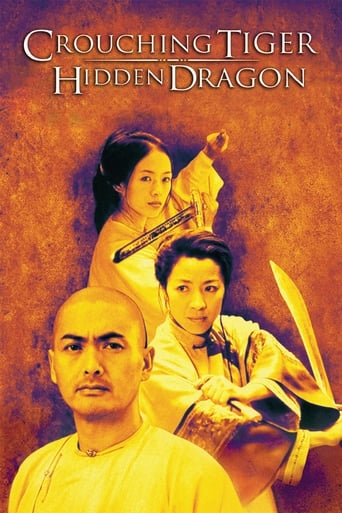
Crouching Tiger, Hidden Dragon 2000
The Martial Artist Who Could Not Surrender
Read the revelation →