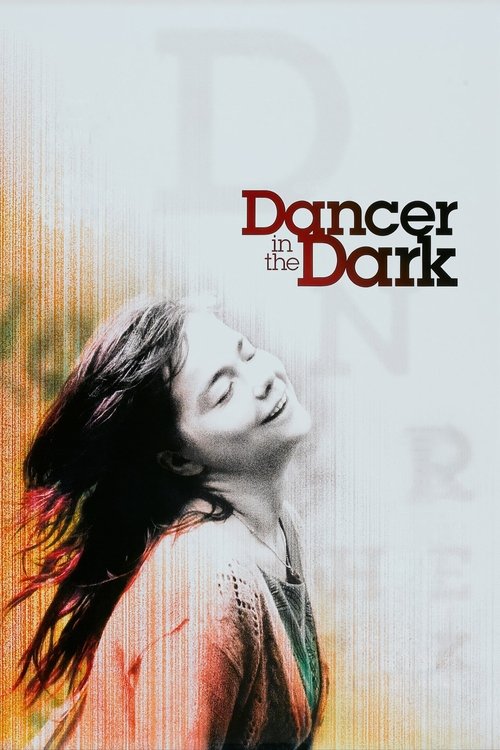
Dancer in the Dark
Dancer in the Dark Is a Passion Play That Refuses to Let You Look Away From the Cross
Directed by Lars von Trier
Selma goes blind so her son will see. Lars von Trier films the oldest sacrifice in the world and dares you to call it a musical.
Selma is a Czech immigrant working a factory line in nowhere America, going blind from a genetic disease she has already passed to her son. Everything she earns goes into a jar for the operation that will save his eyes. When her neighbor Bill steals the jar and forces her to shoot him, she goes to the gallows rather than spend a dollar of the boy's sight on her own defense. The surface reading is that this is a cruel melodrama, misery for its own sake. It is the opposite. Von Trier has built a Passion, and Selma is the figure on the cross who could climb down at any moment and chooses not to. She hides in musical numbers because the world she actually inhabits is unbearable, and the film asks whether her retreat into song is delusion or the only accurate perception in the room.
Gnostic Reading: The Blind Woman Sees, the Sighted World Is the Prison
In Gnostic cosmology the material world is a counterfeit, and the sighted are the truly blind, mistaking the prison for the whole of reality. Selma is losing her physical eyes and gaining something the others lack. She hears the rhythm inside machines. She perceives, in the clank of a factory press and the rattle of a train, a music no sighted person around her can register. The world calls this her failing. It is her only accurate sense.
Her retreat into song at each catastrophe is not escape in the ordinary meaning. It is the pneumatic soul's refusal to accept that the material catastrophe is the final word. When Bill lies dying and the courtroom later condemns her, the sighted authorities act with total conviction inside a reality that Selma has already seen through. She will not defend herself because the trial belongs to the false world, the world of appearances and money and law, and her treasure was never there. Her son's eyes are the one real thing, and she buys them with her body. The Gnostic never wins the argument with the archons. The Gnostic simply stops believing the archons own anything that matters.
Initiatory Reading: The Descent Where the Guide Does Not Return
Every initiation is a descent, a trial, a transformation, a return. Selma completes three of the four. She descends into blindness and poverty, is tested past any reasonable limit, and is transformed into someone the ordinary world cannot comprehend. The fourth stage, the return, she deliberately surrenders so that the initiate she is guiding, her son Gene, can complete his own.
The gallows sequence stages this with unbearable precision. Selma cannot walk the final steps until her friend Kathy whispers that the operation is done, that the boy will see. Only then does she stand and sing "the next-to-last song," breaking off mid-note when the trap drops. The guide gives her life so the initiate can keep his sight. She never learns whether the world remembers her rightly, and it does not matter. The transmission is complete. The one who carries you through the underworld is often the one who cannot follow you out of it.
Questions this film answers
What is the deeper meaning of Dancer in the Dark?
Selma is a Czech immigrant working a factory line in nowhere America, going blind from a genetic disease she has already passed to her son. Everything she earns goes into a jar for the operation that will save his eyes. When her neighbor Bill steals the jar and forces her to shoot him, she goes to the gallows rather than spend a dollar of the boy's sight on her own defense. The surface reading is that this is a cruel melodrama, misery for its own sake. It is the opposite. Von Trier has built a Passion, and Selma is the figure on the cross who could climb down at any moment and chooses not to. She hides in musical numbers because the world she actually inhabits is unbearable, and the film asks whether her retreat into song is delusion or the only accurate perception in the room.
What is the hidden symbolism in Dancer in the Dark?
In Gnostic cosmology the material world is a counterfeit, and the sighted are the truly blind, mistaking the prison for the whole of reality. Selma is losing her physical eyes and gaining something the others lack. She hears the rhythm inside machines. She perceives, in the clank of a factory press and the rattle of a train, a music no sighted person around her can register. The world calls this her failing. It is her only accurate sense.
What esoteric traditions appear in Dancer in the Dark?
Dancer in the Dark draws from Gnosticism, Initiation traditions. Selma goes blind so her son will see. Lars von Trier films the oldest sacrifice in the world and dares you to call it a musical.
Is Dancer in the Dark worth watching for spiritual seekers?
Dancer in the Dark (2000) directed by Lars von Trier is essential viewing for those interested in Gnosticism, Initiation. Dancer in the Dark Is a Passion Play That Refuses to Let You Look Away From the Cross. It rewards multiple viewings and contemplation.
Rewatch With New Eyes
Now that you've seen the architecture, experience it again. The same film becomes a different film when you know what to watch for.
This time, watch for:
- Watch for the false world vs. the real — who is asleep, who awakens
- Mark the threshold: the old self dies, the ordeal transforms, the new self returns
Links may include affiliate partnerships that support Media Revelations
The Descent Continues
Where this thread leads next.
Breaking the Waves 1996
Breaking the Waves Is About a Woman Whose Direct Line to God Makes Every Institution Around Her Call Her Insane
Read the revelation →