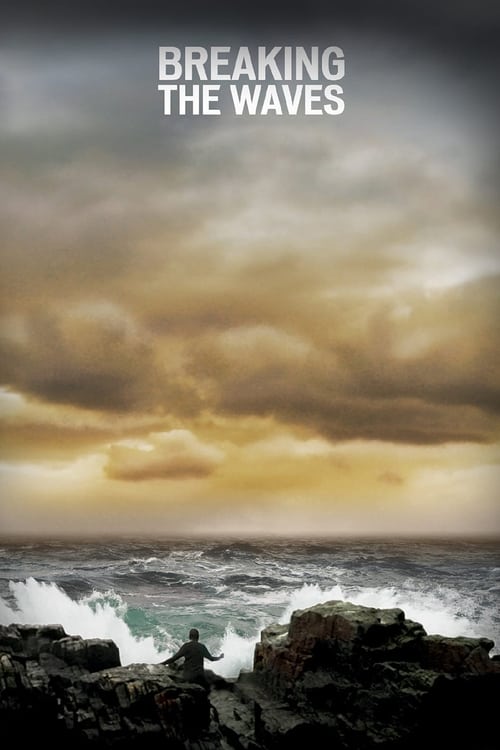
Breaking the Waves
Breaking the Waves Is About a Woman Whose Direct Line to God Makes Every Institution Around Her Call Her Insane
Directed by Lars von Trier
Bess talks to God and answers in His voice. Von Trier films this not as delusion but as the one true channel in a village of dead law.
Lars von Trier structures Breaking the Waves as a collision between a living faith and every dead form built to contain it. Bess McNeill, in a bleak Calvinist community on the Scottish coast where the church has removed its bells and women are forbidden to speak inside it, prays aloud and then answers herself in a stern lower voice she believes is God's. When her husband Jan is paralyzed in an oil-rig accident and asks her to take other men to her bed and describe it to him so that he might stay alive through her, Bess obeys. The village reads this as madness and prostitution and casts her out. The film reads it as a wager of total love against a God she will not stop trusting. Bess is destroyed. Then the bells ring anyway, from the sky, over her burial at sea, and von Trier forces you to decide whether you just watched a delusion or a canonization.
Gnosticism Reading: Bess Carries the Divine Spark the Institution Was Built to Suffocate
Gnosticism divides the world into the dead law of the archons and the living spark of the pneumatic soul that knows God directly, without intermediary. The church elders in Breaking the Waves are the archons made flesh. They control the bell tower, they refuse women a voice, they bury the wicked in unconsecrated ground while pronouncing the dead damned over the grave. Their religion is administration. It has offices and verdicts and no contact whatsoever with the God it claims to serve.
Bess has the contact. Her dialogues with God are the pneumatic's unmediated gnosis, the direct knowing that the institution cannot permit because it makes the institution unnecessary. When she chooses to keep her promise to Jan even as it destroys her body and her standing, she is following an inner authority the archons cannot recognize as anything but sin. The final image confirms which side the film is on: the mourners on the boat hear bells where there is no tower, a sound the material world cannot produce. The living spark is vindicated over the dead law, and the men who condemned her never hear the proof.
Sufism Reading: This Is Fana, the Annihilation of the Self in the Beloved, Told Without Metaphor
In Sufi teaching fana is the dissolving of the ego into the Beloved so complete that the lover ceases to exist as a separate thing. Von Trier tells this story with the metaphor stripped off, made physically literal and unbearable. Bess loves Jan past the point where any self-protecting boundary remains. She does not calibrate. She does not preserve a portion of herself against the demand. When Jan asks her to give her body to strangers so that he might live, she treats his request as the voice of the Beloved and annihilates every last defense of the ordinary self in answering it.
The Sufi poets sang of the moth flying into the flame, and the film gives you the flame in full. Bess returns to the ship of men she knows will kill her, and does it deliberately, because she has calculated that her death will heal Jan, and love has left her no self with which to refuse. When Jan walks again at the film's end, restored past all medical explanation, von Trier suggests the calculation was correct. The moth reached the flame. What burned away was Bess, and what she loved is walking.
Questions this film answers
What is the deeper meaning of Breaking the Waves?
Lars von Trier structures Breaking the Waves as a collision between a living faith and every dead form built to contain it. Bess McNeill, in a bleak Calvinist community on the Scottish coast where the church has removed its bells and women are forbidden to speak inside it, prays aloud and then answers herself in a stern lower voice she believes is God's. When her husband Jan is paralyzed in an oil-rig accident and asks her to take other men to her bed and describe it to him so that he might stay alive through her, Bess obeys. The village reads this as madness and prostitution and casts her out. The film reads it as a wager of total love against a God she will not stop trusting. Bess is destroyed. Then the bells ring anyway, from the sky, over her burial at sea, and von Trier forces you to decide whether you just watched a delusion or a canonization.
What is the hidden symbolism in Breaking the Waves?
Gnosticism divides the world into the dead law of the archons and the living spark of the pneumatic soul that knows God directly, without intermediary. The church elders in Breaking the Waves are the archons made flesh. They control the bell tower, they refuse women a voice, they bury the wicked in unconsecrated ground while pronouncing the dead damned over the grave. Their religion is administration. It has offices and verdicts and no contact whatsoever with the God it claims to serve.
What esoteric traditions appear in Breaking the Waves?
Breaking the Waves draws from Gnosticism, Sufism traditions. Bess talks to God and answers in His voice. Von Trier films this not as delusion but as the one true channel in a village of dead law.
Is Breaking the Waves worth watching for spiritual seekers?
Breaking the Waves (1996) directed by Lars von Trier is essential viewing for those interested in Gnosticism, Sufism. Breaking the Waves Is About a Woman Whose Direct Line to God Makes Every Institution Around Her Call Her Insane. It rewards multiple viewings and contemplation.
Rewatch With New Eyes
Now that you've seen the architecture, experience it again. The same film becomes a different film when you know what to watch for.
This time, watch for:
- Watch for the false world vs. the real — who is asleep, who awakens
- Feel the love that transforms: what the heart sees that the mind cannot
Links may include affiliate partnerships that support Media Revelations
The Descent Continues
Where this thread leads next.

Dancer in the Dark 2000
Dancer in the Dark Is a Passion Play That Refuses to Let You Look Away From the Cross
Read the revelation →