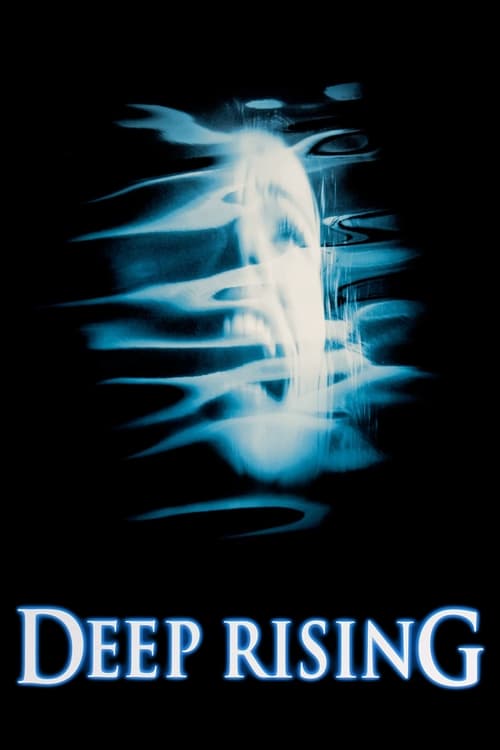
Deep Rising
Deep Rising Is What Happens When You Loot the Belly of the Deep and It Digests You Back
Directed by Stephen Sommers
A creature feature about a luxury liner eaten from below. Stephen Sommers built a monster movie, but the monster is older than any of its models.
Deep Rising sells itself as a schlock hybrid: mercenaries, a heist, a boat, a sea beast. The plot is thin on purpose. A crew of hijackers boards the newly launched ocean liner Argonautica to rob its wealthy passengers, and finds the ship already emptied by something that came up through the hull. That something is not one creature but many mouths on one body: long tentacles that drag victims down separate corridors and dissolve them alive, then reveal themselves at the end to be the feeding arms of a single vast organism. This is the film's actual subject. The tentacles are not a monster attacking a ship. They are the digestive system of the ocean, and the ship is the meal. Everything human on board, the greed, the mutiny, the last-job desperation, is being processed at a scale that does not notice it.
Shamanic Reading: Swallowed by the Water, Delivered Back Skinless
Shamanic initiation across cultures runs through the same terrible door: the initiate is swallowed by a water beast, dismembered inside it, and returned to the surface remade. Jonah in the fish. The Inuit shaman consumed by the sea below the ice. Deep Rising literalizes the dismemberment with grotesque precision. The tentacles do not kill cleanly. They take a person down into the dark and return only a half-digested remnant, the flesh partly gone, the man still conscious enough to beg. That is the shamanic dismemberment shown from the outside, without the transmission that redeems it.
Watch what the ocean liner itself is named: Argonautica, the voyage of the Argonauts, the archetypal descent-quest for a treasure guarded by a monster at the edge of the known world. Sommers names his boat after the oldest sea-initiation myth and then floods it. The one crewman who survives, Finnegan, survives not by conquering the beast but by refusing its logic. He does not come to loot. When the ship is finally destroyed and the survivors wash up on an island, only to find the creature waiting on the beach, the film admits its own teaching: you do not defeat the deep by reaching land. The deep follows you up. Initiation does not end when you climb out of the water.
Jungian Reading: The Unconscious Devours What Comes to Steal From It
Jung named the ocean the standard image of the unconscious, and the sea monster the specific image of the devouring aspect that swallows the ego whole. Every character who boards the Argonautica comes to take: money, jewels, the score that ends the working life. They descend into the belly of a ship, into corridors below the waterline, carrying the conscious mind's one demand, more. The creature answers that demand by eating them.
The mercenary leader Hanover keeps insisting the mission is under control right up to the moment a tentacle pulls him through a wall. His control is the ego's illusion that it can raid the depths and leave unchanged. Finnegan lives because he stops calculating profit and starts moving with the ship's own currents, letting it flood, riding the water instead of fighting it. The unconscious does not punish the greedy for being immoral. It digests them for being small.
Questions this film answers
What is the deeper meaning of Deep Rising?
Deep Rising sells itself as a schlock hybrid: mercenaries, a heist, a boat, a sea beast. The plot is thin on purpose. A crew of hijackers boards the newly launched ocean liner Argonautica to rob its wealthy passengers, and finds the ship already emptied by something that came up through the hull. That something is not one creature but many mouths on one body: long tentacles that drag victims down separate corridors and dissolve them alive, then reveal themselves at the end to be the feeding arms of a single vast organism. This is the film's actual subject. The tentacles are not a monster attacking a ship. They are the digestive system of the ocean, and the ship is the meal. Everything human on board, the greed, the mutiny, the last-job desperation, is being processed at a scale that does not notice it.
What is the hidden symbolism in Deep Rising?
Shamanic initiation across cultures runs through the same terrible door: the initiate is swallowed by a water beast, dismembered inside it, and returned to the surface remade. Jonah in the fish. The Inuit shaman consumed by the sea below the ice. Deep Rising literalizes the dismemberment with grotesque precision. The tentacles do not kill cleanly. They take a person down into the dark and return only a half-digested remnant, the flesh partly gone, the man still conscious enough to beg. That is the shamanic dismemberment shown from the outside, without the transmission that redeems it.
What esoteric traditions appear in Deep Rising?
Deep Rising draws from Shamanism, Jungian traditions. A creature feature about a luxury liner eaten from below. Stephen Sommers built a monster movie, but the monster is older than any of its models.
Is Deep Rising worth watching for spiritual seekers?
Deep Rising (1998) directed by Stephen Sommers is essential viewing for those interested in Shamanism, Jungian. Deep Rising Is What Happens When You Loot the Belly of the Deep and It Digests You Back. It rewards multiple viewings and contemplation.
Rewatch With New Eyes
Now that you've seen the architecture, experience it again. The same film becomes a different film when you know what to watch for.
This time, watch for:
- Follow the descent: what dies, what guides, what returns transformed
- Meet the shadow: what is rejected, projected, and finally integrated
Links may include affiliate partnerships that support Media Revelations