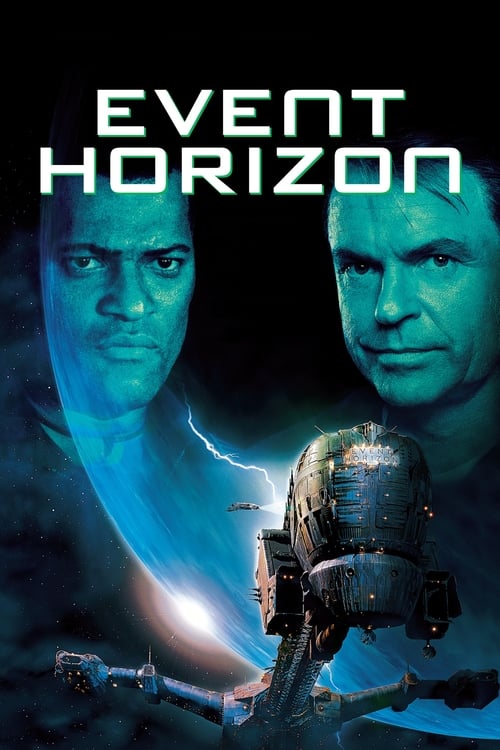
Event Horizon
The Ship That Found Hell and Brought It Back
Directed by Paul W. S. Anderson
The Event Horizon didn't malfunction. It worked. The ship's gravity drive punched a hole through spacetime and went somewhere — a dimension of pure chaos and suffering. It came back changed. The ship is possessed. Hell is not a metaphor. It is a location. And we built a door to it.
Event Horizon is the only major studio film to treat Hell as a literal place that technology can access. The ship's experimental gravity drive — designed to fold space for faster-than-light travel — worked. It folded space. But space folded into somewhere. The dimension the Event Horizon entered was not empty. It was populated. And what populated it came back with the ship. The film is often dismissed as dumb sci-fi horror. It is actually rigorous Gnostic cosmology. Beyond the material universe lies something else — something older, something that hates, something that wants in. The gravity drive was an invitation. The Event Horizon accepted. What returned is a ship possessed by a dimension that should never have been contacted. Dr. Weir, the drive's creator, becomes the film's prophet of Hell. His visions show him what the dimension wants. He becomes its apostle, preaching the gospel of chaos to the rescue crew. 'Where we're going, we won't need eyes.' The line is absurd. It is also true. The dimension beyond does not operate by light. It operates by torment.
The Surface
In 2047, the experimental starship Event Horizon reappears near Neptune after vanishing seven years earlier. A rescue crew is sent to investigate. Dr. Weir, the ship's designer, accompanies them to understand what happened to his creation.
The ship is empty but damaged. The logs are corrupted. What fragments they recover show the crew going mad, killing each other, performing acts of self-mutilation. Something happened aboard the Event Horizon. The ship itself feels wrong — corridors that seem to shift, sounds that should not exist.
Each crew member begins experiencing hallucinations — visions of their deepest guilt and trauma. The ship is reading them, using their pain against them. Weir succumbs first, becoming the herald of whatever the ship now serves. The rescue becomes a survival horror as the dimension that possesses the ship tries to prevent anyone from leaving.
The Door That Should Not Open
The gravity drive is the film's theological engine. It creates a temporary black hole, folds space, allows instant travel to any point in the universe. The science is plausible enough to suspend disbelief. The metaphysics is what matters.
The drive opened a door. Doors go both ways. The Event Horizon went somewhere — and something from that somewhere came back with it. The ship is no longer an object. It is a vessel in both senses: a vehicle and a container for something else.
This is the Gnostic cosmos literalized. Beyond the material realm — the kenoma, the emptiness where humans live — lies something else. The Gnostics called it the pleroma, the fullness, but their texts also described hostile regions ruled by Archons. The Event Horizon found the hostile region.
The film never names this place Heaven or Hell. It shows what it shows: a dimension of pure suffering, where the crew tortured each other for eternity, where pain is the operating principle. The label does not matter. The experience is undeniable.
Dr. Weir and the Prophet of Chaos
Weir designed the gravity drive. His wife killed herself while he was working on it. His guilt has haunted him for years. The ship finds this guilt and uses it. His dead wife appears to him, beckoning. He is the weakest point in the crew, and the dimension breaks him first.
Weir's transformation is the film's most disturbing arc. The brilliant scientist becomes the apostle of something that hates. His eyes are torn out — he does not need them where he is going. His flesh is modified into something that looks tortured. He preaches Hell's gospel.
'Hell is just a word. The reality is much, much worse.' Weir has seen the dimension. He knows what it wants. It wants everyone. It wants the ship to return to Earth and open the door wider. Weir will help it because Weir is no longer Weir.
Sam Neill's performance escalates from grief to ecstasy. By the end, Weir is not suffering. He is illuminated. He has achieved a kind of gnosis — he knows what lies beyond. The knowledge has destroyed him. He smiles as he kills.
The Ship as Possessed Body
The Event Horizon is not a ship with something aboard it. The Event Horizon is possessed — the ship itself has been transformed into a vessel for the dimension it visited. The corridors are its body. The gravity drive is its heart. The crew members are its food.
This is demonic possession applied to architecture. The ship has become the haunted house in space. Its walls show visions. Its systems malfunction to prevent escape. Its geometry does not quite make sense. It wants to trap. It wants to feed.
The crew's hallucinations are not random. Each person sees their deepest wound. The dimension is reading them through the ship, finding the trauma that will break them. It is personalizing the torture. The ship has become an instrument of targeted suffering.
When the rescue crew tries to escape, the ship fights back. It is alive now — or rather, it is hosting something alive. The dimension has no body of its own. It uses bodies it can get. The Event Horizon is the body it chose.
Where We're Going
The film's most famous line — 'Where we're going, we won't need eyes to see' — is Weir's invitation to Hell. It sounds absurd. It is literally true. The dimension does not operate by light. Sight is irrelevant there. What matters is pain.
The line is also theological. Gnosis in the positive sense is seeing — perceiving the truth behind appearances. Anti-gnosis is blindness that becomes a different mode of perception. Weir tears out his eyes because the dimension has given him a different way of knowing.
The ending is deliberately ambiguous. Some crew members escape — but do they? The final shot suggests the dimension is still with them. The door was opened. It cannot be entirely closed. What touched them will keep touching them.
This is Hell as infection. You do not visit and leave clean. You do not close the door behind you. The dimension is now part of reality because someone built a machine that contacted it. The technology was not the error. The technology worked. Working was the error.
The Transmission
Event Horizon failed at the box office and was dismissed by critics. It has since become a cult classic — one of the few sci-fi horror films that treats its metaphysics seriously. The ship went to Hell. Not metaphorically. Literally.
The film's studio demanded cuts, and significant footage was lost. The original version reportedly showed more of what happened to the crew — imagery so disturbing that test audiences could not handle it. What remains is suggestion, which may be more effective.
The transmission is bleak: some doors should not be opened. Not because of what might enter, but because of where they lead. The Event Horizon's crew did not invite demons. They went to the demons' home. The dimension did not invade. It was visited.
Human curiosity built the gravity drive. Human ambition launched the ship. Human ingenuity opened the door. What came back was not human failure. It was human success — the success of building a machine that worked exactly as designed, and discovering that working meant contact with something that should never have been contacted.
Questions this film answers
What is the deeper meaning of Event Horizon?
Event Horizon is the only major studio film to treat Hell as a literal place that technology can access. The ship's experimental gravity drive — designed to fold space for faster-than-light travel — worked. It folded space. But space folded into somewhere. The dimension the Event Horizon entered was not empty. It was populated. And what populated it came back with the ship. The film is often dismissed as dumb sci-fi horror. It is actually rigorous Gnostic cosmology. Beyond the material universe lies something else — something older, something that hates, something that wants in. The gravity drive was an invitation. The Event Horizon accepted. What returned is a ship possessed by a dimension that should never have been contacted. Dr. Weir, the drive's creator, becomes the film's prophet of Hell. His visions show him what the dimension wants. He becomes its apostle, preaching the gospel of chaos to the rescue crew. 'Where we're going, we won't need eyes.' The line is absurd. It is also true. The dimension beyond does not operate by light. It operates by torment.
What is the hidden symbolism in Event Horizon?
In 2047, the experimental starship Event Horizon reappears near Neptune after vanishing seven years earlier. A rescue crew is sent to investigate. Dr. Weir, the ship's designer, accompanies them to understand what happened to his creation.
What esoteric traditions appear in Event Horizon?
Event Horizon draws from Gnosticism traditions. The Event Horizon didn't malfunction. It worked. The ship's gravity drive punched a hole through spacetime and went somewhere — a dimension of pure chaos and suffering. It came back changed. The ship is possessed. Hell is not a metaphor. It is a location. And we built a door to it.
What does Event Horizon teach about where we're going?
You do not visit and leave clean. The dimension is now part of reality because someone built a machine that contacted it. The film's most famous line — 'Where we're going, we won't need eyes to see' — is Weir's invitation to Hell. It sounds absurd. It is literally true. The dimension does not operate by light. Sight is irrelevant there. What matters is pain.
Is Event Horizon worth watching for spiritual seekers?
Event Horizon (1997) directed by Paul W. S. Anderson is essential viewing for those interested in Gnosticism, Hell, Cosmic Horror. The Ship That Found Hell and Brought It Back. It rewards multiple viewings and contemplation.
Rewatch With New Eyes
Now that you've seen the architecture, experience it again. The same film becomes a different film when you know what to watch for.
This time, watch for:
- Watch for the false world vs. the real — who is asleep, who awakens
Links may include affiliate partnerships that support Media Revelations
The Descent Continues
Where this thread leads next.
The Void 2016
The Void Is What a Hospital Becomes When a Man Refuses to Let His Daughter Stay Dead
Read the revelation →