Doctor Strange
The Materialist Who Met His Soul (And Couldn't Go Back)
Directed by Scott Derrickson
Strange wanted his hands back. The Ancient One gave him something infinitely larger — direct experience of dimensions his worldview said couldn't exist. Once you've been pushed out of your body, you can't pretend there's no such thing as spirit. The film is an initiation manual disguised as a superhero origin story.
Doctor Strange is the most accurate depiction of spiritual awakening in the Marvel Cinematic Universe — and possibly in any blockbuster franchise. Stephen Strange begins as a materialist absolutist: 'There is no such thing as spirit. We are made of matter and nothing more.' The Ancient One doesn't argue with him. She pushes his astral form out of his body and lets direct experience do what argument cannot. After that, Strange can't return to his old worldview. He came for healing. He received initiation.
The Surface
Doctor Strange appears to be a standard hero's journey: arrogant man loses everything, finds humility, gains power, saves the world. But the film sneaks something real into the superhero formula. The techniques shown — astral projection, the manipulation of dimensional energies, the opening of the third eye — are not invented for the movie. They are practices taught in mystery schools for millennia.
Strange's hands are destroyed in a car accident. His identity was his surgical skill. Without it, he has no self. This is the prerequisite for initiation — the dissolution of the ego structure that thought it knew who it was. Strange doesn't choose the spiritual path. He is broken into it.
The film was shot partly in Kathmandu, at real temples. Cumberbatch described the location as 'absolutely vital' because the story requires 'a profound gearshift into a spiritual and otherworldly dimension.' The filmmakers understood that setting matters. Spiritual practice has geography.
The Ancient One's Method
The Ancient One tells Strange: 'You're a man looking at the world through a keyhole. You've spent your whole life trying to widen that keyhole — to see more, to know more. And now, hearing that it can be widened in ways you can't imagine, you reject the possibility.'
Strange rejects it because his worldview cannot accommodate it. 'I do not believe in fairy tales about chakras or energy or the power of belief. There is no such thing as spirit.' This is the modern materialist position, stated clearly. The Ancient One doesn't debate. She touches his forehead and pushes his astral form out of his physical body.
The experience is overwhelming. Strange falls through dimensions, sees his hands multiply into infinity, encounters beings and geometries that have no place in his scientific framework. When he returns, he asks if there was something in the tea. 'Just tea,' she says. 'With a little honey.'
This is how genuine initiation works. Not through argument or belief but through direct experience. Once you've been outside your body, 'there is no such thing as spirit' becomes absurd. The Ancient One doesn't need Strange to believe. She needs him to know.
Opening the Third Eye
When the Ancient One touches Strange's forehead and says 'Open your eye,' she is activating the ajna chakra — the third eye, the seat of inner vision. This isn't metaphor within the film's logic. Strange literally gains the ability to perceive dimensions that were always there but invisible to ordinary sight.
The multiverse Strange is shown — 'worlds without end, some benevolent and life-giving, others filled with malice and hunger' — corresponds to the planes of existence described in esoteric teaching. The astral plane, the causal plane, dimensions of light and dimensions of darkness. The Ancient One calls them 'powers older than time, ravenous and waiting.'
Strange's scientific mind wants to reduce this to neurology. 'What did you just do to me?' But the experience cannot be reduced. The astral dimension is 'a place where the soul exists apart from the body.' The film states this plainly. The soul is real. The body is a vehicle. Strange now knows this not as belief but as fact.
The rest of the film follows Strange's training — learning to access these dimensions deliberately, to draw energy from them, to use that energy for protection and combat. The 'magic' is technology from a higher dimension. The 'spells' are programs that shape reality. But underneath the superhero trappings, the core teaching remains: consciousness is not produced by matter. Consciousness uses matter.
Letting Go
Strange cannot access the dimensional energies until he lets go. Mordo tells him: 'Forget everything you think you know.' But Strange is attached to his self-image as a brilliant rational man. This attachment is an energy blockage.
The Ancient One's solution is extreme: she opens a portal to a Himalayan peak and pushes Strange through. He is freezing. He will die without creating a portal back. This is the test of life and death that appears in every initiatory tradition — the moment where the ego must surrender or the body will perish.
Strange succeeds not through effort but through release. He stops trying to force the portal open with his will and allows the dimensional energy to flow through him. This is the shift from doing to being, from control to surrender, from ego to Self.
The film connects this explicitly to Buddhist teaching. Wong quotes: 'Death is what gives life meaning.' The Ancient One, dying, stretches a moment into eternity 'just so I can watch the snow.' Time is not fixed. Consciousness is not bound by the body. These are teachings Strange learns not from books but from direct encounter.
The Psychic Warrior
Wong explains the role of the sorcerers: 'While heroes like the Avengers protect the world from physical dangers, we safeguard it against more mystical threats.' This is the concept of the Psychic Warrior — one who fights on the subtle planes to protect humanity from forces most people cannot perceive.
Every spiritual tradition has this figure. The shaman who battles spirits. The exorcist who casts out demons. The yogi who maintains the cosmic balance. Doctor Strange places this archetype inside a superhero franchise, giving millions of viewers their first introduction to the idea that there are dimensions of reality beyond the physical and beings who work in those dimensions on humanity's behalf.
Strange came to Kamar-Taj to heal his hands. He leaves as an Earth Protector. This is the twist every genuine seeker experiences: you go looking for something small (healing, answers, relief from suffering) and you receive something infinitely larger (purpose, initiation, responsibility for others). Strange wanted to be a surgeon again. He became a guardian of reality itself.
The Transmission
Doctor Strange transmits through the back door of entertainment what mystics have taught for millennia: the material world is not all there is. Consciousness extends beyond the body. Direct experience trumps belief. The ego must die for the larger self to live.
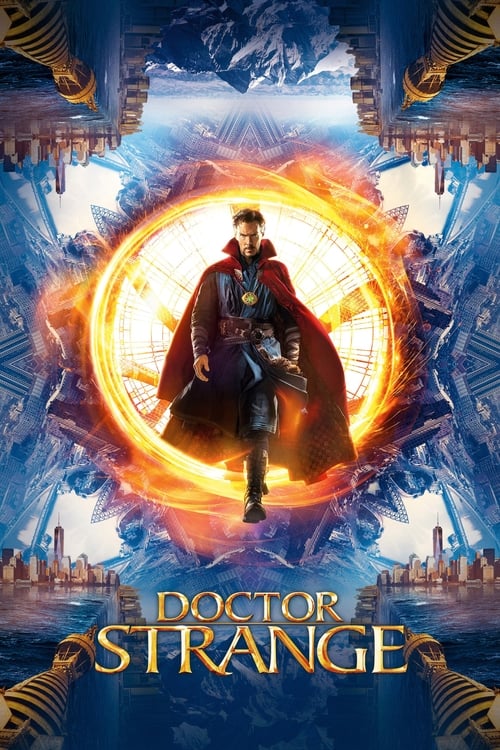
The film's visual effects — the folding cities, the fractal dimensions, the kaleidoscopic realms — are not decoration. They are attempts to depict what practitioners actually see when the third eye opens. The images won't mean much to someone who has never experienced expanded states. To someone who has, they are recognition.
Strange ends the film with a new worldview and a new purpose. The materialist absolutism is gone. But he is not a believer now. He is a knower. He has been outside his body. He has seen the dark dimension and its hunger. He has died and been resurrected. Faith is no longer required. Experience has made faith irrelevant.
The Ancient One's final teaching: 'It's not about you.' Strange wanted to heal his hands so he could return to being the best surgeon. The path gave him something else — the understanding that his gifts exist to serve others. This is the completion of initiation. The ego dies. Service remains.
Questions this film answers
What is the deeper meaning of Doctor Strange?
Doctor Strange is the most accurate depiction of spiritual awakening in the Marvel Cinematic Universe — and possibly in any blockbuster franchise. Stephen Strange begins as a materialist absolutist: 'There is no such thing as spirit. We are made of matter and nothing more.' The Ancient One doesn't argue with him. She pushes his astral form out of his body and lets direct experience do what argument cannot. After that, Strange can't return to his old worldview. He came for healing. He received initiation.
What is the hidden symbolism in Doctor Strange?
Doctor Strange appears to be a standard hero's journey: arrogant man loses everything, finds humility, gains power, saves the world. But the film sneaks something real into the superhero formula. The techniques shown — astral projection, the manipulation of dimensional energies, the opening of the third eye — are not invented for the movie. They are practices taught in mystery schools for millennia.
What esoteric traditions appear in Doctor Strange?
Doctor Strange draws from Initiation, Buddhism traditions. Strange wanted his hands back. The Ancient One gave him something infinitely larger — direct experience of dimensions his worldview said couldn't exist. Once you've been pushed out of your body, you can't pretend there's no such thing as spirit. The film is an initiation manual disguised as a superhero origin story.
What does Doctor Strange teach about the ancient one's method?
The Ancient One doesn't need Strange to believe. She needs him to know. Direct experience does what argument cannot. The Ancient One tells Strange: 'You're a man looking at the world through a keyhole. You've spent your whole life trying to widen that keyhole — to see more, to know more. And now, hearing that it can be widened in ways you can't imagine, you reject the possibility.'
What does Doctor Strange teach about opening the third eye?
The astral dimension is 'a place where the soul exists apart from the body.' The film states this plainly. The soul is real. When the Ancient One touches Strange's forehead and says 'Open your eye,' she is activating the ajna chakra — the third eye, the seat of inner vision. This isn't metaphor within the film's logic. Strange literally gains the ability to perceive dimensions that were always there but invisible to ordinary sight.
What does Doctor Strange teach about letting go?
Strange succeeds not through effort but through release. He stops trying to force it and allows the energy to flow through him. Strange cannot access the dimensional energies until he lets go. Mordo tells him: 'Forget everything you think you know.' But Strange is attached to his self-image as a brilliant rational man. This attachment is an energy blockage.
Is Doctor Strange worth watching for spiritual seekers?
Doctor Strange (2016) directed by Scott Derrickson is essential viewing for those interested in Initiation, Astral Projection, Materialism vs Spirit. The Materialist Who Met His Soul (And Couldn't Go Back). It rewards multiple viewings and contemplation.
Rewatch With New Eyes
Now that you've seen the architecture, experience it again. The same film becomes a different film when you know what to watch for.
This time, watch for:
- Mark the threshold: the old self dies, the ordeal transforms, the new self returns
- See impermanence: what clings, what releases, what remains
Links may include affiliate partnerships that support Media Revelations
The Descent Continues
Where this thread leads next.
The Matrix 1999
The Gnostic Gospel of the Machine Age
Read the revelation →