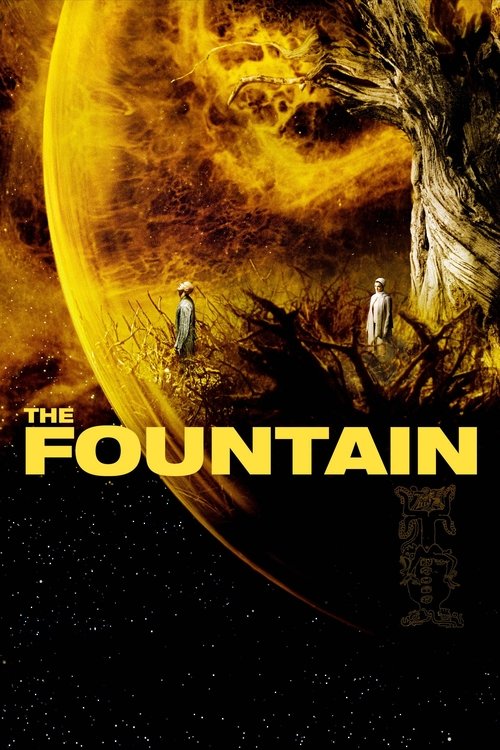
The Fountain
The Tree of Life and the Death of Death
Directed by Darren Aronofsky
Three timelines united by the same soul learning to accept mortality. The tree is the Kabbalistic axis mundi. The nebula is Xibalba — the Mayan underworld. Death is the road to awe, not the end of it.
The Fountain is a film about one soul across three lifetimes learning the same lesson: death is not the enemy. It is the road. Tomas the conquistador fights to bring his queen the tree of immortality. Tommy the scientist fights to cure his wife's cancer. Tom the astronaut travels through the nebula Xibalba toward rebirth. They are the same man unable to accept what every spiritual tradition has tried to teach: that resisting death is the wound, not its solution. Aronofsky's claim is alchemical and Kabbalistic: the work is to die well. The Fountain is the cinematic ritual for the man who has not yet been able to.
The Surface
Three timelines intercut: 16th-century conquistador Tomas seeking the tree of life for his queen Isabella; present-day scientist Tommy researching a cure for his wife Izzi's brain tumor; far-future astronaut Tom traveling toward a dying star with a tree that contains his wife's spirit. Izzi writes a book in the present timeline that contains the conquistador story. The astronaut is meditating on a memory or completing a journey.
The film was famously mauled at release. Audiences could not follow the structure. Critics were divided. Aronofsky's original version was canceled after Brad Pitt dropped out. The released film is smaller, more intimate, almost claustrophobic for an epic about three timelines. This works in its favor. The interior scale matches the interior subject.
Watch it as one man's confrontation with mortality in three registers. The conquistador is the masculine response — conquest, sword, refuse the limit. The scientist is the modern response — research, technology, postpone the limit. The astronaut is the spiritual response — meditation, surrender, accept the limit. Aronofsky is showing that only the third path actually arrives.
Death as the Road, Not the End
Izzi tells Tommy the story of the Maya conception of death: 'They believed that from his body would grow new life, that he would still live in the tree, his soul in its fruit. Death is the road to awe.' This is the film's thesis spoken plainly. It does not work on Tommy. He still wants to save her. He cannot accept that her death might be anything other than failure.
Most spiritual traditions teach that the fear of death is the wound from which all other suffering radiates. Buddhism in particular is direct: the practice is to die before you die, so that when you actually die it does not surprise you. The teaching is universal across mystery traditions because the lesson is structural. Whatever in you resists death cannot fully live. The resistance occupies the space life would have used.
Tommy is the scientist who has not heard this. He is brilliant. He is dedicated. He is trying to save his wife. He is also missing her death. He is in the lab while she is dying. The film is not condemning his work. It is showing what it costs. Each hour spent fighting death is an hour not spent being present with the dying. The fight he is conducting is partly a defense against the grief that arrives if he stops fighting.
This is the masculine pattern the film is diagnosing. The will to save can be a sophisticated form of refusal to grieve. Tommy needs to learn what Izzi has already learned: the cure is not the cure. The cure is presence with what cannot be cured.
The Tree as Axis Mundi
The Tree of Life appears in Kabbalah, in Maya cosmology, in Norse Yggdrasil, in Genesis. It is the universal symbol of the axis that connects realms. The tree is the structure along which consciousness ascends and descends. To eat from the tree is to participate in the substance of reality at every level.
Aronofsky's tree is the conduit between the three timelines. The conquistador seeks it. The scientist works with a sample of it. The astronaut travels with it. The tree is the same tree across all three. It is also Izzi. It is also the consciousness that learns the lesson across lifetimes.
The Kabbalistic Tree has ten sephirot. The journey of the soul is up the tree, from Malkuth (kingdom, embodiment) to Keter (crown, source). Each sephirah is a station. Each station has its lesson. The Fountain is showing the journey in compressed form — three lifetimes, three stations, the same soul learning what cannot be learned in less than three iterations.
When the astronaut arrives at the dying star Xibalba, the tree dies and explodes. The death of the tree is also the death of Izzi and the rebirth of both. The film is showing what every esoteric tradition has held: the death of the body is the next station on the ascent. The work is to die in a way that completes the iteration. The work is not to skip the station.
Xibalba and the Underworld
Xibalba in Maya cosmology is the underworld — the realm of the dead, ruled by the death gods. The hero twins in the Popol Vuh descend into Xibalba and play games with the death gods. They die and are reborn. They become the sun and moon. This is the structural template.
Aronofsky transposes Xibalba into deep space. The dying nebula is the underworld. The astronaut travels there. He passes through death. He is reborn. The structure is shamanic across cultures: descent, dissolution, reconstitution, return. Every initiation system teaches some version of this journey. The Fountain is making the case that the cancer-suffering of the present timeline is the entry to the same journey.
Tommy does not go willingly into Xibalba. He resists. He fights the death the entire film. Only at the end, in the astronaut timeline, does he choose to enter. He says: 'I'm going to die.' He sits in lotus. He surrenders. The star explodes. He is reborn.
This is the choice the film has been driving toward. The hero twins did not avoid Xibalba. They walked in. The astronaut walks in. Tommy could have walked in years earlier. The film is showing what choosing differently looks like, in the timeline where the choice was finally made.
The Transmission
The Fountain is one of the most maligned and most loved films of its era. The reason is the same. It refuses to be a film about death-as-tragedy. It insists on being a film about death-as-completion. Audiences trained on the tragic register find the film embarrassing in its earnestness. Audiences who have lost someone find the film one of the few that meets the situation honestly.
Aronofsky shot the climax with practical effects — chemical reactions in petri dishes filmed at microscopic scale, then composited as nebulae. The dying star is real chemistry. The film's argument is that the same processes happen at every scale: dissolution and reformation, the death of one form into the conditions for the next. Whether or not this is consoling depends on what you are looking at.
Tommy finishes the film by writing the last chapter of Izzi's book. The book had stopped because she died. He picks up the pen and writes the ending. This is what mourning is. It is finishing the book the dying did not finish. The cure was always to take up the work of the one who has died, not to keep them from dying. The film teaches this in the only way the lesson is teachable: by inducing the grief and then showing what the grief becomes when it is allowed to complete.
Questions this film answers
What is the deeper meaning of The Fountain?
The Fountain is a film about one soul across three lifetimes learning the same lesson: death is not the enemy. It is the road. Tomas the conquistador fights to bring his queen the tree of immortality. Tommy the scientist fights to cure his wife's cancer. Tom the astronaut travels through the nebula Xibalba toward rebirth. They are the same man unable to accept what every spiritual tradition has tried to teach: that resisting death is the wound, not its solution. Aronofsky's claim is alchemical and Kabbalistic: the work is to die well. The Fountain is the cinematic ritual for the man who has not yet been able to.
What is the hidden symbolism in The Fountain?
Three timelines intercut: 16th-century conquistador Tomas seeking the tree of life for his queen Isabella; present-day scientist Tommy researching a cure for his wife Izzi's brain tumor; far-future astronaut Tom traveling toward a dying star with a tree that contains his wife's spirit. Izzi writes a book in the present timeline that contains the conquistador story. The astronaut is meditating on a memory or completing a journey.
What esoteric traditions appear in The Fountain?
The Fountain draws from Kabbalah, Initiation, Buddhism, Shamanism traditions. Three timelines united by the same soul learning to accept mortality. The tree is the Kabbalistic axis mundi. The nebula is Xibalba — the Mayan underworld. Death is the road to awe, not the end of it.
What does The Fountain teach about the tree as axis mundi?
The death of the body is the next station on the ascent. The work is to die in a way that completes the iteration. The Tree of Life appears in Kabbalah, in Maya cosmology, in Norse Yggdrasil, in Genesis. It is the universal symbol of the axis that connects realms. The tree is the structure along which consciousness ascends and descends. To eat from the tree is to participate in the substance of reality at every level.
Is The Fountain worth watching for spiritual seekers?
The Fountain (2006) directed by Darren Aronofsky is essential viewing for those interested in Kabbalah, Tree of Life, Mortality. The Tree of Life and the Death of Death. It rewards multiple viewings and contemplation.
Rewatch With New Eyes
Now that you've seen the architecture, experience it again. The same film becomes a different film when you know what to watch for.
This time, watch for:
- Notice the vessels: what contains, what shatters, what repairs
- Mark the threshold: the old self dies, the ordeal transforms, the new self returns
- See impermanence: what clings, what releases, what remains
Links may include affiliate partnerships that support Media Revelations
The Descent Continues
Where this thread leads next.
The Tree of Life 2011
Nature, Grace, and the Wound of Incarnation
Read the revelation →