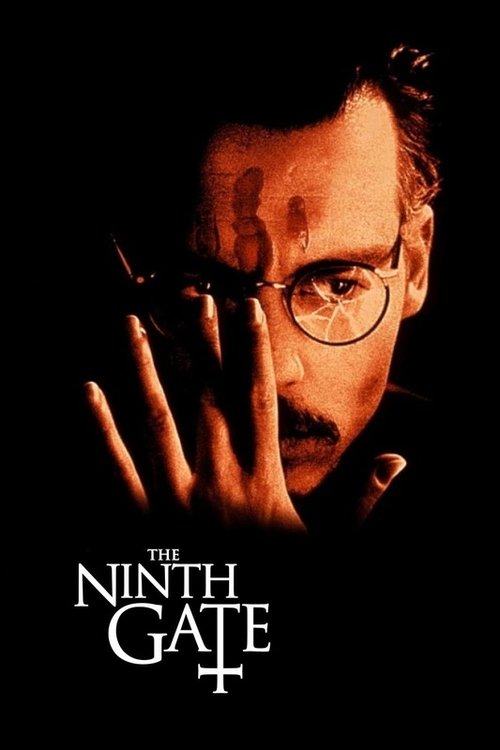
The Ninth Gate
The Book Collector Who Became the Collected
Directed by Roman Polanski
Dean Corso deals in rare books. He has no beliefs, no scruples, no interest in what books contain — only what they're worth. He is hired to authenticate a text that summons the Devil. Three copies exist; only one is genuine. The hunt transforms him. By the end, he is walking into light. He thought he was the expert. He was the initiate.
The Ninth Gate is a film about initiation disguised as a mystery thriller. Dean Corso is a cynical book dealer with no spiritual beliefs. He is hired to authenticate a seventeenth-century text — 'The Nine Gates of the Kingdom of Shadows' — supposedly co-authored by the Devil. Three copies exist. Only one is genuine. The hunt for authenticity becomes a hunt for transcendence. Polanski, who knows something about evil, builds the film as a slow transformation. Corso begins as a mercenary: books are objects, value is monetary, occultism is superstition for rich eccentrics. By the end, he is walking into light that should destroy him but doesn't. The Devil's book was not a hoax. The ritual worked. Corso, who sought nothing, received everything. The film's Luciferian theology is precise: the light-bringer is not evil but forbidden. What Corso finds behind the ninth gate is not Hell but illumination. The final image — Corso walking into blinding light — is not damnation. It is apotheosis. The cynical book dealer has become the one the book was written for.
The Surface
Boris Balkan, a wealthy collector of diabolical texts, hires Dean Corso to authenticate his copy of 'The Nine Gates of the Kingdom of Shadows' — a seventeenth-century book supposedly written with the Devil's assistance. Two other copies exist. Balkan wants to know if his is the genuine one.
Corso travels to Europe, examining the other copies, noting differences in the engravings. People around him begin dying — previous owners, rival collectors, anyone who gets too close to the book's secrets. A mysterious woman follows him, sometimes helping, sometimes watching.
As Corso assembles the genuine engravings from all three copies, he discovers the book is a ritual instruction. The nine engravings, properly arranged, are gates. The final gate leads somewhere. Balkan attempts the ritual and burns to death. Corso, guided by the mysterious woman, finds the final missing engraving and walks through.
The Book Dealer and the Sacred
Corso's profession is significant: he deals in books but does not read them. He knows monetary value, rarity, condition. He does not care about content. A book is an object to be appraised, not a teaching to be received.
This makes him the perfect initiate. He has no preconceptions. He does not believe the book can do anything. He approaches it as merchandise. The book needs exactly this emptiness — a vessel without prior content.
Throughout the film, Corso's attitude shifts. He begins dismissing the occultism as collector's fantasy. He ends performing the ritual himself. The transformation is not conversion — he never announces belief. It is contamination. The book has gotten into him.
Polanski films this contamination physically. Corso becomes more disheveled, more obsessed, less connected to ordinary life. He stops eating. He stops sleeping. The book is consuming him. By the end, he is ready to walk into light that should kill him, because the alternative is returning to what he was.
The Girl and the Fallen
The mysterious woman who follows Corso — credited only as 'The Girl' — is not human. Her eyes flash strangely. She appears at impossible moments. She kills a man with superhuman strength. She has sex with Corso while Balkan burns to death nearby.
She is Lucifer. Not a demon — the original light-bringer, the fallen angel who is also the ascending one. In Gnostic and Luciferian traditions, the serpent in Eden was not evil. It gave humanity knowledge. The Fall was not sin. It was awakening.
The Girl guides Corso toward the final gate. She provides the missing engraving when he does not know he needs it. She is the book's guardian and its author's messenger. She has been waiting for someone capable of completing the ritual.
Her sexuality is deliberate. In occult tradition, sexual union with the divine feminine opens gates that cannot be opened otherwise. The Girl's seduction of Corso is not corruption — it is initiation. She is making him ready for what he will see.
Balkan and the Failed Magician
Boris Balkan is the false initiate. He has studied the texts. He has collected the artifacts. He believes he deserves what the ninth gate offers. He performs the ritual, enters the light, and burns to death.
His failure is not technical. He had the correct engravings — or thought he did. His failure is spiritual. Balkan wants power. He wants to command the Devil, to make the book serve his will. The gate does not open for those who demand.
Corso, by contrast, wants nothing. He took the job for money. He kept going from stubbornness. He walked through the gate because there was nowhere else to go. The ritual requires emptiness, not ambition. Balkan was too full of himself.
The difference is crucial: the gate kills the one who wants to conquer and admits the one who simply walks through. Balkan burns because he tried to master what he should have surrendered to. Corso survives because he had no self-image to defend.
The Ninth Gate
The film's final image is Corso walking into blinding light. The gate is open. What lies behind it is not shown. The light suggests transcendence rather than torment.
This is Luciferian theology precisely rendered. The light-bringer's realm is not Hell in the traditional sense. It is illumination — knowledge that transforms the knower. Corso is not damned. He is completed.
Polanski leaves the ending open. We do not know what Corso finds. We know only that he walks toward it without fear. The cynic who believed in nothing has been initiated into something. The book dealer has become the book's fulfillment.
The film suggests that initiation happens to those who do not seek it. Balkan sought and failed. Corso stumbled through and succeeded. The gate chooses. The gate opens for those it wants.
The Transmission
Polanski made The Ninth Gate after the similar Rosemary's Baby, but the theology is different. Rosemary's Baby is about victimization by satanic forces. The Ninth Gate is about selection by them. Corso is not violated. He is chosen.
The film failed commercially and was dismissed as pretentious. It has since gathered admirers who recognize its seriousness. Polanski, whatever else he is, knows something about deals with dark powers. The film carries that knowledge.
The transmission is ambiguous by design. Is Lucifer good or evil? Is transcendence worth the cost? The film does not answer. It shows Corso making a choice and walking through. What he finds is his alone.
The ninth gate is not for everyone. Most who seek it burn. Corso, who did not seek, enters. The book dealer who reduced everything to price discovers something that has no price. He walks into light. The credits roll. What he becomes is between him and the light.
Questions this film answers
What is the deeper meaning of The Ninth Gate?
The Ninth Gate is a film about initiation disguised as a mystery thriller. Dean Corso is a cynical book dealer with no spiritual beliefs. He is hired to authenticate a seventeenth-century text — 'The Nine Gates of the Kingdom of Shadows' — supposedly co-authored by the Devil. Three copies exist. Only one is genuine. The hunt for authenticity becomes a hunt for transcendence. Polanski, who knows something about evil, builds the film as a slow transformation. Corso begins as a mercenary: books are objects, value is monetary, occultism is superstition for rich eccentrics. By the end, he is walking into light that should destroy him but doesn't. The Devil's book was not a hoax. The ritual worked. Corso, who sought nothing, received everything. The film's Luciferian theology is precise: the light-bringer is not evil but forbidden. What Corso finds behind the ninth gate is not Hell but illumination. The final image — Corso walking into blinding light — is not damnation. It is apotheosis. The cynical book dealer has become the one the book was written for.
What is the hidden symbolism in The Ninth Gate?
Boris Balkan, a wealthy collector of diabolical texts, hires Dean Corso to authenticate his copy of 'The Nine Gates of the Kingdom of Shadows' — a seventeenth-century book supposedly written with the Devil's assistance. Two other copies exist. Balkan wants to know if his is the genuine one.
What esoteric traditions appear in The Ninth Gate?
The Ninth Gate draws from Initiation, Gnosticism traditions. Dean Corso deals in rare books. He has no beliefs, no scruples, no interest in what books contain — only what they're worth. He is hired to authenticate a text that summons the Devil. Three copies exist; only one is genuine. The hunt transforms him. By the end, he is walking into light. He thought he was the expert. He was the initiate.
What does The Ninth Gate teach about the girl and the fallen?
She is Lucifer. Not a demon — the original light-bringer, the fallen angel who is also the ascending one. The mysterious woman who follows Corso — credited only as 'The Girl' — is not human. Her eyes flash strangely. She appears at impossible moments. She kills a man with superhuman strength. She has sex with Corso while Balkan burns to death nearby.
What does The Ninth Gate teach about the ninth gate?
Corso stumbled through and succeeded. The gate chooses. The gate opens for those it wants. The film's final image is Corso walking into blinding light. The gate is open. What lies behind it is not shown. The light suggests transcendence rather than torment.
Is The Ninth Gate worth watching for spiritual seekers?
The Ninth Gate (1999) directed by Roman Polanski is essential viewing for those interested in Initiation, Gnosticism, Lucifer. The Book Collector Who Became the Collected. It rewards multiple viewings and contemplation.
Rewatch With New Eyes
Now that you've seen the architecture, experience it again. The same film becomes a different film when you know what to watch for.
This time, watch for:
- Mark the threshold: the old self dies, the ordeal transforms, the new self returns
- Watch for the false world vs. the real — who is asleep, who awakens
Links may include affiliate partnerships that support Media Revelations
The Descent Continues
Where this thread leads next.
Rosemary's Baby 1968
The Coven Was Always Already in the Building
Read the revelation →