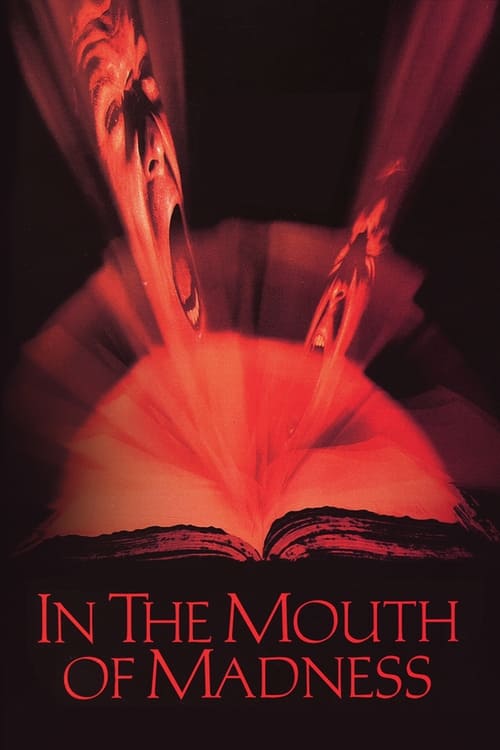
In the Mouth of Madness
Sutter Cane Is the Demiurge. His Readers Are the Archons Who Built the World.
Directed by John Carpenter
John Carpenter made a Gnostic horror film and disguised it as a Stephen King parody.
The most important thing about Sutter Cane is not that he writes horror novels. It is that his readers outnumber the Bible's. Carpenter puts this detail in the first act and treats it like backstory. It is the mechanism. In the Mouth of Madness is a film about how a false creator builds a real world through collective belief, how the pneumatic awakens inside the fiction too late, and how the only sane response to total ontological collapse is the laughter John Trent produces in that cinema at the end. He is not mad. He finally understands.
The Gnostic Architecture Running Beneath the Genre Surface
In Gnostic cosmology, the Demiurge is the false god who creates the material world and passes it off as ultimate reality. His agents are the Archons: lesser beings who enforce the illusion, guard the exits, prevent the pneumatic soul from remembering its origin. Sutter Cane is a precise rendering of this figure. He does not merely write fiction. He manufactures ontology. His novels do not describe Hobb's End; they constitute it, brick by ink-soaked brick, assembled by the collective attention of millions of readers who believe.
Watch what happens when Trent finds the town. The map he assembles from Cane's book covers leads him there. The geometry of the novels is the geometry of the place. His editor Linda Styles has been there before, in the pages, and she knows it. The Archons in Hobb's End are not the shambling creatures crawling out of the walls. They are the readers, the congregation of believers whose sustained credulity gives the Demiurge the energy to complete his final creation: a world that replaces the real one. The monsters are just the visible edge of a cosmological machinery that runs on faith.
Trent's only crime, in Gnostic terms, is that he is a skeptic in a world that has already voted. He investigates insurance fraud for a living. He demands evidence. He is armored against the irrational. The Demiurge's trap for the pneumatic is always the same: make the false world legible, logical, internally consistent. Cane's world is exactly that. It has its own rules. Trent cannot disbelieve his way out because the believers have already made the lie true.
The Jungian Dismantling: Hobb's End as Shadow Made Visible
Carl Jung's Shadow is not metaphor in this film. It is geography. Hobb's End is the unconscious given architecture, the contents of the psyche rendered as streets, buildings, and the congregation at the church of Sutter Cane. Trent enters as a man of pure ego-function: rational, investigative, contractually committed to the verifiable. He is the consciousness that has never turned inward.
The film's most precise Jungian moment arrives when Trent realizes he is a character in Cane's novel, watching himself act out the story. His behavior, his skepticism, his entire personality were written before he was born into this narrative. For Jung, the ego believes itself to be the author of its own story. The encounter with the Shadow reveals it was never the author at all. Trent's breakdown is not psychosis. It is individuation without preparation, the unconscious tearing through every wall the ego built because no other entry point was offered.
He survives Hobb's End physically. He does not survive as the man who entered.
The paranoia of collective reality runs through The Thing, where the horror is also an entity that rewrites what's real from the inside. For reality dissolved by extradimensional intrusion, Event Horizon and Color Out of Space share the same cosmological dread.
Questions this film answers
What is the deeper meaning of In the Mouth of Madness?
The most important thing about Sutter Cane is not that he writes horror novels. It is that his readers outnumber the Bible's. Carpenter puts this detail in the first act and treats it like backstory. It is the mechanism. In the Mouth of Madness is a film about how a false creator builds a real world through collective belief, how the pneumatic awakens inside the fiction too late, and how the only sane response to total ontological collapse is the laughter John Trent produces in that cinema at the end. He is not mad. He finally understands.
What is the hidden symbolism in In the Mouth of Madness?
In Gnostic cosmology, the Demiurge is the false god who creates the material world and passes it off as ultimate reality. His agents are the Archons: lesser beings who enforce the illusion, guard the exits, prevent the pneumatic soul from remembering its origin. Sutter Cane is a precise rendering of this figure. He does not merely write fiction. He manufactures ontology. His novels do not describe Hobb's End; they constitute it, brick by ink-soaked brick, assembled by the collective attention of millions of readers who believe.
What esoteric traditions appear in In the Mouth of Madness?
In the Mouth of Madness draws from Gnosticism, Jungian traditions. John Carpenter made a Gnostic horror film and disguised it as a Stephen King parody.
Is In the Mouth of Madness worth watching for spiritual seekers?
In the Mouth of Madness (1995) directed by John Carpenter is essential viewing for those interested in Gnosticism, Jungian. Sutter Cane Is the Demiurge. His Readers Are the Archons Who Built the World.. It rewards multiple viewings and contemplation.
Rewatch With New Eyes
Now that you've seen the architecture, experience it again. The same film becomes a different film when you know what to watch for.
This time, watch for:
- Watch for the false world vs. the real — who is asleep, who awakens
- Meet the shadow: what is rejected, projected, and finally integrated
Links may include affiliate partnerships that support Media Revelations