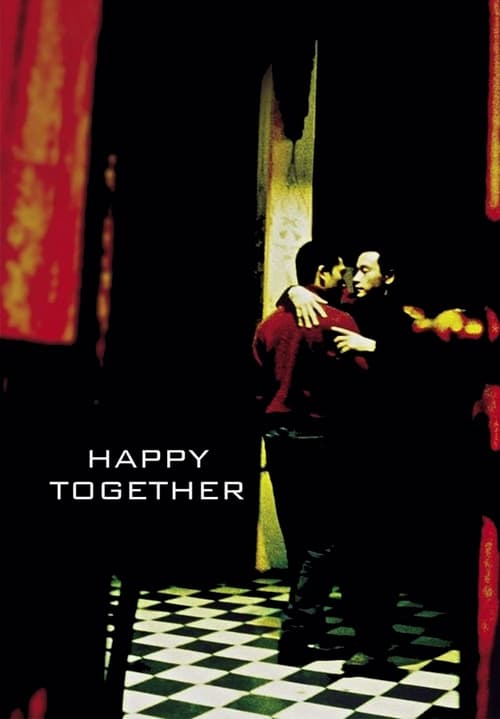
Happy Together
Happy Together Is a Map of Samsara, Two Souls Who Cannot Stop Restarting Their Suffering
Directed by Wong Kar-Wai
Wong Kar-Wai set it in Argentina so they could lose themselves without landmarks. The geography was never the problem.
Fai and Po-Wing travel from Hong Kong to Buenos Aires to fix what is broken between them. Within the film's first minutes they have separated, reunited, and agreed to "start over from scratch." They will say this again. The phrase "start over" is the film's actual subject, not romance, not jealousy, not the distance between Hong Kong and the end of the world. The film is about the mechanism that makes two people return to suffering they already know. Wong Kar-Wai films this not as tragedy but as a diagnostic portrait. He holds the camera close until the pattern becomes visible. The pattern is samsara, in the precise technical sense: the mind that mistakes the familiar wound for home.
Buddhist Reading: The Second Arrow
In the Buddhist teaching on the second arrow, the first arrow is the pain that arrives. The second arrow is what you do with it, the story you build around it, the attachment to the suffering as proof of the relationship's reality. Fai and Po-Wing do not suffer from love gone wrong. They suffer from choosing the second arrow every time.
Watch the scene where they dance the tango in their apartment, the table lamp creating the only warm light in the film's gray Buenos Aires palette. They are, for a moment, genuinely together. The lamp does not lie. But it cannot hold against what either of them does next. When Po-Wing disappears again, Fai wraps the lamp, his gift to Fai, in cloth and stores it. He does not throw it away. Storage is the samsaric gesture: keeping the instrument of attachment intact so the cycle can restart. Later, when Po-Wing returns with broken hands and needs care, Fai nurses him. He buys the same food. He sleeps in the same proximity. The wheel turns exactly as it turned before because both of them have kept the mechanism in working order. The Buddhist diagnosis is precise: the craving is not for Po-Wing. It is for the particular texture of this suffering. They have confused a familiar agony with intimacy.
Sufi Reading: The Lover Who Chooses the Prison
In Sufi teaching, the lover's journey is toward annihilation in the Beloved, the self dissolving into love's larger fire. But there is a counter-path the poets describe with equal precision: the lover who becomes so attached to the condition of longing that reaching the Beloved would end something they have built their identity around. This lover does not seek union. He seeks the perpetuation of the wound.
Fai watches Po-Wing through a crack in his door while he sleeps. The shot is one of the film's most compressed images: Fai can see him, is physically close, and cannot move. The paralysis is not fear. It is the Sufi failure mode, the lover who has made the locked door sacred. When Fai finally does leave Buenos Aires, traveling toward the Iguazu Falls that he and Po-Wing planned to see together, he carries a small cassette recorder that plays Chang's weeping. He gives Chang's sadness to the falls. He cannot give his own. The pilgrimage to the edge of the world completes something, but what it completes is Fai's readiness to carry his own grief forward rather than stay inside the one he shared. That capacity, to move grief instead of preserve it, is what the Sufi path calls the beginning of real love.
Other films where love becomes the architecture of its own entrapment: 2046 (the film this one haunts, the wound Chow cannot stop living in), In the Mood for Love (the same director's question about the love that chose restraint), Chungking Express (Wong Kar-Wai's earlier map of Hong Kong longing, before exile made the distance physical).
Questions this film answers
What is the deeper meaning of Happy Together?
Fai and Po-Wing travel from Hong Kong to Buenos Aires to fix what is broken between them. Within the film's first minutes they have separated, reunited, and agreed to "start over from scratch." They will say this again. The phrase "start over" is the film's actual subject, not romance, not jealousy, not the distance between Hong Kong and the end of the world. The film is about the mechanism that makes two people return to suffering they already know. Wong Kar-Wai films this not as tragedy but as a diagnostic portrait. He holds the camera close until the pattern becomes visible. The pattern is samsara, in the precise technical sense: the mind that mistakes the familiar wound for home.
What is the hidden symbolism in Happy Together?
In the Buddhist teaching on the second arrow, the first arrow is the pain that arrives. The second arrow is what you do with it, the story you build around it, the attachment to the suffering as proof of the relationship's reality. Fai and Po-Wing do not suffer from love gone wrong. They suffer from choosing the second arrow every time.
What esoteric traditions appear in Happy Together?
Happy Together draws from Buddhism, Sufism traditions. Wong Kar-Wai set it in Argentina so they could lose themselves without landmarks. The geography was never the problem.
Is Happy Together worth watching for spiritual seekers?
Happy Together (1997) directed by Wong Kar-Wai is essential viewing for those interested in Buddhism, Sufism. Happy Together Is a Map of Samsara, Two Souls Who Cannot Stop Restarting Their Suffering. It rewards multiple viewings and contemplation.
Rewatch With New Eyes
Now that you've seen the architecture, experience it again. The same film becomes a different film when you know what to watch for.
This time, watch for:
- See impermanence: what clings, what releases, what remains
- Feel the love that transforms: what the heart sees that the mind cannot
Links may include affiliate partnerships that support Media Revelations