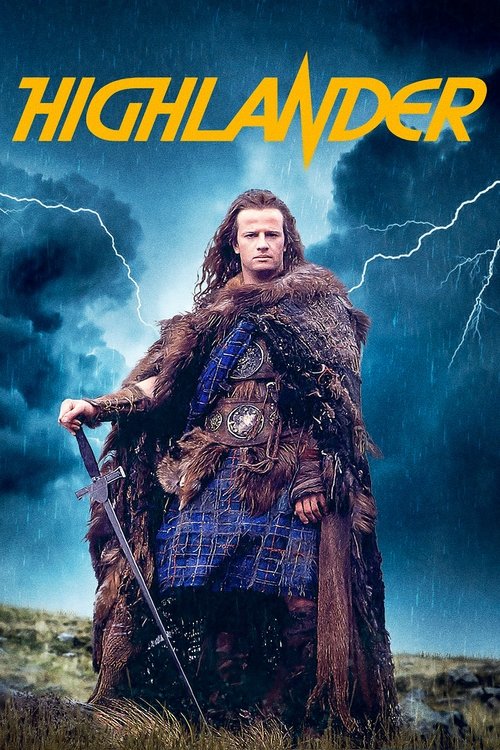
There can be only one. The Highlander's immortality is not a gift — it is a sentence. Watch everyone you love die. Fight forever. Kill or be killed across centuries until only one remains. The Prize is not power. It is release. Connor MacLeod wants the Game to end.
Highlander is disguised as an action film about sword-fighting immortals. It is actually a meditation on the unbearable weight of deathlessness — what it costs to live while everyone you love grows old and dies. Connor MacLeod is not seeking power. He is seeking the end of the Game. The Prize is release. The Immortals did not choose their condition. They were born mortal, died their first death, and woke unable to die again. Their only rule: fight each other until one remains. The last Immortal receives the Prize — communion with all human minds, power beyond measure. But the film is honest about what the centuries cost. Connor watches his wives age and die. He buries his mentors. He walks through generations as an outsider who can never belong. The Quickening — the lightning transfer of power when one Immortal kills another — is not victory. It is absorption of another soul's centuries of pain. The winner does not triumph. The winner accumulates weight.
The Surface
Connor MacLeod, a Highland clansman in 1536 Scotland, is killed in battle and wakes up healed. His village expels him as a witch. Wandering alone, he meets Ramirez, an Egyptian immortal disguised as a Spaniard, who explains the rules: Immortals cannot die except by beheading. They are drawn to fight each other. Eventually only one will remain to claim the Prize.
Four centuries later, Connor lives in New York as an antique dealer. The Gathering is approaching — the time when all remaining Immortals will be drawn together for the final battles. The Kurgan, an ancient evil Immortal who killed Ramirez and has been Connor's enemy across centuries, arrives for the endgame.
The film intercuts Connor's modern life with his past: his first wife Heather, who aged and died while he stayed young; his training with Ramirez; the moments that shaped him across centuries. The sword fights are spectacular. The loneliness is heavier.
The First Death
Connor's first death is not his becoming — it is his exile. He falls in battle, mortally wounded. He should die. Instead, he wakes, healed. His clan sees this and is terrified. They burn him as a consort of Satan. His own people drive him out.
This is the initiation structure: the one who returns from death is no longer human. The village cannot contain what he has become. He has crossed a threshold and can never cross back. His immortality begins with total rejection.
The mark of the Immortal is invisibility to normal society. They cannot have families — the children would grow old while they stayed young. They cannot have careers — paperwork betrays their unchanging faces. They must move, change names, abandon everything before they are discovered.
Connor's initiation is into loneliness. The power comes with exile built in. He will never belong anywhere again. The Game is the only community of his kind, and the Game requires them to kill each other.
Heather and the Cost
Connor marries Heather, a mortal woman who loves him despite knowing what he is. The film does not skip the consequence. We watch Heather age. We watch Connor stay young. We watch her die in his arms while he remains exactly as he was on their wedding day.
This sequence is the film's emotional center. The action scenes are entertaining. The Heather scenes are devastating. Connor has to watch the woman he loves decay and die, knowing there is nothing he can do, knowing this will happen with every mortal he loves, forever.
Before she dies, Heather asks Connor to light a candle for her birthday. He does — every year, for centuries. The montage shows him lighting candles through the ages, in different rooms, in different clothes, always alone. The ritual persists after the person is gone.
Immortality in Highlander is not power. It is accumulated grief. Every year is another loss. Every attachment is future pain. The Immortals who survive longest are the ones who stop attaching — which means stopping being human while remaining alive.
The Quickening as Communion
When an Immortal is beheaded, their power transfers to the victor in the Quickening — a storm of lightning and force that looks like victory but is actually absorption. The winner does not just gain power. They gain memories, experiences, centuries of the other's life.
This is alchemical transmutation: two substances become one. The Quickening is not clean. The loser's personality, knowledge, and weight are added to the winner. Connor does not just defeat enemies. He incorporates them.
The Kurgan has absorbed hundreds of Immortals. He is ancient and powerful — and also deeply insane. The accumulated Quickenings have not made him wise. They have made him a chaos of absorbed souls that can barely hold a single identity.
The Prize, which goes to the last Immortal, is the final Quickening — communion with all human minds. But the film hints that this is not transcendence. It is the ultimate absorption. The winner does not become God. The winner becomes everyone, which might be worse.
The Kurgan and the Shadow
The Kurgan is Connor's shadow — everything Connor refuses to become. Where Connor loves and loses, the Kurgan destroys without caring. Where Connor hides his nature and lives quietly, the Kurgan revels in chaos and fear. They are mirror images of what immortality makes possible.
The Kurgan killed Ramirez, Connor's mentor. This makes their conflict personal, but it is also structural. Every Immortal must eventually face every other Immortal. The Game demands it. The Kurgan is not just Connor's enemy — he is the endpoint of one path through eternity.
If immortality produces either wisdom or madness, the Kurgan is the madness. He rapes, murders, laughs at suffering. He has lived so long that human life means nothing to him. He is what Connor might become if he stops caring.
The final battle is not good versus evil in simple terms. It is Connor choosing to remain human in his values despite centuries of evidence that humanity is painful. Defeating the Kurgan is defeating the temptation to become him.
The Transmission
Highlander was a modest hit that became a cult phenomenon. Its sequels and television series expanded the mythology endlessly. But the original film's power comes from its simplicity: immortality is curse, not gift.
The film transmits a specific meditation: what would it mean to live forever? Not the power fantasy of the question, but the actual experience. Watching everyone you love die. Fighting the same fight for centuries. Accumulating grief until it breaks you.
Connor wins the Prize and gains connection to all human minds. The film ends with him becoming mortal again — able to age, able to die, able to have children. This is presented as victory. The Game is over. He can finally live.
There can be only one. But the one who remains is not a god. He is a man who has finally earned the right to die. The Prize is mortality. The victory is becoming human again. That is Highlander's deepest truth.
Questions this film answers
What is the deeper meaning of Highlander?
Highlander is disguised as an action film about sword-fighting immortals. It is actually a meditation on the unbearable weight of deathlessness — what it costs to live while everyone you love grows old and dies. Connor MacLeod is not seeking power. He is seeking the end of the Game. The Prize is release. The Immortals did not choose their condition. They were born mortal, died their first death, and woke unable to die again. Their only rule: fight each other until one remains. The last Immortal receives the Prize — communion with all human minds, power beyond measure. But the film is honest about what the centuries cost. Connor watches his wives age and die. He buries his mentors. He walks through generations as an outsider who can never belong. The Quickening — the lightning transfer of power when one Immortal kills another — is not victory. It is absorption of another soul's centuries of pain. The winner does not triumph. The winner accumulates weight.
What is the hidden symbolism in Highlander?
Connor MacLeod, a Highland clansman in 1536 Scotland, is killed in battle and wakes up healed. His village expels him as a witch. Wandering alone, he meets Ramirez, an Egyptian immortal disguised as a Spaniard, who explains the rules: Immortals cannot die except by beheading. They are drawn to fight each other. Eventually only one will remain to claim the Prize.
What esoteric traditions appear in Highlander?
Highlander draws from Initiation, Jungian, Alchemy traditions. There can be only one. The Highlander's immortality is not a gift — it is a sentence. Watch everyone you love die. Fight forever. Kill or be killed across centuries until only one remains. The Prize is not power. It is release. Connor MacLeod wants the Game to end.
What does Highlander teach about the first death?
The one who returns from death is no longer human. The village cannot contain what he has become. Connor's first death is not his becoming — it is his exile. He falls in battle, mortally wounded. He should die. Instead, he wakes, healed. His clan sees this and is terrified. They burn him as a consort of Satan. His own people drive him out.
What does Highlander teach about the quickening as communion?
The winner does not just gain power. They gain memories, experiences, centuries of the other's life. When an Immortal is beheaded, their power transfers to the victor in the Quickening — a storm of lightning and force that looks like victory but is actually absorption. The winner does not just gain power. They gain memories, experiences, centuries of the other's life.
Is Highlander worth watching for spiritual seekers?
Highlander (1986) directed by Russell Mulcahy is essential viewing for those interested in Immortality, Isolation, Initiation. Immortality as the Loneliest Curse. It rewards multiple viewings and contemplation.
Rewatch With New Eyes
Now that you've seen the architecture, experience it again. The same film becomes a different film when you know what to watch for.
This time, watch for:
- Mark the threshold: the old self dies, the ordeal transforms, the new self returns
- Meet the shadow: what is rejected, projected, and finally integrated
- Track the stages: blackening, whitening, reddening — death before rebirth
Links may include affiliate partnerships that support Media Revelations
The Descent Continues
Where this thread leads next.
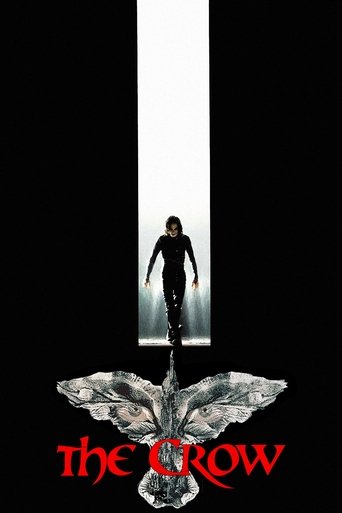
The Crow 1994
The Crow Is a Soul That Refuses Death Until the Wound Is Answered
Read the revelation →