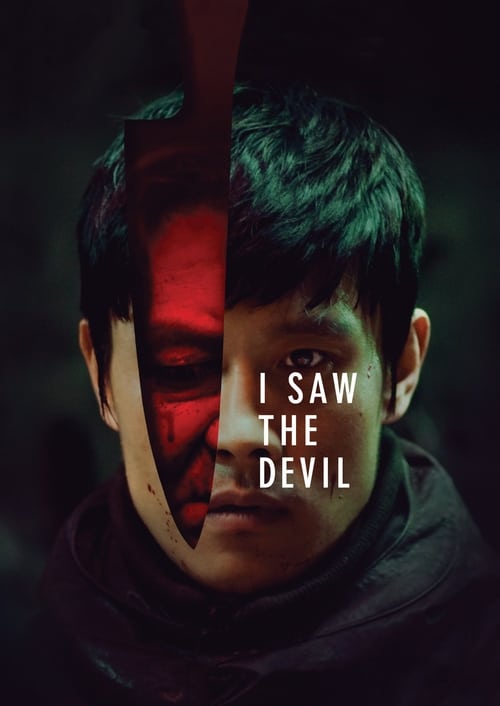
I Saw the Devil
Every Time Kim Releases the Killer, He Releases More of Himself
Directed by Kim Jee-woon
I Saw the Devil is not a revenge film. It is a Jungian parable about what happens when a man mistakes his shadow for his enemy, and spends the rest of the film proving it.
Kim Jee-woon's 2010 film looks like a chase. Special agent Kim Soo-hyun hunts down Kyung-chul, the psychopath who murdered his fiancee, and then does something no revenge film had done this cleanly before: he lets him go. Implants a tracker, brutalizes him, and releases him back into the world to be hunted again. The audience reads this as strategy. The film reads it as pathology. Kim cannot kill Kyung-chul because he needs Kyung-chul. The monster keeps Kim's grief from turning inward, where it belongs.
The Jungian Reading: You Cannot Murder Your Shadow
Jung's concept of the shadow is specific. It is not evil. It is the unlived life, the denied potential, the capacities the ego refuses to own. When projection occurs, the shadow attaches itself to an external figure: now it can be seen, hunted, punished. The projection feels like clarity. It is the opposite.
Kyung-chul knows this about Kim before Kim does. In the greenhouse scene, after Kim has beaten him for the second time and paused before the killing blow, Kyung-chul smiles with blood in his teeth and says Kim is just like him. Kim hits him again. The hitting proves nothing except that Kyung-chul landed something true. A man who had no shadow-content in common with the killer he hunts would not need to keep releasing him. He would finish it at the first encounter and go home to grieve.
The catch-and-release structure reveals that Kim's grief has found a container it refuses to leave. Killing Kyung-chul quickly would end the pain. Prolonging the hunt prolongs the sensation of agency over the loss. Every time Kim releases the killer, he releases another cycle of the compulsion that the loss created. The violence is the symptom, not the cure. Kim's fiancee died once. His soul begins dying at the first release.
The Buddhist Reading: Kim Builds the Wheel and Steps Inside
Buddhist cosmology describes samsara as a wheel kept spinning by craving and aversion. The wheel's motion does not depend on the object of craving. It depends on the one who craves. Pull away the object and the craving finds another.
The film's structure mirrors the Wheel of Becoming with disturbing precision. Kim encounters Kyung-chul, acts, releases, waits, re-encounters. The cycle does not escalate toward resolution. It escalates toward repetition. Each iteration costs Kim something he does not get back: his professional discipline, his composure, eventually his face when he watches via the GPS signal as Kyung-chul attacks another woman in a taxi, one beat too long before intervening. Kim watches one beat too long. The film holds on that beat.
In Buddhist terms, Kim has made Kyung-chul into an object of attachment. The attachment is called hatred, but hatred is still attachment. Mercy would have severed the bond. Only cruelty could not. The final scene earns this reading completely: Kyung-chul is dead, Kim has won, and Kim weeps alone on a road in the dark while the killer's family screams inside a house behind him. The wheel has stopped. There is no one left to ride it with him. What remains is the grief he was running from in the first place, unchanged, waiting exactly where he left it.
Questions this film answers
What is the deeper meaning of I Saw the Devil?
Kim Jee-woon's 2010 film looks like a chase. Special agent Kim Soo-hyun hunts down Kyung-chul, the psychopath who murdered his fiancee, and then does something no revenge film had done this cleanly before: he lets him go. Implants a tracker, brutalizes him, and releases him back into the world to be hunted again. The audience reads this as strategy. The film reads it as pathology. Kim cannot kill Kyung-chul because he needs Kyung-chul. The monster keeps Kim's grief from turning inward, where it belongs.
What is the hidden symbolism in I Saw the Devil?
Jung's concept of the shadow is specific. It is not evil. It is the unlived life, the denied potential, the capacities the ego refuses to own. When projection occurs, the shadow attaches itself to an external figure: now it can be seen, hunted, punished. The projection feels like clarity. It is the opposite.
What esoteric traditions appear in I Saw the Devil?
I Saw the Devil draws from Jungian, Buddhism traditions. I Saw the Devil is not a revenge film. It is a Jungian parable about what happens when a man mistakes his shadow for his enemy, and spends the rest of the film proving it.
Is I Saw the Devil worth watching for spiritual seekers?
I Saw the Devil (2010) directed by Kim Jee-woon is essential viewing for those interested in Jungian, Buddhism. Every Time Kim Releases the Killer, He Releases More of Himself. It rewards multiple viewings and contemplation.
Rewatch With New Eyes
Now that you've seen the architecture, experience it again. The same film becomes a different film when you know what to watch for.
This time, watch for:
- Meet the shadow: what is rejected, projected, and finally integrated
- See impermanence: what clings, what releases, what remains
Links may include affiliate partnerships that support Media Revelations