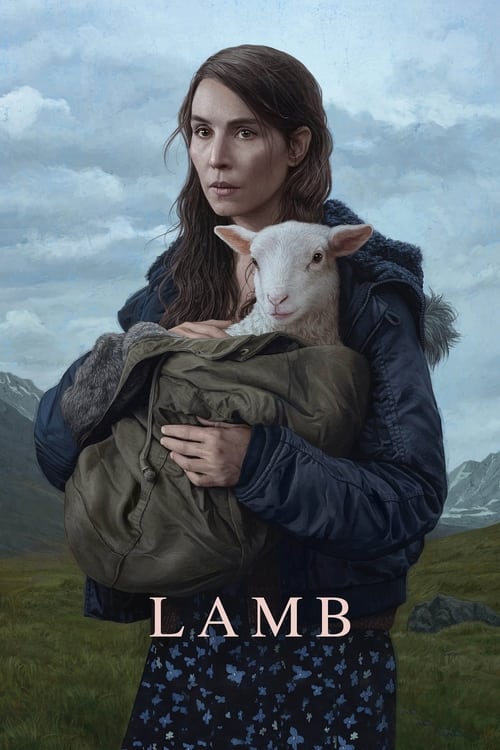
Lamb
Lamb Is About the Grief-Stricken Who Steal a Child From Nature and Discover Nature Keeps Its Ledger
Directed by Valdimar Jóhannsson
A childless Icelandic couple raise a half-lamb, half-human infant born in their barn, and the film is the slow, quiet accounting of what it costs to take what the wild did not offer.
María and Ingvar have lost a child. We are never told the whole of it, but the absence sits in every silence of their farmhouse, in the untouched bed, in the way they move around each other like people avoiding a hole in the floor. Then a ewe gives birth to Ada, a creature with a lamb's head and a human body, and the couple simply takes her. They carry her inside, name her, dress her, and raise her as the daughter they buried. Valdimar Jóhannsson films this without a single wink at the camera. The horror is not the creature. The horror is the theft, made gently, out of love, by two grieving people who have decided that the boundary between the human world and the animal world does not apply to their pain. The film is the patient demonstration that it does.
Shamanic Reading: The Debt Owed to the Master of the Animals
Across circumpolar shamanic traditions there is a figure who governs the balance between humans and the creatures they take: the Master or Mistress of the Animals, who permits the hunt but demands reciprocity, and who avenges anything taken without offering. The hunter who kills more than he needs, or takes without the proper acknowledgment, incurs a debt the spirit will collect. Lamb is a film about that debt, transposed from the hunt to the family.
Ada's true father, the ram-headed being who appears at the film's edges and finally crosses the last field toward the farm, is exactly this figure: the animal power that will not be robbed of its own. María, in her fiercest act of theft, shoots the ewe who is Ada's biological mother, murdering the animal that keeps reaching for her child. She thinks she has severed the last claim on her daughter. She has only confirmed the debt and named the collector. The wild permits you to take what it offers. It does not permit you to steal, and it never forgets a mother killed. When the ram-headed father finally comes and takes Ingvar's life in exchange for the daughter that was taken, this is not random tragedy. It is the ledger balancing, the offering finally extracted by force because it was never freely given.
Jungian Reading: The Denied Grief Returns Wearing Horns
Jung held that what we refuse to consciously mourn does not vanish but sinks into the unconscious and returns in autonomous, often monstrous form. María and Ingvar never grieve their lost child. They replace her. Ada is not a healing. She is the wound reanimated, the refused mourning given a body and a name so the parents never have to sit in the empty space the child left.
This is why Ada is a hybrid, human above and animal below in the ram-father, animal head on human body in the child. She is a symbol of exactly what the parents have done: grafted the animal onto the human, the unfelt onto the felt, the substitute onto the loss. The father who comes for her at the end is the shadow of that refusal, the return of everything they buried without mourning. He does not merely take Ada back. He collects Ingvar, because the price of refusing to grieve is always eventually paid by the one who refused, and María is left standing exactly where she began: alone in a field, having lost a child.
Questions this film answers
What is the deeper meaning of Lamb?
María and Ingvar have lost a child. We are never told the whole of it, but the absence sits in every silence of their farmhouse, in the untouched bed, in the way they move around each other like people avoiding a hole in the floor. Then a ewe gives birth to Ada, a creature with a lamb's head and a human body, and the couple simply takes her. They carry her inside, name her, dress her, and raise her as the daughter they buried. Valdimar Jóhannsson films this without a single wink at the camera. The horror is not the creature. The horror is the theft, made gently, out of love, by two grieving people who have decided that the boundary between the human world and the animal world does not apply to their pain. The film is the patient demonstration that it does.
What is the hidden symbolism in Lamb?
Across circumpolar shamanic traditions there is a figure who governs the balance between humans and the creatures they take: the Master or Mistress of the Animals, who permits the hunt but demands reciprocity, and who avenges anything taken without offering. The hunter who kills more than he needs, or takes without the proper acknowledgment, incurs a debt the spirit will collect. Lamb is a film about that debt, transposed from the hunt to the family.
What esoteric traditions appear in Lamb?
Lamb draws from Shamanism, Jungian traditions. A childless Icelandic couple raise a half-lamb, half-human infant born in their barn, and the film is the slow, quiet accounting of what it costs to take what the wild did not offer.
Is Lamb worth watching for spiritual seekers?
Lamb (2021) directed by Valdimar Jóhannsson is essential viewing for those interested in Shamanism, Jungian. Lamb Is About the Grief-Stricken Who Steal a Child From Nature and Discover Nature Keeps Its Ledger. It rewards multiple viewings and contemplation.
Rewatch With New Eyes
Now that you've seen the architecture, experience it again. The same film becomes a different film when you know what to watch for.
This time, watch for:
- Follow the descent: what dies, what guides, what returns transformed
- Meet the shadow: what is rejected, projected, and finally integrated
Links may include affiliate partnerships that support Media Revelations
The Descent Continues
Where this thread leads next.
The Witch 2015
Black Phillip Keeps His Word. No One Else in the Film Does.
Read the revelation →