Dani joins a death cult and it heals her. That's the actual horror — the commune gives her what her boyfriend never could. The smile at the end is genuine. Aster asks: what if the terrifying thing is also the cure?
Midsommar is not a horror film about a cult. It is a film about what happens when the cult is correct. Dani arrives traumatized, abandoned by her boyfriend, carrying grief no one in her life will hold. The Hårga see her grief immediately. They sit on the floor and wail with her. They put her at the center of a community that organizes around shared feeling. By the end she has selected one of her tormentors for ritual sacrifice and her smile is real. Aster's diagnosis: modern life has no container for grief, no rite of passage, no community that breathes together. Of course people are vulnerable to cults. The cult is offering what the culture refuses.
The Surface
A young woman whose family has just died in a murder-suicide accompanies her emotionally checked-out boyfriend and his graduate-student friends to a midsummer festival in a remote Swedish commune. Over nine days, the visitors are picked off through ritual violence. The protagonist becomes the May Queen and selects her boyfriend as the final sacrifice.
Read as horror, the film is unconventional — sunlit, slow, deliberately undisturbed by jump scares. Read as Aster constructed it, the film is something stranger: a portrait of a wounded woman receiving the only kind of community that recognizes her wound. The horror is not what is being done to the visitors. The horror is that what is being done is also, partially, working.
Aster called the film 'a wish-fulfillment fantasy disguised as a breakup movie.' Watch it that way. Dani gets exactly what she needs. The cost is staggering. The need is real.
The Hårga as Initiatory Container
The Hårga have something almost no modern community has: a complete ritual calendar. Every life stage has its rite. Every grief has its container. Children are raised collectively, elders are honored, and at age 72 each person walks off a cliff to complete the cycle. No one dies alone. No one ages without witness.
Traditional societies organized themselves around initiation. The community held the individual through every transformation. Modern life destroyed these containers and offered nothing to replace them. People grieve in private. They turn 30 alone in apartments. They are 'in transition' without rites of transition.
Dani's family death has no container in her American life. Her boyfriend cannot hold her grief. Her friends do not know how. Her therapy is a substitute that gestures toward what real initiatory community would do but cannot deliver it. She is starving for a structure that no longer exists in her culture.
The Hårga have the structure. They also have human sacrifice. Aster is not letting you separate these. The structure includes the sacrifice. The community that can hold your grief is the same community that can decide who dies. There is no version of integration that does not also have edges.
Breath as Communion
The most disturbing scene in the film is not the bone-grinding pit. It is the scene where Dani, screaming and sobbing after discovering her boyfriend's betrayal, is joined by every woman in the commune — and they scream and sob with her. They match her breath. They wail when she wails. They convulse when she convulses.
This is what shamanic cultures have always known and what therapy can only partially imitate: extreme emotion processed alone becomes pathological. Extreme emotion processed in a body of co-witnesses passes through. The Hårga are doing somatic group therapy as ritual practice. They know it works because they have been doing it for centuries.
Aster's camera holds on Dani's face during this scene for a long time. You can see something shift. She is not being soothed. She is being met. The difference is enormous. Modern emotional intelligence has produced a lot of soothing. The Hårga produce meeting.
Once you have been met like that, ordinary life — the boyfriend who shrugs at your call, the friends who change the subject — becomes unbearable. Dani cannot go back to that. The film is asking whether anyone could.
The May Queen and the Sacrifice
Dani wins the May Queen competition during what is, structurally, a shamanic dance — drugs, exhaustion, language failing, perception shifting. She becomes the village's chosen vessel for the season. She is now responsible for the harvest. She must choose the final sacrifice.
She chooses Christian, her boyfriend. He has done nothing the film treats as wholly unforgivable — he is checked out, unfaithful, unwilling to break up cleanly. The crime is small. The punishment is total. This is the inversion the film is making explicit: when the community finally holds you, its judgments become your judgments. What seemed minor in isolation becomes ritual sacrifice when the village agrees.
Notice that Dani never speaks the choice. Her face moves. The Hårga read her face. The decision is communal even as it is hers. This is what membership in such a structure means. You no longer have purely private feelings. Your feelings are infrastructure.
The final shot is her smile. Critics argue about whether the smile is liberation or further damage. Aster has said it is both, and that the question is the wrong question. She is in a body of people who will wail with her. Whatever else is true, that is also true.
The Transmission
Midsommar is the film for the person who has noticed that they have nowhere to scream. It is not endorsement of cults. It is a precise X-ray of the wound cults exploit and a refusal to lie about why people walk into them.
Aster shoots the film entirely in daylight because nothing about the Hårga is hidden. They explain their practices. They show their books. They warn the visitors what is coming. The trap is not concealment. The trap is offering. They are offering what the culture cannot offer, on terms that should be unacceptable, and the offering works.
The film asks you to look at your own life and notice what is missing. Where is your ritual calendar? Where is the body of co-witnesses for your grief? Where is the chosen elder, the held mother, the place you can scream and be matched? If you do not have these things, the film says, you are exposed in a way you have not let yourself notice. The Hårga are not the danger. The absence is.
Questions this film answers
What is the deeper meaning of Midsommar?
Midsommar is not a horror film about a cult. It is a film about what happens when the cult is correct. Dani arrives traumatized, abandoned by her boyfriend, carrying grief no one in her life will hold. The Hårga see her grief immediately. They sit on the floor and wail with her. They put her at the center of a community that organizes around shared feeling. By the end she has selected one of her tormentors for ritual sacrifice and her smile is real. Aster's diagnosis: modern life has no container for grief, no rite of passage, no community that breathes together. Of course people are vulnerable to cults. The cult is offering what the culture refuses.
What is the hidden symbolism in Midsommar?
A young woman whose family has just died in a murder-suicide accompanies her emotionally checked-out boyfriend and his graduate-student friends to a midsummer festival in a remote Swedish commune. Over nine days, the visitors are picked off through ritual violence. The protagonist becomes the May Queen and selects her boyfriend as the final sacrifice.
What esoteric traditions appear in Midsommar?
Midsommar draws from Shamanism, Initiation, Demonology traditions. Dani joins a death cult and it heals her. That's the actual horror — the commune gives her what her boyfriend never could. The smile at the end is genuine. Aster asks: what if the terrifying thing is also the cure?
What does Midsommar teach about the hårga as initiatory container?
Modern life destroyed the initiatory containers and offered nothing to replace them. Of course the cult works. The Hårga have something almost no modern community has: a complete ritual calendar. Every life stage has its rite. Every grief has its container. Children are raised collectively, elders are honored, and at age 72 each person walks off a cliff to complete the cycle. No one dies alone. No one ages without witness.
What does Midsommar teach about breath as communion?
Extreme emotion processed alone becomes pathological. Extreme emotion processed in a body of co-witnesses passes through. The most disturbing scene in the film is not the bone-grinding pit. It is the scene where Dani, screaming and sobbing after discovering her boyfriend's betrayal, is joined by every woman in the commune — and they scream and sob with her. They match her breath. They wail when she wails. They convulse when she convulses.
Is Midsommar worth watching for spiritual seekers?
Midsommar (2019) directed by Ari Aster is essential viewing for those interested in Ritual, Belonging, Inversion. The Horror of Finally Belonging. It rewards multiple viewings and contemplation.
Rewatch With New Eyes
Now that you've seen the architecture, experience it again. The same film becomes a different film when you know what to watch for.
This time, watch for:
- Follow the descent: what dies, what guides, what returns transformed
- Mark the threshold: the old self dies, the ordeal transforms, the new self returns
- Identify the hierarchy: which demon, which rank, which grimoire it comes from
Links may include affiliate partnerships that support Media Revelations
The Descent Continues
Where this thread leads next.
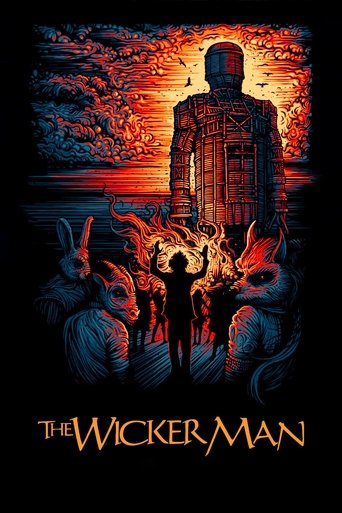
The Wicker Man 1973
The Sacrifice the Christian Did Not Know He Volunteered For
Read the revelation →