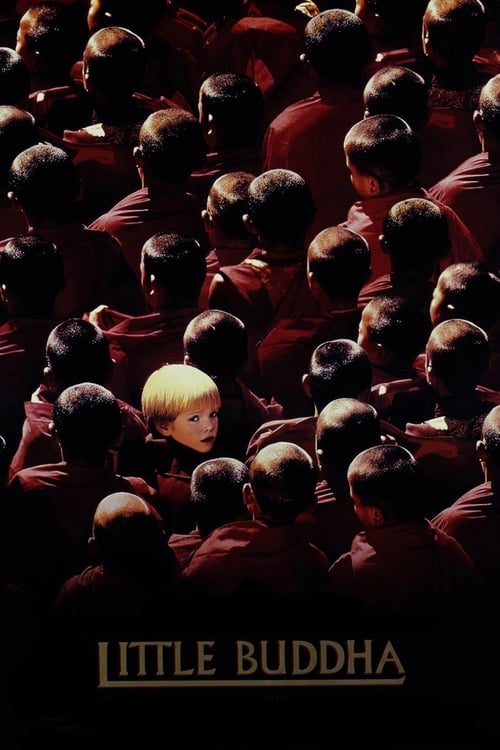
Little Buddha
Little Buddha Answers the Question It Poses: How Can One Lama Be Reborn in Three Children at Once
Directed by Bernardo Bertolucci
Monks find not one candidate for their dead teacher's rebirth but three: an American boy, a Nepalese boy, a Nepalese girl. The film's whole meaning is why the answer is all of them.
Bertolucci runs two stories in parallel. In present-day Seattle and Bhutan, Tibetan monks led by Lama Norbu search for the reincarnation of Lama Dorje and find three children who each pass parts of the test. In an intercut mythic register, the film tells the life of Prince Siddhartha, from palace to enlightenment. The surface reading treats the modern plot as a frame and the Siddhartha story as the real content. The film's actual seeing lives in the join between them. A Western audience wants a single answer: which child is the true rebirth. The film withholds it and then reveals that the withholding is the teaching. Lama Dorje was reborn as body, speech, and mind, split across three children, because a self is not a single indivisible thing that jumps from one body to the next. The premise that only one can be right is the exact illusion Buddhism exists to dissolve.
Buddhist Reading: Anatta Staged as a Detective Story
The doctrine of anatta, no-self, holds that there is no fixed unchanging soul, only a stream of conditions arising and passing. Western reincarnation stories almost always smuggle in a soul: one essence, one continuous identity, migrating intact. Bertolucci builds the whole plot to break that smuggling. When the three children are all confirmed as aspects of Lama Dorje, the film has dramatized anatta directly. What continues is not a person but a continuity of tendencies, karma, and vow, and that continuity can flow into more than one vessel because it was never a single thing to begin with.
The Siddhartha thread reinforces this at its climax. Under the Bodhi tree, Mara sends armies and daughters, and the demon's final challenge is to ask who will witness Siddhartha's right to enlightenment. Siddhartha touches the earth, and the ground itself answers. When Mara's own reflection appears in the water and Siddhartha says the self Mara defends does not exist, the film delivers anatta as spoken doctrine at the exact center of the myth. The detective story and the sermon are saying one thing.
Initiation Reading: The Teacher Who Dies to Open the Door
Lama Norbu is not merely conducting a search. He is completing an initiation, both the children's and his own. He is dying, and he knows it, and he undertakes the long journey to find and confirm his teacher's rebirth as his final act. The initiatory pattern is exact: the elder transmits, then departs, so the new vessels can receive. Norbu reads the children the story of the Buddha as their preparation, the way an initiator prepares candidates before the threshold.
The film's closing sequence completes the arc with unusual grace. Norbu conducts the ceremony confirming the children, then sits in meditation and dies, choosing his death consciously the way the tradition describes an accomplished practitioner does. His ashes are divided and given to the three children to scatter, in Bhutan, in a stream, on the wind. The teacher is distributed exactly as Lama Dorje was distributed. Transmission is not one thing handed to one heir. It is a stream poured out, and the initiate who receives it is always, secretly, more than one.
Questions this film answers
What is the deeper meaning of Little Buddha?
Bertolucci runs two stories in parallel. In present-day Seattle and Bhutan, Tibetan monks led by Lama Norbu search for the reincarnation of Lama Dorje and find three children who each pass parts of the test. In an intercut mythic register, the film tells the life of Prince Siddhartha, from palace to enlightenment. The surface reading treats the modern plot as a frame and the Siddhartha story as the real content. The film's actual seeing lives in the join between them. A Western audience wants a single answer: which child is the true rebirth. The film withholds it and then reveals that the withholding is the teaching. Lama Dorje was reborn as body, speech, and mind, split across three children, because a self is not a single indivisible thing that jumps from one body to the next. The premise that only one can be right is the exact illusion Buddhism exists to dissolve.
What is the hidden symbolism in Little Buddha?
The doctrine of anatta, no-self, holds that there is no fixed unchanging soul, only a stream of conditions arising and passing. Western reincarnation stories almost always smuggle in a soul: one essence, one continuous identity, migrating intact. Bertolucci builds the whole plot to break that smuggling. When the three children are all confirmed as aspects of Lama Dorje, the film has dramatized anatta directly. What continues is not a person but a continuity of tendencies, karma, and vow, and that continuity can flow into more than one vessel because it was never a single thing to begin with.
What esoteric traditions appear in Little Buddha?
Little Buddha draws from Buddhism, Initiation traditions. Monks find not one candidate for their dead teacher's rebirth but three: an American boy, a Nepalese boy, a Nepalese girl. The film's whole meaning is why the answer is all of them.
Is Little Buddha worth watching for spiritual seekers?
Little Buddha (1993) directed by Bernardo Bertolucci is essential viewing for those interested in Buddhism, Initiation. Little Buddha Answers the Question It Poses: How Can One Lama Be Reborn in Three Children at Once. It rewards multiple viewings and contemplation.
Rewatch With New Eyes
Now that you've seen the architecture, experience it again. The same film becomes a different film when you know what to watch for.
This time, watch for:
- See impermanence: what clings, what releases, what remains
- Mark the threshold: the old self dies, the ordeal transforms, the new self returns
Links may include affiliate partnerships that support Media Revelations
The Descent Continues
Where this thread leads next.
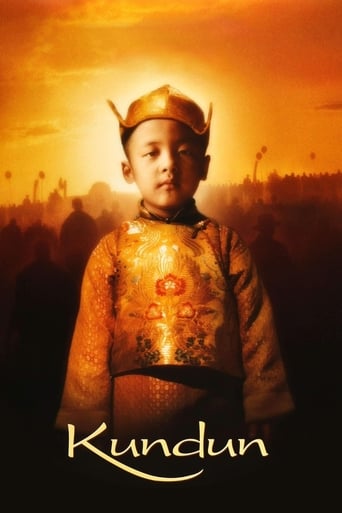
Kundun 1997
Kundun Is Scorsese's Film About Losing Everything Without Losing Yourself
Read the revelation →