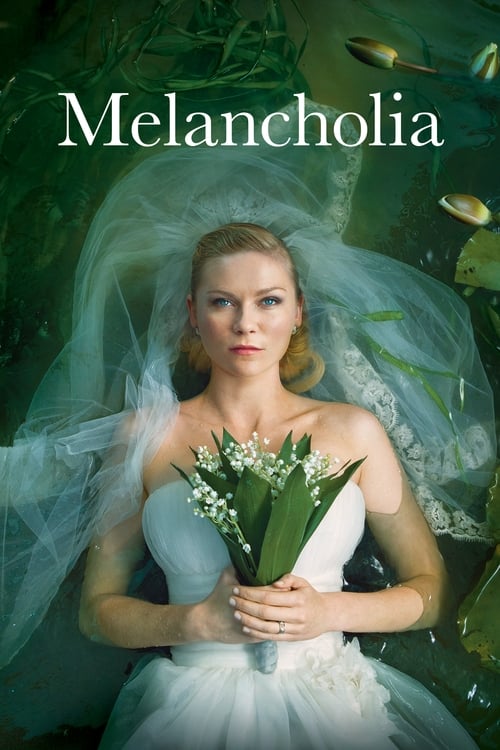
Melancholia
The Apocalypse Arrives and Justine Is Calm. She Has Always Known.
Directed by Lars von Trier
Lars von Trier's Melancholia is a Gnostic parable disguised as a disaster film. The rogue planet is not the catastrophe. It is the confirmation.
Justine spends the entire film already knowing. Her depression is not illness in the clinical sense, it is perception. She has always sensed that underneath the wedding party, the vows, the champagne, the manicured estate, the world was hollow in a way no one around her could tolerate naming. Her sister Claire manages life through ritual and control. Her husband Michael manages it through optimism. The guests manage it through distraction. Justine cannot do any of that. She sits in the bath, unable to move, staring at nothing, because what she is looking at is not nothing. It is the void the others paper over. When Melancholia finally appears in the sky, she does not collapse. She walks outside and lies in its blue light with her arms open. Something is arriving that she has already lived with for years.
The Gnostic Reading: The Demiurge's World Is Ending, and One Pneumatic Already Knew
Gnostic cosmology divides humanity into three types: the hylics, who are bound entirely to matter; the psychics, who sense something higher but cling to form; and the pneumatics, who carry a divine spark and have always felt the wrongness of the material world. Justine is pneumatic to the bone.
The wedding sequence in Act One shows her performing the psychic's life, wearing the persona of the happy bride, and it tears her apart in real time. She vanishes from her own reception. She has sex with a stranger in a sand trap. She tells her boss, in front of his dinner guests, that his advertising campaign is morally bankrupt. These are not breakdowns. They are eruptions of a self that cannot survive in the Demiurge's world, the world of appearances, propriety, and strategic happiness. When she lies naked on the riverbank letting Melancholia's light wash over her, she is not surrendering to death. She is recognizing her own nature in something vast enough to match it.
The Jungian Reading: The Self Arrives as a Destroying Star
In Jungian terms, the Self is the totality of the psyche, far larger than the ego, and its arrival is not gentle. When the Self erupts into consciousness, it can look like madness, destruction, obliteration of everything the ego built. Claire represents the ego throughout Melancholia: organized, practical, functionally managing, running toward the horse as though decisive action can stop a planet.
The film's most precise moment comes in Act Two, when Justine looks through Claire's science magazine telescope and confirms with flat certainty that Melancholia is on a collision course. Claire has just accepted her husband's assurance that it will pass safely. Justine simply looks, sees, and says what is true. The ego (Claire) needs comfort. The larger psyche (Justine) can hold what is actually there. The Jungian Self does not offer consolation. It offers reality, and reality here is total. The Self arrives as a destroying star, and only those who have already befriended their own annihilation can meet it without shattering.
Von Trier's other films operate on adjacent ground: Antichrist maps the same female-grief territory as pure demonology, while Breaking the Waves runs the pneumatic soul through institutional torture until it transcends or breaks. For the longer lineage of humans waiting calmly at the end of everything, The Seventh Seal holds the door.
Questions this film answers
What is the deeper meaning of Melancholia?
Justine spends the entire film already knowing. Her depression is not illness in the clinical sense, it is perception. She has always sensed that underneath the wedding party, the vows, the champagne, the manicured estate, the world was hollow in a way no one around her could tolerate naming. Her sister Claire manages life through ritual and control. Her husband Michael manages it through optimism. The guests manage it through distraction. Justine cannot do any of that. She sits in the bath, unable to move, staring at nothing, because what she is looking at is not nothing. It is the void the others paper over. When Melancholia finally appears in the sky, she does not collapse. She walks outside and lies in its blue light with her arms open. Something is arriving that she has already lived with for years.
What is the hidden symbolism in Melancholia?
Gnostic cosmology divides humanity into three types: the hylics, who are bound entirely to matter; the psychics, who sense something higher but cling to form; and the pneumatics, who carry a divine spark and have always felt the wrongness of the material world. Justine is pneumatic to the bone.
What esoteric traditions appear in Melancholia?
Melancholia draws from Gnosticism, Jungian traditions. Lars von Trier's Melancholia is a Gnostic parable disguised as a disaster film. The rogue planet is not the catastrophe. It is the confirmation.
Is Melancholia worth watching for spiritual seekers?
Melancholia (2011) directed by Lars von Trier is essential viewing for those interested in Gnosticism, Jungian. The Apocalypse Arrives and Justine Is Calm. She Has Always Known.. It rewards multiple viewings and contemplation.
Rewatch With New Eyes
Now that you've seen the architecture, experience it again. The same film becomes a different film when you know what to watch for.
This time, watch for:
- Watch for the false world vs. the real — who is asleep, who awakens
- Meet the shadow: what is rejected, projected, and finally integrated
Links may include affiliate partnerships that support Media Revelations