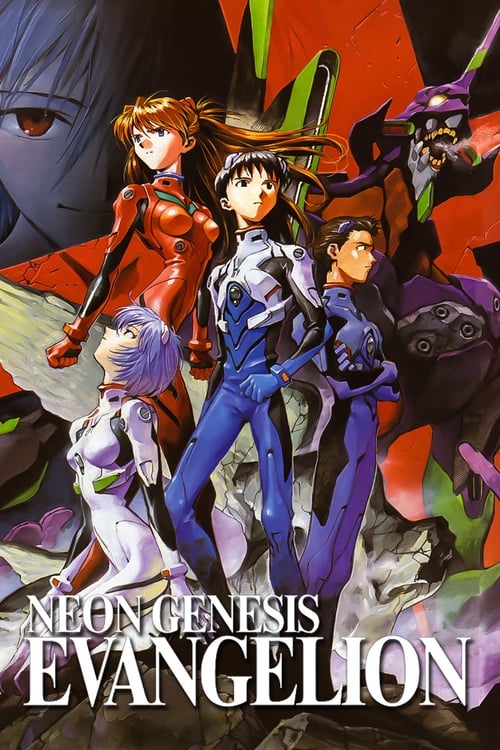
Neon Genesis Evangelion
Kabbalistic Apocalypse in the Ruins of the Self
Directed by Hideaki Anno
Anno built the entire architecture on the Tree of Life. Each Angel is a Sephirah. SEELE's goal is forced Tikkun — repair through merger of all souls into Ein Sof.
Neon Genesis Evangelion is the most complex Kabbalistic work in contemporary fiction. The entire architecture — the Angels, NERV, SEELE, the Human Instrumentality Project — maps onto the Tree of Life with precision that suggests either deep study or channeled download. Anno was clinically depressed when he made it. He poured his breakdown into the structure, and the structure held. The result is a work that uses mecha anime conventions to ask the only questions that matter: What is a self? What connects self to other? What would it mean to dissolve the boundary between souls — and would that be salvation or annihilation?
The Surface
Giant robots fight monsters to save humanity. A traumatized fourteen-year-old is forced to pilot one because his father tells him to. The organization protecting humanity has secrets. The monsters have secrets. The robots have secrets. Everything is much worse than it appears.
This is the hook that caught a generation. Evangelion arrived in 1995 and detonated. It was not the first mecha anime to feature psychological complexity, but it was the first to make the psychological damage the actual subject while maintaining spectacular action. Shinji Ikari cries, screams, runs away, fails to connect — and still gets in the robot. The dissonance was unbearable. It was also honest.
What most viewers sense but cannot articulate is that Evangelion is operating on multiple levels simultaneously. The monster-of-the-week structure is a delivery mechanism. The actual content is something else entirely — a sustained meditation on individuation, merger, trauma, and the desperate human need for connection that is also the desperate human fear of connection.
The Kabbalistic Architecture
The Angels are not aliens. They are emanations of Adam, the first Angel, who is discovered crucified beneath NERV headquarters. Adam and Lilith — the two progenitor beings — correspond to the Kabbalistic concepts of the masculine and feminine divine principles. Humanity descends from Lilith. The Angels descend from Adam. They are siblings, not invaders.
SEELE — the secret council that controls everything — is pursuing the Human Instrumentality Project: the forced merger of all human souls into a single unified consciousness. This is Tikkun — the repair of the shattered vessels, the return of the divine sparks to their source. But SEELE wants to achieve it artificially, through technology and manipulation rather than spiritual evolution.
The Tree of Life appears explicitly throughout the series — in SEELE's logo, in the Sephirothic system that powers the Evas, in the structure of Terminal Dogma. Each Angel corresponds to a Sephirah. Each battle is a confrontation with a different aspect of divine emanation. The war is not physical. It is cosmological.
This is not decoration. Anno either studied Kabbalah deeply or intuited its structures through his own psychological exploration. The Tree of Life is a map of consciousness, and Evangelion is navigating that map with the entire apparatus of giant robot anime.
The Hedgehog's Dilemma
Shinji's fundamental problem is not the Angels. It is other people. He cannot connect. He cannot let himself be known. Every relationship triggers the same wound: abandonment by his father, death of his mother, the fear that closeness means annihilation.
This is the Hedgehog's Dilemma, which the show names explicitly: hedgehogs need to huddle for warmth, but their spines hurt each other. The closer they get, the more pain. The choice seems to be: freeze alone or bleed together.
Shinji is not unique in this. Every character in Evangelion suffers the same wound in different forms. Asuka performs competence to cover worthlessness. Rei has no boundaries and therefore no self. Misato uses sexuality to create distance. Gendo refuses all vulnerability and becomes a monster. The entire cast is a spectrum of failed individuation.
Anno made this show during a four-year depressive episode. He was hospitalized. He could not function. And he poured all of it into the work. The result is that Evangelion does not depict psychological damage from the outside, as an author's construct. It transmits psychological damage from the inside, as lived experience. This is why it hits so hard. It is not representation. It is transmission.
The Absolute Terror Field
The A.T. Field is Evangelion's central metaphor, disguised as a plot device. It is the barrier that Angels and Evas project — an impenetrable wall that cannot be breached by conventional weapons. Only an Eva's own A.T. Field can neutralize an Angel's.
But the A.T. Field is not just a defensive technology. It is the boundary of individual identity itself. Every human has an A.T. Field — the invisible wall that separates self from other. The Human Instrumentality Project aims to dissolve all A.T. Fields, returning humanity to a state of undifferentiated unity.
This is the core question: Is the boundary between selves a prison or a protection? Is individuation a wound that needs healing through merger? Or is separateness the prerequisite for love — because you cannot love what is not other?
The show's answer is complex. Instrumentality is depicted as seductive — a return to warmth, to connection, to the end of loneliness. But it is also annihilation. To dissolve into the collective is to cease being a self that can experience anything at all. The hedgehog's dilemma has no solution that doesn't involve pain.
The End of Evangelion
The original TV ending — two episodes of pure psychological breakdown, Shinji's mind fragmenting on screen — was so controversial that Anno received death threats. He responded by making The End of Evangelion, a theatrical film that provides the 'real' ending. It is one of the most disturbing animated films ever made.
Third Impact occurs. Lilith, merged with Rei, rises as a white giant that covers the Earth. All A.T. Fields collapse. Every human being liquefies into primordial soup — LCL, the amniotic fluid that fills Eva cockpits. The Sephiroth appear in the sky. The Tree of Life manifests physically over the planet.
Shinji is given the choice: remain in Instrumentality, in perfect undifferentiated unity — or reject it, accept the pain of separateness, and return to a world where others can hurt you. He chooses to return. He chooses individuation over merger. He chooses the hedgehog's dilemma over dissolution.
The film ends on a beach. Shinji and Asuka are the only humans who have reconstituted themselves. Everyone else chose to stay dissolved. Shinji strangles Asuka. She strokes his face. He cries. She says: 'How disgusting.' This is not a happy ending. It is the only ending that isn't annihilation.
The Transmission
Evangelion traumatized a generation. Fans debated its meaning for decades. The rebuild films revisited and revised the story. Memes proliferated. 'Get in the robot, Shinji' became a catchphrase for every demand that someone face their responsibilities.
But the reason Evangelion endures is not its plot complexity or its psychological depth or its Kabbalistic architecture. It endures because it is true. It depicts the terror of being a self who needs others but cannot bear them with a precision that feels like being seen.
Anno understood something that most entertainment refuses to acknowledge: there is no solution to the human problem. There is no technique that makes connection painless. There is no merger that preserves individuation. There is no individuation that doesn't risk loneliness. There is only the choice to stay, to keep choosing separateness and connection simultaneously, to pilot the robot even when you don't want to.
The final message is neither hopeful nor hopeless. It is realistic: this is what it costs to be human. You can dissolve into unity and lose yourself. Or you can stay separate, get hurt, hurt others, and call it love. Those are the options. Choose.
Questions this film answers
What is the deeper meaning of Neon Genesis Evangelion?
Neon Genesis Evangelion is the most complex Kabbalistic work in contemporary fiction. The entire architecture — the Angels, NERV, SEELE, the Human Instrumentality Project — maps onto the Tree of Life with precision that suggests either deep study or channeled download. Anno was clinically depressed when he made it. He poured his breakdown into the structure, and the structure held. The result is a work that uses mecha anime conventions to ask the only questions that matter: What is a self? What connects self to other? What would it mean to dissolve the boundary between souls — and would that be salvation or annihilation?
What is the hidden symbolism in Neon Genesis Evangelion?
Giant robots fight monsters to save humanity. A traumatized fourteen-year-old is forced to pilot one because his father tells him to. The organization protecting humanity has secrets. The monsters have secrets. The robots have secrets. Everything is much worse than it appears.
What esoteric traditions appear in Neon Genesis Evangelion?
Neon Genesis Evangelion draws from Kabbalah, Jungian traditions. Anno built the entire architecture on the Tree of Life. Each Angel is a Sephirah. SEELE's goal is forced Tikkun — repair through merger of all souls into Ein Sof.
What does Neon Genesis Evangelion teach about the kabbalistic architecture?
The war is not physical. It is cosmological. The Angels are not aliens. They are emanations of Adam, the first Angel, who is discovered crucified beneath NERV headquarters. Adam and Lilith — the two progenitor beings — correspond to the Kabbalistic concepts of the masculine and feminine divine principles. Humanity descends from Lilith. The Angels descend from Adam. They are siblings, not invaders.
What does Neon Genesis Evangelion teach about the hedgehog's dilemma?
Anno made this show during a four-year depressive episode. He poured all of it into the work. Shinji's fundamental problem is not the Angels. It is other people. He cannot connect. He cannot let himself be known. Every relationship triggers the same wound: abandonment by his father, death of his mother, the fear that closeness means annihilation.
What does Neon Genesis Evangelion teach about the absolute terror field?
Is the boundary between selves a prison or a protection? The A.T. Field is Evangelion's central metaphor, disguised as a plot device. It is the barrier that Angels and Evas project — an impenetrable wall that cannot be breached by conventional weapons. Only an Eva's own A.T. Field can neutralize an Angel's.
What does Neon Genesis Evangelion teach about the end of evangelion?
He chooses the hedgehog's dilemma over dissolution. The original TV ending — two episodes of pure psychological breakdown, Shinji's mind fragmenting on screen — was so controversial that Anno received death threats. He responded by making The End of Evangelion, a theatrical film that provides the 'real' ending. It is one of the most disturbing animated films ever made.
Is Neon Genesis Evangelion worth watching for spiritual seekers?
Neon Genesis Evangelion (1995) directed by Hideaki Anno is essential viewing for those interested in Kabbalah, Tree of Life, Tikkun. Kabbalistic Apocalypse in the Ruins of the Self. It rewards multiple viewings and contemplation.
Rewatch With New Eyes
Now that you've seen the architecture, experience it again. The same film becomes a different film when you know what to watch for.
This time, watch for:
- Notice the vessels: what contains, what shatters, what repairs
- Meet the shadow: what is rejected, projected, and finally integrated
Links may include affiliate partnerships that support Media Revelations