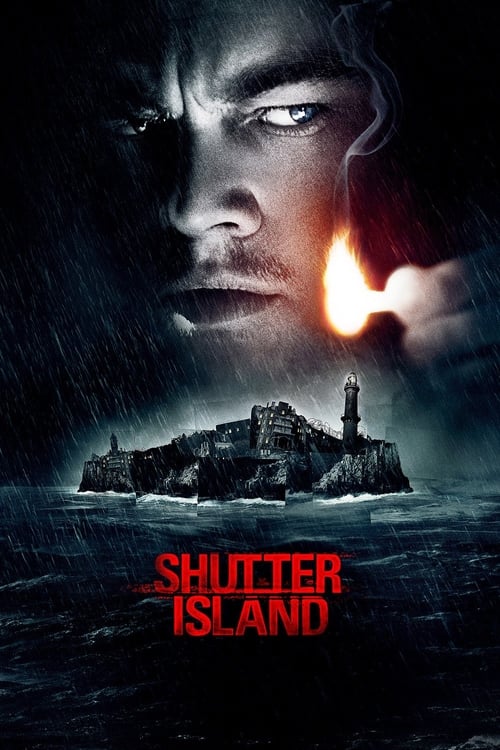
Shutter Island
Shutter Island Is a Man Choosing to Die as a Monster Rather Than Live as Himself
Directed by Martin Scorsese
The whole island is a stage the doctors built so one patient could face what he did. The final line tells you he saw it, and refused it anyway.
Teddy Daniels is not investigating a disappearance. He is the patient, and the entire elaborate manhunt, the missing woman, the conspiracy of Nazi doctors, the lighthouse full of lobotomies, is a role-play staged by the hospital's most radical psychiatrists to lead him back to a truth he cannot survive: his real name is Andrew Laeddis, his wife drowned their three children in a moment of psychosis, and he shot her at the lake to end it. Shutter Island is often discussed as a twist film, a puzzle with a solution. It is not a puzzle. It is a study of what a psyche will build to avoid one unbearable image, and of the moment a man is offered the chance to become sane and chooses annihilation instead. The last line settles it: "Which would be worse, to live as a monster, or to die as a good man?" He has remembered everything. He is pretending he hasn't, so they will lobotomize him. He would rather be erased than be Andrew.
Jungian Reading: The Shadow the Ego Will Die to Avoid Integrating
Jung named the Shadow the disowned self, the sum of everything the ego cannot bear to know it contains. Integration means facing that material consciously and taking it back as one's own. The failure to integrate does not make the Shadow disappear. It projects. Teddy's entire delusion is projection made architectural: he cannot own that he killed his wife, so he invents Andrew Laeddis as an external arsonist he is hunting, a monster somewhere out on the island who must be found and punished. He is chasing himself and calling it justice.
The migraines, the trembling hands, the dreams of his wife dissolving into ash and water, are the Shadow pressing against the wall of the story. Watch the lake sequence, when Rachel Solando becomes his wife Dolores, when she says "why are you all wet, baby," when the drowned children appear at the water's edge. The projection collapses; for one scene he holds his dead daughter and knows. That is the integration the doctors gambled everything on. But Jung warned that some wounds are too large for the vessel that must hold them. Teddy touches the truth and cannot carry its weight, and so he seals it back inside the fantasy and walks toward the lobotomy as toward mercy.
Initiatory Reading: The Descent Whose Candidate Chooses Not to Return
Every initiation is a descent into the underworld, a confrontation with death, and a return transformed. Dr. Cawley and Dr. Sheehan design Shutter Island as a deliberate initiatory ordeal: the ferry crossing the water like Charon's barge, the storm that seals the island off from the ordinary world, the ascent to the lighthouse where the final revelation waits. Every threshold is engineered to bring Teddy face to face with the guardian, which is his own deed.
The structure is textbook. He passes through the wards, descends into Ward C where the most violent are kept, climbs to the lighthouse, and receives the truth. The initiation is technically complete. He knows. But initiation is only real if the candidate consents to be reborn as who he actually is. Sheehan waits by the hospital steps for the sign that the return has held. Teddy, briefly, is Andrew again, sane and shattered. Then he says the line about the monster and the good man, and Sheehan's face falls, because he understands: the initiate has looked at the light and chosen the dark. Not every descent produces a return. Some candidates would rather stay in the underworld than come back carrying what they found there.
Other descents where a mind rewrites reality to survive a wound: Jacob's Ladder (the dying man's bargaining dream), Vertigo (a man remaking a woman to undo a death), Angel Heart (the detective hunting himself).
Questions this film answers
What is the deeper meaning of Shutter Island?
Teddy Daniels is not investigating a disappearance. He is the patient, and the entire elaborate manhunt, the missing woman, the conspiracy of Nazi doctors, the lighthouse full of lobotomies, is a role-play staged by the hospital's most radical psychiatrists to lead him back to a truth he cannot survive: his real name is Andrew Laeddis, his wife drowned their three children in a moment of psychosis, and he shot her at the lake to end it. Shutter Island is often discussed as a twist film, a puzzle with a solution. It is not a puzzle. It is a study of what a psyche will build to avoid one unbearable image, and of the moment a man is offered the chance to become sane and chooses annihilation instead. The last line settles it: "Which would be worse, to live as a monster, or to die as a good man?" He has remembered everything. He is pretending he hasn't, so they will lobotomize him. He would rather be erased than be Andrew.
What is the hidden symbolism in Shutter Island?
Jung named the Shadow the disowned self, the sum of everything the ego cannot bear to know it contains. Integration means facing that material consciously and taking it back as one's own. The failure to integrate does not make the Shadow disappear. It projects. Teddy's entire delusion is projection made architectural: he cannot own that he killed his wife, so he invents Andrew Laeddis as an external arsonist he is hunting, a monster somewhere out on the island who must be found and punished. He is chasing himself and calling it justice.
What esoteric traditions appear in Shutter Island?
Shutter Island draws from Jungian, Initiation traditions. The whole island is a stage the doctors built so one patient could face what he did. The final line tells you he saw it, and refused it anyway.
Is Shutter Island worth watching for spiritual seekers?
Shutter Island (2010) directed by Martin Scorsese is essential viewing for those interested in Jungian, Initiation. Shutter Island Is a Man Choosing to Die as a Monster Rather Than Live as Himself. It rewards multiple viewings and contemplation.
Rewatch With New Eyes
Now that you've seen the architecture, experience it again. The same film becomes a different film when you know what to watch for.
This time, watch for:
- Meet the shadow: what is rejected, projected, and finally integrated
- Mark the threshold: the old self dies, the ordeal transforms, the new self returns
Links may include affiliate partnerships that support Media Revelations