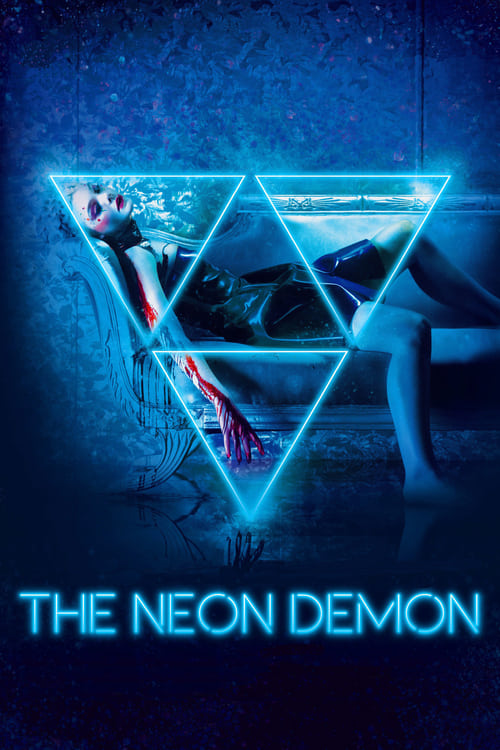
The Neon Demon
The Goddess Who Gets Eaten by Her Worshippers
Directed by Nicolas Winding Refn
Jesse has what everyone wants: youth, beauty, the thing that cannot be bought or earned. She arrives innocent. She becomes the idol. She is consumed. Refn films Los Angeles as a temple where beauty is the god and the god must be devoured to be possessed. Necrophilia, cannibalism — the sacraments of this religion are literal consumption.
The Neon Demon is the most honest film ever made about beauty — not as surface but as currency, as weapon, as divinity. Jesse arrives in Los Angeles possessing what cannot be bought: youth and natural beauty. She enters an industry that worships what she has. She becomes the goddess. She is consumed. Refn structures the film as a ritual. Jesse's innocence is real at the start — she genuinely does not understand her power. The industry transforms her. She learns that she has what everyone wants and cannot replicate. 'I'm not as helpless as I look.' She becomes the deity — cold, distant, worthy of worship. And the worshippers, unable to possess what she is, must destroy and consume her. The film's final act is not metaphor. The women who envied Jesse eat her corpse. One bathes in her blood. This is the logical conclusion of the beauty industry: if beauty is power and youth is the source, then consuming the young and beautiful is the only way to take what they have. Refn films it with the same neon-drenched reverence he gives everything else. The horror is not separate from the beauty. It is the beauty.
The Surface
Jesse, a sixteen-year-old aspiring model, arrives in Los Angeles with no connections, no experience, and impossible beauty. She meets a makeup artist, Ruby, who befriends her. She attracts attention from a photographer who sees something 'dangerous' in her innocence. She is signed to an agency. Her career begins.
The established models — Gigi, who has had extensive plastic surgery, and Sarah, whose career is fading with age — recognize Jesse as a threat. She has what they have been destroying themselves to approximate. Ruby's interest becomes predatory. The industry turns its attention toward Jesse with the intensity of hunger.
At a fashion show, Jesse completes her transformation — from innocent to idol. She kisses her own reflection. She has become the goddess. But goddesses in this temple are not worshipped from a distance. They are consumed.
Beauty as Divine Material
Refn films beauty as the Gnostic spark — the divine element trapped in matter. Jesse possesses it. Others do not. This is not earned. It is given. The film is brutally honest about this: beauty is not democratic. Some people have it and some people will never have it no matter what they do.
The Archons of this world are the beauty industry — the agencies, photographers, designers who decide who possesses the spark and who does not. They do not create beauty. They recognize it. They elevate those who have it and discard those who do not.
Jesse's transformation is a Gnostic awakening. She begins not knowing what she is. She ends knowing — and knowing that knowledge is power. 'Women would kill to look like this. They carve and stuff and inject themselves.' She has what cannot be manufactured. She has become aware of it.
But awareness is not protection. The spark makes her visible to those who would consume it. The more she shines, the more dangerous she becomes — not to others, but from others. The Archons do not want to serve the pneumatic. They want to eat her.
Ruby and Perverted Worship
Ruby is the film's most complex figure — friend, predator, worshipper, destroyer. She makeup-artists corpses at the morgue and models at the studios. She moves between death and beauty professionally. She sees Jesse's beauty and wants to be near it.
Ruby's seduction attempt — and Jesse's rejection — is the film's turning point. Ruby cannot have Jesse while Jesse is alive and choosing. What Jesse has cannot be transferred through desire. It can only be transferred through destruction.
After murdering Jesse, Ruby lies with a corpse in the morgue while covered in Jesse's blood. The necrophilia is the sacrament completed. Unable to possess living beauty, Ruby possesses dead flesh. The act is ritual, not aberration.
Ruby's fate — bleeding out in Jesse's blood, expiring under the moon — suggests the transaction went wrong. You cannot actually consume divinity. You can only destroy the vessel and gain nothing. The worshipper who kills the god is still not a god.
The Consumption
The climactic murder and cannibalism is filmed with the same aesthetic reverence as the fashion shows. This is deliberate. Refn refuses to separate beauty from horror. They are the same material differently arranged.
Gigi and Sarah consume Jesse's corpse. They bathe in her blood. They believe they are absorbing what she had. The ritual logic is ancient: eat the heart of the brave warrior and gain his courage. Consume the flesh of the divine and become divine.
But it does not work. In the final scene, Gigi begins vomiting — expelling what remains of Jesse. She cannot keep it down. She cuts open her stomach with scissors and dies. Sarah picks up the expelled eyeball and swallows it again. The cycle continues. The consumption fails. The beauty cannot be transferred.
Refn's diagnosis is complete: the beauty industry is cannibalistic. It consumes youth and discards the consumed. But the consumption achieves nothing. Those who eat the young do not become young. They become murderers who are still aging.
The Transmission
The Neon Demon was marketed as a horror film and rejected by mainstream audiences. The film is too slow, too beautiful, too honest about what it is depicting. Critics could not decide if Refn was critiquing or celebrating the world he showed.
He is doing both. The neon aesthetic makes everything beautiful — including the murder, including the corpse, including the eyeball. The beauty is real. The horror is also real. They are not opposites. In the world of surfaces, they are the same.
Jesse's line — 'I'm not as helpless as I look' — is the film's hinge. She has become aware of her power. She is no longer innocent. The corruption has entered. And the corruption is not external. It is the recognition of what she is in a world that will destroy her for being it.
The transmission is ugly: beauty is power, and power invites destruction. The beautiful are consumed. The consumers gain nothing. The cycle continues. Los Angeles is the temple. The neon is the cathedral lighting. The god bleeds. The worshippers eat. Nothing changes.
Questions this film answers
What is the deeper meaning of The Neon Demon?
The Neon Demon is the most honest film ever made about beauty — not as surface but as currency, as weapon, as divinity. Jesse arrives in Los Angeles possessing what cannot be bought: youth and natural beauty. She enters an industry that worships what she has. She becomes the goddess. She is consumed. Refn structures the film as a ritual. Jesse's innocence is real at the start — she genuinely does not understand her power. The industry transforms her. She learns that she has what everyone wants and cannot replicate. 'I'm not as helpless as I look.' She becomes the deity — cold, distant, worthy of worship. And the worshippers, unable to possess what she is, must destroy and consume her. The film's final act is not metaphor. The women who envied Jesse eat her corpse. One bathes in her blood. This is the logical conclusion of the beauty industry: if beauty is power and youth is the source, then consuming the young and beautiful is the only way to take what they have. Refn films it with the same neon-drenched reverence he gives everything else. The horror is not separate from the beauty. It is the beauty.
What is the hidden symbolism in The Neon Demon?
Jesse, a sixteen-year-old aspiring model, arrives in Los Angeles with no connections, no experience, and impossible beauty. She meets a makeup artist, Ruby, who befriends her. She attracts attention from a photographer who sees something 'dangerous' in her innocence. She is signed to an agency. Her career begins.
What esoteric traditions appear in The Neon Demon?
The Neon Demon draws from Gnosticism, Shamanism traditions. Jesse has what everyone wants: youth, beauty, the thing that cannot be bought or earned. She arrives innocent. She becomes the idol. She is consumed. Refn films Los Angeles as a temple where beauty is the god and the god must be devoured to be possessed. Necrophilia, cannibalism — the sacraments of this religion are literal consumption.
What does The Neon Demon teach about beauty as divine material?
Beauty is the Gnostic spark — the divine element trapped in matter. Some people have it. Some will never have it. Refn films beauty as the Gnostic spark — the divine element trapped in matter. Jesse possesses it. Others do not. This is not earned. It is given. The film is brutally honest about this: beauty is not democratic. Some people have it and some people will never have it no matter what they do.
What does The Neon Demon teach about the consumption?
Eat the heart of the divine and become divine. But it does not work. The beauty cannot be transferred. The climactic murder and cannibalism is filmed with the same aesthetic reverence as the fashion shows. This is deliberate. Refn refuses to separate beauty from horror. They are the same material differently arranged.
Is The Neon Demon worth watching for spiritual seekers?
The Neon Demon (2016) directed by Nicolas Winding Refn is essential viewing for those interested in Gnosticism, Beauty, Sacrifice. The Goddess Who Gets Eaten by Her Worshippers. It rewards multiple viewings and contemplation.
Rewatch With New Eyes
Now that you've seen the architecture, experience it again. The same film becomes a different film when you know what to watch for.
This time, watch for:
- Watch for the false world vs. the real — who is asleep, who awakens
- Follow the descent: what dies, what guides, what returns transformed
Links may include affiliate partnerships that support Media Revelations