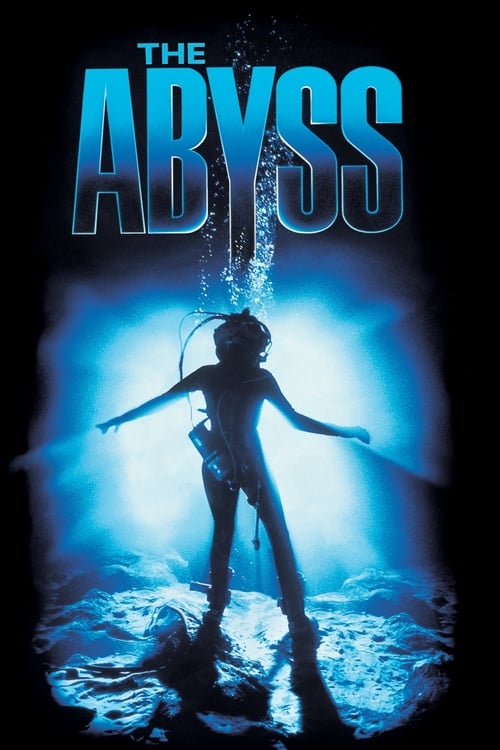
The Abyss
The Abyss Is a Descent Where a Man Must Drown and a Marriage Must Die Before Either Can Be Saved
Directed by James Cameron
Cameron sends his hero to the bottom of the ocean, then makes him go lower, into water so deep no diver has returned from it.
The Abyss opens as a rescue thriller and keeps descending past every floor where the plot could have stopped. A sunken submarine, then a deep-sea oil rig, then a trench that drops off the edge of the mapped world, then a single man breathing liquid, falling alone into black water toward an intelligence at the bottom. Cameron structures the film as a ladder going down, and each rung strips away another layer of safety. The married couple at the center, Bud and Lindsey, are divorcing when the film begins, snapping at each other across the wreck of their partnership. The abyss will not let them stay divided. Everything the film does to them physically, the pressure, the cold, the drowning, the impossible dive, is the outer form of an inner work: the dissolution of two hardened, separated selves back into the thing they were before pride sealed them apart. The bottom of the ocean is where the surgery happens, and the pressure is the anesthetic.
Initiatory Reading: The Drowning That Has to Be Real
The film's central initiation is a death that is not symbolic. Lindsey, trapped underwater with one suit between them, chooses to drown so that Bud can carry her body to safety and revive her. Cameron films the drowning at full length: she goes cold, she goes still, she is genuinely dead for minutes. This is the initiatory death in its oldest form, the candidate who must actually cross the threshold and return, not merely brush against it.
Then Bud takes his own turn. He descends into the trench in a liquid-breathing suit, deeper than any human has gone, knowing his air for the return trip runs out at the bottom. He is not expected to survive it. He falls through absolute dark toward the guardian at the floor of the world, and what he meets there is not death but the beings who have been watching. The pattern is exact: descent past the point of no return, encounter with the powers below, transformation, and a return that is really a rescue by what he found. He goes down to die and is brought back up remade.
Alchemical Reading: The Solutio That Dissolves the Marriage to Reunite It
Alchemy calls the immersion of a hardened substance in water solutio, the dissolving that must precede any true joining. Two things cannot be wed until each has been softened back to solution; otherwise they only sit beside each other, rigid and separate. Bud and Lindsey begin the film as exactly that, two rigid stones, a marriage crystallized into resentment.
The entire descent is their solutio. Water strips them of everything that let them stay hard: their roles, their control, their certainty that they are done with each other. In the drowning scene the alchemy is literal. Lindsey dissolves completely, into cold water and death, and Bud calls her back not with technique but with fury and love, refusing to let the dissolution be final. The coniunctio, the alchemical wedding, follows from it: the reunion at the bottom is possible only because both were unmade first. The abyss is the vessel, the deep water is the solvent, and the marriage that comes back up is not the old one repaired. It is a new thing precipitated out of solution.
Questions this film answers
What is the deeper meaning of The Abyss?
The Abyss opens as a rescue thriller and keeps descending past every floor where the plot could have stopped. A sunken submarine, then a deep-sea oil rig, then a trench that drops off the edge of the mapped world, then a single man breathing liquid, falling alone into black water toward an intelligence at the bottom. Cameron structures the film as a ladder going down, and each rung strips away another layer of safety. The married couple at the center, Bud and Lindsey, are divorcing when the film begins, snapping at each other across the wreck of their partnership. The abyss will not let them stay divided. Everything the film does to them physically, the pressure, the cold, the drowning, the impossible dive, is the outer form of an inner work: the dissolution of two hardened, separated selves back into the thing they were before pride sealed them apart. The bottom of the ocean is where the surgery happens, and the pressure is the anesthetic.
What is the hidden symbolism in The Abyss?
The film's central initiation is a death that is not symbolic. Lindsey, trapped underwater with one suit between them, chooses to drown so that Bud can carry her body to safety and revive her. Cameron films the drowning at full length: she goes cold, she goes still, she is genuinely dead for minutes. This is the initiatory death in its oldest form, the candidate who must actually cross the threshold and return, not merely brush against it.
What esoteric traditions appear in The Abyss?
The Abyss draws from Initiation, Alchemy traditions. Cameron sends his hero to the bottom of the ocean, then makes him go lower, into water so deep no diver has returned from it.
Is The Abyss worth watching for spiritual seekers?
The Abyss (1989) directed by James Cameron is essential viewing for those interested in Initiation, Alchemy. The Abyss Is a Descent Where a Man Must Drown and a Marriage Must Die Before Either Can Be Saved. It rewards multiple viewings and contemplation.
Rewatch With New Eyes
Now that you've seen the architecture, experience it again. The same film becomes a different film when you know what to watch for.
This time, watch for:
- Mark the threshold: the old self dies, the ordeal transforms, the new self returns
- Track the stages: blackening, whitening, reddening — death before rebirth
Links may include affiliate partnerships that support Media Revelations