The Beyond
The Beyond Is What Happens When the Gate to Hell Has No Guardian
Directed by Lucio Fulci
Fulci's plot collapses because the film is not about people. It is about a location that was never meant to be inhabited, and the slow discovery that there is no floor beneath the world.
The Beyond is Fulci at his most metaphysical and least logical, and the two facts are one fact. Liza inherits a decrepit Louisiana hotel built over one of the seven gates of hell, described in a forbidden book called Eibon. Every attempt to repair, sell, or escape the hotel opens the gate wider. Characters die in ways that make no narrative sense: acid dissolves faces, spiders devour a man alive in a library, the dead return without explanation and cannot be stopped by explanation. Viewers who demand the deaths add up to a mystery are looking for the wrong thing. There is no mystery to solve because there is no solution to reach. The film's horror is ontological. It proposes that reality is a thin membrane stretched over an abyss, and that some places, through no one's fault, are simply worn through.
Gnostic Reading: The Painting That Shows the World Is False
The Book of Eibon and the painter Schweick establish the film's secret architecture. Schweick was crucified in the hotel's cellar in 1927 for painting the gate, for depicting the truth of what the building sits upon. His painting shows a barren gray wasteland strewn with corpses, and by the final scene Liza and John have walked directly into it. They go blind first, then find themselves standing in the painted hell, motionless, staring at a horizon that does not change. This is Gnostic cosmology stripped of its consolation. The material world is a false construction, a veil, and the Gnostic promise is that seeing through the veil brings liberation. Fulci refuses the promise. His characters see through the veil and find only more veil, a gray plain with no gnosis, no rescuing spark, no return. The revelation that the world is not real is supposed to free you. Here it only relocates you to the emptier truth underneath, where sight itself is the final punishment.
Demonology Reading: Hell as Geography, Not Judgment
Traditional demonology frames hell as a verdict, a place you are sent for what you have done. The Beyond dismantles the moral machinery entirely. No one in the hotel has earned their fate. Liza is an innocent inheritor. Emily, the blind woman who warns her, is herself a servant of the gate, a corpse who does not know she is dead. The plumber, the doctor, the little girl Jill, all are consumed with the indifference of weather. This is hell as pure location, a coordinate on a map rather than a sentence in a ledger. The seven gates exist because the film's cosmos was built with holes in it, and standing near one is enough. Fulci's genius, buried under the gore, is this refusal of desert. His hell does not care what you did. It only cares where you are standing. That is far more frightening than any judgment, because judgment at least implies a judge who is paying attention, and here the abyss is simply open, waiting, unattended, and patient in the way that only a thing without a mind can be patient.
Questions this film answers
What is the deeper meaning of The Beyond?
The Beyond is Fulci at his most metaphysical and least logical, and the two facts are one fact. Liza inherits a decrepit Louisiana hotel built over one of the seven gates of hell, described in a forbidden book called Eibon. Every attempt to repair, sell, or escape the hotel opens the gate wider. Characters die in ways that make no narrative sense: acid dissolves faces, spiders devour a man alive in a library, the dead return without explanation and cannot be stopped by explanation. Viewers who demand the deaths add up to a mystery are looking for the wrong thing. There is no mystery to solve because there is no solution to reach. The film's horror is ontological. It proposes that reality is a thin membrane stretched over an abyss, and that some places, through no one's fault, are simply worn through.
What is the hidden symbolism in The Beyond?
The Book of Eibon and the painter Schweick establish the film's secret architecture. Schweick was crucified in the hotel's cellar in 1927 for painting the gate, for depicting the truth of what the building sits upon. His painting shows a barren gray wasteland strewn with corpses, and by the final scene Liza and John have walked directly into it. They go blind first, then find themselves standing in the painted hell, motionless, staring at a horizon that does not change. This is Gnostic cosmology stripped of its consolation. The material world is a false construction, a veil, and the Gnostic promise is that seeing through the veil brings liberation. Fulci refuses the promise. His characters see through the veil and find only more veil, a gray plain with no gnosis, no rescuing spark, no return. The revelation that the world is not real is supposed to free you. Here it only relocates you to the emptier truth underneath, where sight itself is the final punishment.
What esoteric traditions appear in The Beyond?
The Beyond draws from Gnosticism, Demonology traditions. Fulci's plot collapses because the film is not about people. It is about a location that was never meant to be inhabited, and the slow discovery that there is no floor beneath the world.
Is The Beyond worth watching for spiritual seekers?
The Beyond (1981) directed by Lucio Fulci is essential viewing for those interested in Gnosticism, Demonology. The Beyond Is What Happens When the Gate to Hell Has No Guardian. It rewards multiple viewings and contemplation.
Rewatch With New Eyes
Now that you've seen the architecture, experience it again. The same film becomes a different film when you know what to watch for.
This time, watch for:
- Watch for the false world vs. the real — who is asleep, who awakens
- Identify the hierarchy: which demon, which rank, which grimoire it comes from
Links may include affiliate partnerships that support Media Revelations
The Descent Continues
Where this thread leads next.
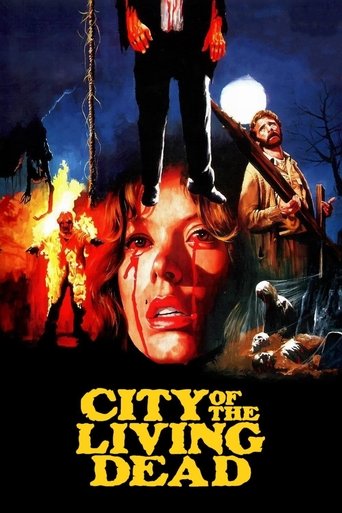
City of the Living Dead 1980
City of the Living Dead Is an Apocalypse in the Original Sense: a Tearing of the Veil That Cannot Be Sewn Shut
Read the revelation →