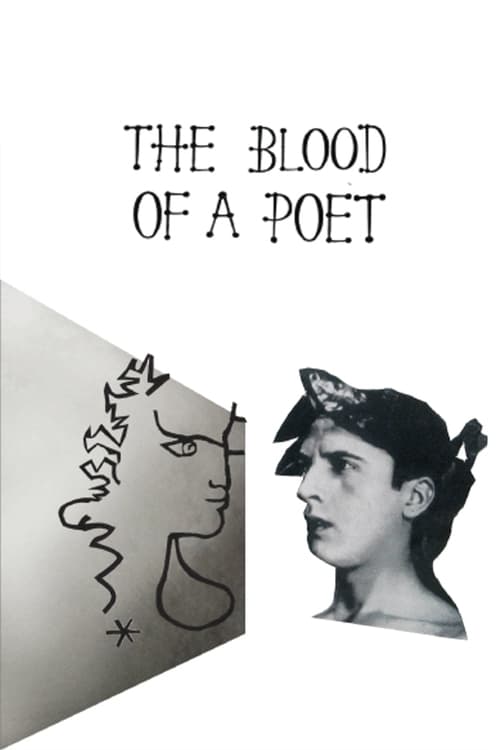
The Blood of a Poet
The Blood of a Poet Is What Happens When an Artist Follows His Own Image Through the Glass
Directed by Jean Cocteau
Cocteau said it was realism of the unreal. What he built was a working diagram of how a poet is unmade and remade by the thing he creates.
A poet draws a mouth on paper. The mouth peels off the page and fastens itself to his living hand, speaking, breathing, refusing to be wiped away. He presses it against an armless plaster statue, and the statue wakes, ordering him to walk into a mirror. He does. On the other side is the Hôtel des Folies-Dramatiques, a corridor of doors he peers through one by one: an opium den, a Mexican firing squad executed and revived on a loop, a flying instructor, a hermaphrodite. The film treats none of this as dream logic to be decoded. It treats it as the actual anatomy of making art. Cocteau numbers the four episodes like stages of an operation. This is the poet dismantled by his own gift and reassembled wrong, and the film is honest that the reassembly is fatal.
Alchemical Reading: The Mouth on the Hand Is the Prima Materia Refusing to Be Discarded
The wound the poet cannot heal is the artwork itself. He draws a face, tries to erase the mouth, and it clings to his palm as living flesh. In alchemy the prima materia is the base substance that must be worked and cannot be thrown away, the thing the operator would rather be rid of but is bound to transform. The poet's whole crisis is that he wants to be free of what he made. He drowns the mouth in a basin. He smothers it against the statue to be rid of it. Every attempt to dispose of the material only animates it further, which is the first law of the work: nothing leaves the vessel until it is transmuted.
The passage through the mirror is the entry into the sealed vessel, and Cocteau films the mirror as water, the poet sinking into it rather than shattering it. Inside, the hotel corridor is the nigredo, the blackening, the descent into fragmented and monstrous images where the self dissolves before it can cohere. The snowball fight that kills the boy, the card game where the poet wins by stealing the ace of hearts from a dead child's body, the blood pooling from the loser's mouth: these are the reddening, the rubedo bought with actual blood. The stone is never delivered. The poet completes the operation and finds no gold, only a marble statue of himself, which is what the artist becomes when the work is finished, admired, and dead.
Initiatory Reading: The Poet Shoots Himself and the Bullet Is the Threshold
Twice in the film the poet dies and does not stay dead. He puts a revolver to his temple after failing the trials in the hotel corridor, and the wound blooms as a crown of laurel, immortality granted for the willingness to die. This is the core mechanism of initiation: the candidate undergoes a real death, symbolic yet total, and returns bearing the mark of it. The poet does not survive the corridor. He is remade by consenting to be destroyed in it.
But Cocteau refuses the clean initiatory reward. The card game repeats the death without the crown, and this time the poet dies for nothing, murdered by the logic of the images he set in motion. Initiation that becomes routine stops transforming and starts consuming. The poet is initiated, then re-initiated, until the ritual is all that is left and he is only its statue.
Questions this film answers
What is the deeper meaning of The Blood of a Poet?
A poet draws a mouth on paper. The mouth peels off the page and fastens itself to his living hand, speaking, breathing, refusing to be wiped away. He presses it against an armless plaster statue, and the statue wakes, ordering him to walk into a mirror. He does. On the other side is the Hôtel des Folies-Dramatiques, a corridor of doors he peers through one by one: an opium den, a Mexican firing squad executed and revived on a loop, a flying instructor, a hermaphrodite. The film treats none of this as dream logic to be decoded. It treats it as the actual anatomy of making art. Cocteau numbers the four episodes like stages of an operation. This is the poet dismantled by his own gift and reassembled wrong, and the film is honest that the reassembly is fatal.
What is the hidden symbolism in The Blood of a Poet?
The wound the poet cannot heal is the artwork itself. He draws a face, tries to erase the mouth, and it clings to his palm as living flesh. In alchemy the prima materia is the base substance that must be worked and cannot be thrown away, the thing the operator would rather be rid of but is bound to transform. The poet's whole crisis is that he wants to be free of what he made. He drowns the mouth in a basin. He smothers it against the statue to be rid of it. Every attempt to dispose of the material only animates it further, which is the first law of the work: nothing leaves the vessel until it is transmuted.
What esoteric traditions appear in The Blood of a Poet?
The Blood of a Poet draws from Alchemy, Initiation traditions. Cocteau said it was realism of the unreal. What he built was a working diagram of how a poet is unmade and remade by the thing he creates.
Is The Blood of a Poet worth watching for spiritual seekers?
The Blood of a Poet (1932) directed by Jean Cocteau is essential viewing for those interested in Alchemy, Initiation. The Blood of a Poet Is What Happens When an Artist Follows His Own Image Through the Glass. It rewards multiple viewings and contemplation.
Rewatch With New Eyes
Now that you've seen the architecture, experience it again. The same film becomes a different film when you know what to watch for.
This time, watch for:
- Track the stages: blackening, whitening, reddening — death before rebirth
- Mark the threshold: the old self dies, the ordeal transforms, the new self returns
Links may include affiliate partnerships that support Media Revelations