Meshes of the Afternoon
Meshes of the Afternoon Is a Woman Meeting Herself in the House and Not Surviving the Introduction
Directed by Maya Deren
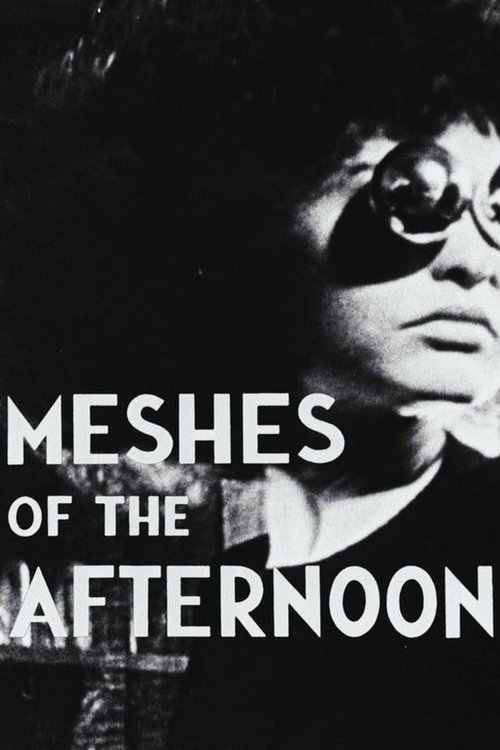
Maya Deren made fourteen minutes that reorganized what film could do. A flower, a key, a knife, a mirror-faced figure, and a woman who keeps chasing herself up the stairs.
A woman walks up a path, picks up a flower, enters a house, and falls asleep in a chair. Then it happens again, and again, and each repetition is slightly wrong. The key becomes a knife on the tongue. The stairway tilts and throws her against the walls. A figure in a black robe with a mirror for a face carries the flower ahead of her, always ahead. And each loop spawns another version of the dreamer, until three of her sit at the same table and one lifts a knife against the sleeping original. The surface reading calls this a landmark of American avant-garde cinema, a dream logic exercise, a formal breakthrough. It is all of that. It is also one of the most exact films ever made about the moment a psyche turns on itself, and Deren, who plays the woman, filmed her own interior with a precision no therapist could match.
Jungian Reading: The Mirror-Faced Figure Is the Self, and It Will Not Show Her a Face
Jung distinguished the ego, the small daylight "I," from the Self, the total psyche that includes everything the ego has refused to see. When the Self approaches, it often appears as a figure that is powerful, impersonal, and faceless, because the ego cannot yet supply it with features. Deren's hooded figure with a mirror where a face should be is that encounter made literal. When the woman looks at it, she sees only herself reflected back. The Self will not give her a face because she has not yet integrated what it holds. It carries the flower, the film's image of the living center, and it always stays ahead of her. She cannot catch what she has not become.
The multiplying doubles are the fragments of a personality that has not been unified. Each new version of her is a splinter of ego, and they cannot cooperate. When one of them raises the knife over the sleeping woman, this is not murder in the ordinary sense. It is the psyche attacking the very center it was meant to protect, the self-division that Jung called the danger of an individuation that fails. The film ends with a man discovering her body in the chair, throat cut, glass and seaweed around her. The introduction to the Self was fatal because there was no one whole enough to receive it.
Initiatory Reading: The Descent With No Return
Every initiation runs the same circuit: the threshold, the ordeal, the transformation, the return to the ordinary world carrying what was found below. Meshes gives us the descent and refuses the return. The house is the underworld disguised as a living room. The woman crosses the threshold again and again, and each crossing takes her deeper rather than through. The repeated objects, flower and key and knife and phone off its hook, are the fixed furniture of an inner chamber she cannot exit.
A true initiation ends when the initiate climbs back up the stairs changed. Deren's dreamer climbs the stairs only to be flung back down by them. The ordeal has no far side. When the mirror-faced figure lays the flower on the empty bed, the offering is complete but the initiate is gone. This is the initiation that consumes the one it was meant to make new.
Questions this film answers
What is the deeper meaning of Meshes of the Afternoon?
A woman walks up a path, picks up a flower, enters a house, and falls asleep in a chair. Then it happens again, and again, and each repetition is slightly wrong. The key becomes a knife on the tongue. The stairway tilts and throws her against the walls. A figure in a black robe with a mirror for a face carries the flower ahead of her, always ahead. And each loop spawns another version of the dreamer, until three of her sit at the same table and one lifts a knife against the sleeping original. The surface reading calls this a landmark of American avant-garde cinema, a dream logic exercise, a formal breakthrough. It is all of that. It is also one of the most exact films ever made about the moment a psyche turns on itself, and Deren, who plays the woman, filmed her own interior with a precision no therapist could match.
What is the hidden symbolism in Meshes of the Afternoon?
Jung distinguished the ego, the small daylight "I," from the Self, the total psyche that includes everything the ego has refused to see. When the Self approaches, it often appears as a figure that is powerful, impersonal, and faceless, because the ego cannot yet supply it with features. Deren's hooded figure with a mirror where a face should be is that encounter made literal. When the woman looks at it, she sees only herself reflected back. The Self will not give her a face because she has not yet integrated what it holds. It carries the flower, the film's image of the living center, and it always stays ahead of her. She cannot catch what she has not become.
What esoteric traditions appear in Meshes of the Afternoon?
Meshes of the Afternoon draws from Jungian, Initiation traditions. Maya Deren made fourteen minutes that reorganized what film could do. A flower, a key, a knife, a mirror-faced figure, and a woman who keeps chasing herself up the stairs.
Is Meshes of the Afternoon worth watching for spiritual seekers?
Meshes of the Afternoon (1943) directed by Maya Deren is essential viewing for those interested in Jungian, Initiation. Meshes of the Afternoon Is a Woman Meeting Herself in the House and Not Surviving the Introduction. It rewards multiple viewings and contemplation.
Rewatch With New Eyes
Now that you've seen the architecture, experience it again. The same film becomes a different film when you know what to watch for.
This time, watch for:
- Meet the shadow: what is rejected, projected, and finally integrated
- Mark the threshold: the old self dies, the ordeal transforms, the new self returns
Links may include affiliate partnerships that support Media Revelations