The Game
Nicholas Van Orton Falls Through a Glass Ceiling Into His Own Birthday Party (That's the Initiation)
Directed by David Fincher
A billionaire who has built a life-proof fortress receives one gift he cannot refuse: his own descent.
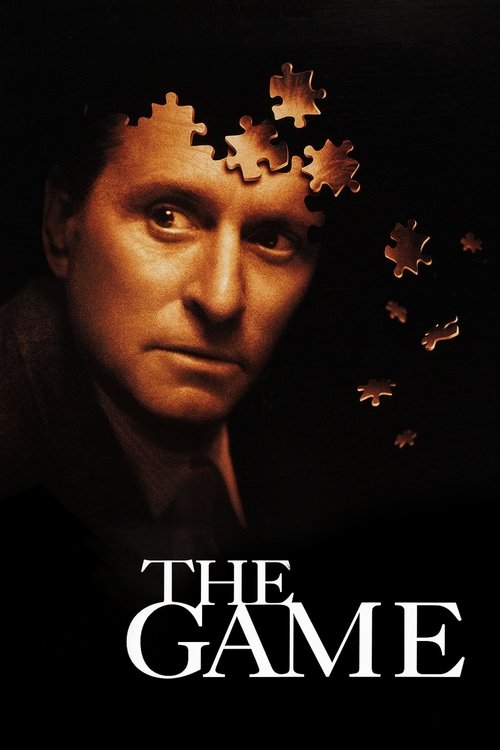
Nicholas Van Orton is forty-eight years old and entirely intact. He does not grieve. He does not need anything. He controls every room he enters with the same cold efficiency his father could not sustain long enough to stay alive. The Game begins the moment his brother Conrad hands him a business card and says, simply, "It changed my life." What follows is not a thriller about a corporate conspiracy. It is a precisely engineered shamanic death ritual. Every loss Nicholas suffers is calibrated. Every humiliation is a station. When he finally falls through a skylight and lands on a giant airbag inside a ballroom full of people shouting "Surprise," he is being born again. The fall was always the point.
Initiation: CRS Is the Threshold Guardian, and the Threshold Is His Father's Death
In every genuine initiatory structure, the candidate is stripped of everything that defined him before he is allowed to cross. Identity, property, social standing, the certainty that reality operates the way he was told it does. The stripping is the ceremony.
Watch Nicholas across the film's second half. His bank accounts are frozen. His passport is gone. He wakes in a Mexican cemetery, penniless, in another man's suit. He shoots the man he believes to be his brother. The entire scaffolding of his competence collapses station by station, and each collapse corresponds precisely to a competence that kept him sealed against his own grief. He was forty-eight, his father's age when his father stood on the edge of the roof and stepped off. Nicholas had never descended into that, only armored against it. The Game forced him down.
The final scene is explicit about what kind of rite this is. Nicholas steps off a building believing Conrad is dead by his hand, and lands inside his own birthday party. His father jumped from a building and died. Nicholas jumps from a building and is reborn. The ceremony mirrors and reverses the foundational wound. The same structure, the same height, the opposite result. Initiation does not erase the original injury. It descends into it and comes up changed.
Jungian: The Controlled Life as Persona, and What the Game Dissolves
The first thing Nicholas loses in The Game is his house. The second is his car. The third is the certainty that the world is navigable by intelligence alone. Carl Jung called the constructed public self the Persona, the mask that faces outward, and he identified its dissolution as the precondition for any real psychological development. Nicholas's Persona is one of the most fortified in Fincher's filmography.
His office is sealed glass and controlled light. His home is the family estate, maintained as a monument to the father he never processed. He fires his housekeeper for rearranging his closet. Every object in his world is a fixed point proving he cannot be disrupted. The Game dismantles fixed points for a living. A clown statue appears in his house. His television speaks to him directly. His coffee is drugged. The Persona requires a stable environment to maintain itself, and CRS methodically withdraws every stable element until the mask has nothing left to hold against.
The moment Nicholas weeps on the phone with Conrad is the film's real climax, not the fall through the skylight. The tears mean the Persona has dissolved. The birthday party is only the celebration of what already happened in that payphone.
The Game is in the same territory as Fight Club on the wealthy ego that requires total destruction before it can be honest, Donnie Darko on the orchestrated death that delivers its recipient into something realer, and The Truman Show on the life-as-controlled-environment collapsing into lived experience.
Questions this film answers
What is the deeper meaning of The Game?
Nicholas Van Orton is forty-eight years old and entirely intact. He does not grieve. He does not need anything. He controls every room he enters with the same cold efficiency his father could not sustain long enough to stay alive. The Game begins the moment his brother Conrad hands him a business card and says, simply, "It changed my life." What follows is not a thriller about a corporate conspiracy. It is a precisely engineered shamanic death ritual. Every loss Nicholas suffers is calibrated. Every humiliation is a station. When he finally falls through a skylight and lands on a giant airbag inside a ballroom full of people shouting "Surprise," he is being born again. The fall was always the point.
What is the hidden symbolism in The Game?
In every genuine initiatory structure, the candidate is stripped of everything that defined him before he is allowed to cross. Identity, property, social standing, the certainty that reality operates the way he was told it does. The stripping is the ceremony.
What esoteric traditions appear in The Game?
The Game draws from Initiation, Jungian traditions. A billionaire who has built a life-proof fortress receives one gift he cannot refuse: his own descent.
Is The Game worth watching for spiritual seekers?
The Game (1997) directed by David Fincher is essential viewing for those interested in Initiation, Jungian. Nicholas Van Orton Falls Through a Glass Ceiling Into His Own Birthday Party (That's the Initiation). It rewards multiple viewings and contemplation.
Rewatch With New Eyes
Now that you've seen the architecture, experience it again. The same film becomes a different film when you know what to watch for.
This time, watch for:
- Mark the threshold: the old self dies, the ordeal transforms, the new self returns
- Meet the shadow: what is rejected, projected, and finally integrated
Links may include affiliate partnerships that support Media Revelations