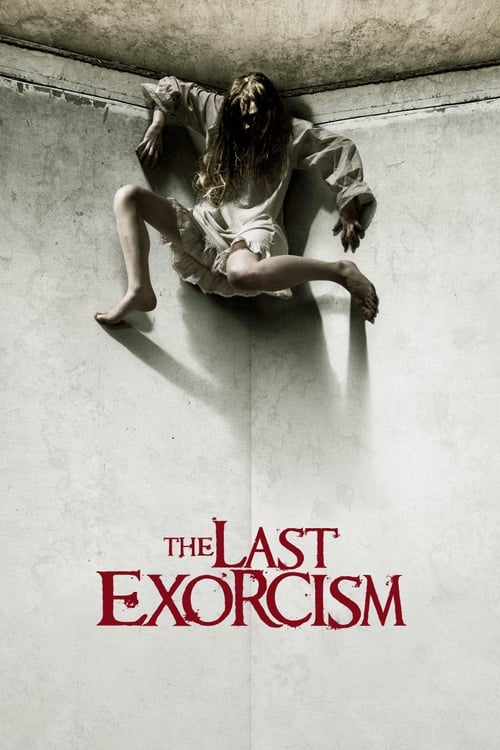
The Last Exorcism
The Last Exorcism Punishes a Faker by Making the Thing He Faked Real
Directed by Daniel Stamm
Reverend Cotton Marcus came to Louisiana to prove demons do not exist. The film agrees with him right up until the last minute, when it decides to disagree at the top of its lungs.
Cotton Marcus is a preacher who has stopped believing. He performs exorcisms with hidden gadgets, smoke, and rigged crucifixes, and he takes the family's money, and he has decided the whole business is theater exploiting frightened people. He invites a documentary crew to film him debunking one final case, the possession of a farm girl named Nell, so the world can see how the trick is done. For most of its runtime the film is on his side. Every symptom has a mundane explanation, every horror could be trauma or abuse. Then, in its final minutes, a bonfire in the woods, a summoned shape, and a cult that was real all along collapse the skeptic's frame completely. The film is not about whether demons are real. It is about what happens to a man who spends his life mocking a door, and then the door opens.
Demonological Reading: The Rite Works Even When the Priest Does Not Believe It
Traditional demonology holds that the exorcism is not persuasion, it is authority. The words and the rite carry power independent of the operator's sincerity, which is precisely why the Church has always feared the unbelieving or corrupt exorcist: the office is loaded whether or not the man holding it is.
Cotton performs the rite as a con, expecting nothing, and something answers. Nell's contortions, the mutilated animals, the drawings she makes of the film crew's deaths before they occur, all of it is the demonic responding to a summons the summoner thought was empty. The horror of the ending is not that a demon appears. It is that Cotton's fakery turns out to have been a real invocation. He picks up his cross and walks toward the fire not because his skepticism finally broke but because the rite reclaims him, dragging the unbelieving priest back into the office he abandoned. The demon did not need his faith. It only needed him to keep saying the words.
Gnostic Reading: A World Where the Only Two Options Are Fraud and Damnation
The film offers Cotton, and the viewer, a bleak-proof trap. Either the supernatural is a swindle run by cynics like Cotton, or it is real and it is malevolent. There is no third door where the sacred is real and good. This is the Gnostic diagnosis of the fallen world in its bleakest form: the divine is either absent, leaving only human deceit, or present as something hostile that wants to consume you.
Nell is the innocent soul caught between these options with no way out. The cult in the woods worships the demon openly, having concluded that if the dark is the only real power then the sane move is to serve it. Cotton spent his career on the other horn, deciding that since he saw no good God he would at least profit from the lie. The film's despair is that both are correct about the same universe. When Cotton finally raises his cross at the fire, it is not an act of returning faith. It is a man discovering that the god he mocked was never the one in charge here.
Questions this film answers
What is the deeper meaning of The Last Exorcism?
Cotton Marcus is a preacher who has stopped believing. He performs exorcisms with hidden gadgets, smoke, and rigged crucifixes, and he takes the family's money, and he has decided the whole business is theater exploiting frightened people. He invites a documentary crew to film him debunking one final case, the possession of a farm girl named Nell, so the world can see how the trick is done. For most of its runtime the film is on his side. Every symptom has a mundane explanation, every horror could be trauma or abuse. Then, in its final minutes, a bonfire in the woods, a summoned shape, and a cult that was real all along collapse the skeptic's frame completely. The film is not about whether demons are real. It is about what happens to a man who spends his life mocking a door, and then the door opens.
What is the hidden symbolism in The Last Exorcism?
Traditional demonology holds that the exorcism is not persuasion, it is authority. The words and the rite carry power independent of the operator's sincerity, which is precisely why the Church has always feared the unbelieving or corrupt exorcist: the office is loaded whether or not the man holding it is.
What esoteric traditions appear in The Last Exorcism?
The Last Exorcism draws from Demonology, Gnosticism traditions. Reverend Cotton Marcus came to Louisiana to prove demons do not exist. The film agrees with him right up until the last minute, when it decides to disagree at the top of its lungs.
Is The Last Exorcism worth watching for spiritual seekers?
The Last Exorcism (2010) directed by Daniel Stamm is essential viewing for those interested in Demonology, Gnosticism. The Last Exorcism Punishes a Faker by Making the Thing He Faked Real. It rewards multiple viewings and contemplation.
Rewatch With New Eyes
Now that you've seen the architecture, experience it again. The same film becomes a different film when you know what to watch for.
This time, watch for:
- Identify the hierarchy: which demon, which rank, which grimoire it comes from
- Watch for the false world vs. the real — who is asleep, who awakens
Links may include affiliate partnerships that support Media Revelations
The Descent Continues
Where this thread leads next.
The Exorcist 1973
The Exorcist Is Not About a Possessed Girl. It Is About a Priest Who Loses His Faith and Gets It Back by Dying for It
Read the revelation →