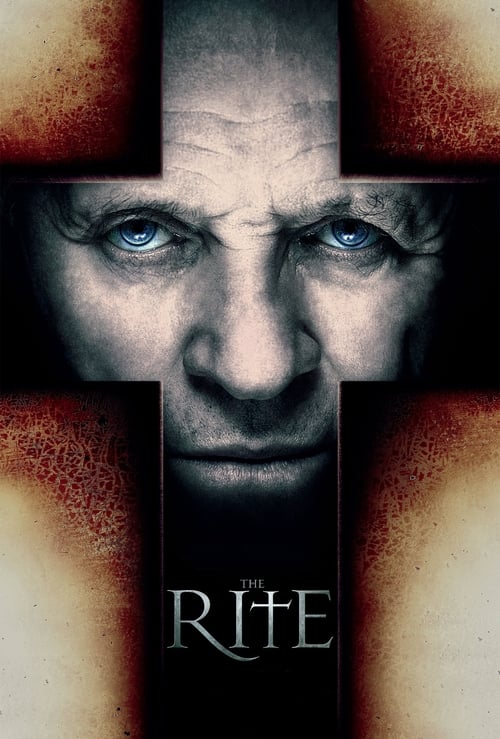
The Rite
The Rite Argues That the Only Real Exorcism Is the One Performed on the Exorcist
Directed by Mikael Håfström
A seminarian who does not believe in God is sent to exorcism school, and the demon he confronts turns out to be his own unbelief, wearing a body.
Michael Kovak enrolls at the Vatican's exorcism course to escape the family mortuary, not to serve a faith he no longer holds. He is a skeptic in a cassock, quietly certain that possession is untreated psychosis and that the Church is treating epileptics with Latin. The film could have been a standard shocker. Instead it does something more interesting: it takes the skeptic's position seriously for most of its length, then closes the trap. The demon's entire strategy against Michael is not to frighten him but to confirm his doubt, to behave just ambiguously enough that a rational man can keep explaining it away, right up until the ambiguity becomes his prison. The Rite understands the real target of an exorcism. It is never only the possessed body on the bed. It is the belief, or the absence of it, in the man holding the crucifix.
Demonological Reading: The Demon Attacks Belief, Not the Body
Traditional demonology holds that the possessing spirit is a liar whose deepest weapon is doubt, and that its aim is not merely to torment a host but to corrupt everyone in the room, especially the priest. The demon in The Rite operates by this doctrine exactly. It works through a pregnant girl and through Father Lucas, the veteran exorcist, and its method with Michael is precision-targeted at his skepticism. It knows things it could not know. It speaks in voices. But it always leaves a rational exit open, because a demon that only frightens a skeptic strengthens his defenses, while a demon that confirms his doubt keeps him disarmed.
The masterstroke is the possession of Father Lucas himself. The most faithful man becomes the vessel, which is the demon's argument made physical: if belief can be devoured in the strongest, what chance does the unbeliever have. When the demon finally names itself as Baal and demands Michael say its name, the confrontation has nothing to do with the body writhing in the chair. The demon wants Michael's certainty that it does not exist, because that certainty is the door it has been standing behind the whole time. To cast it out, Michael must first do the thing he came to avoid: believe.
Initiatory Reading: Faith as the Trial That Cannot Be Faked
Every genuine initiation demands that the candidate confront the exact thing he has organized his life around avoiding. Michael has spent years avoiding God, hiding inside intellect and irony, treating the priesthood as a scholarship rather than a vocation. His entire arc is an initiation he did not consent to and cannot complete on his own terms.
Father Lucas is the initiator, and initiation follows its ancient pattern: the guide must fall so the candidate can rise. Lucas is taken by the demon precisely when Michael still refuses to believe, forcing the initiate into the role he has been dodging. The final exorcism is Michael's threshold trial, and it cannot be passed with technique. It can only be passed with the surrender he has withheld his entire life. When he finally invokes God to cast Baal out of Lucas, he is not performing a ritual he studied. He is crossing the exact threshold the demon built the whole ordeal to keep him from crossing. The possessed man is freed, but the person actually initiated is the one who walked in an unbeliever.
Questions this film answers
What is the deeper meaning of The Rite?
Michael Kovak enrolls at the Vatican's exorcism course to escape the family mortuary, not to serve a faith he no longer holds. He is a skeptic in a cassock, quietly certain that possession is untreated psychosis and that the Church is treating epileptics with Latin. The film could have been a standard shocker. Instead it does something more interesting: it takes the skeptic's position seriously for most of its length, then closes the trap. The demon's entire strategy against Michael is not to frighten him but to confirm his doubt, to behave just ambiguously enough that a rational man can keep explaining it away, right up until the ambiguity becomes his prison. The Rite understands the real target of an exorcism. It is never only the possessed body on the bed. It is the belief, or the absence of it, in the man holding the crucifix.
What is the hidden symbolism in The Rite?
Traditional demonology holds that the possessing spirit is a liar whose deepest weapon is doubt, and that its aim is not merely to torment a host but to corrupt everyone in the room, especially the priest. The demon in The Rite operates by this doctrine exactly. It works through a pregnant girl and through Father Lucas, the veteran exorcist, and its method with Michael is precision-targeted at his skepticism. It knows things it could not know. It speaks in voices. But it always leaves a rational exit open, because a demon that only frightens a skeptic strengthens his defenses, while a demon that confirms his doubt keeps him disarmed.
What esoteric traditions appear in The Rite?
The Rite draws from Demonology, Initiation traditions. A seminarian who does not believe in God is sent to exorcism school, and the demon he confronts turns out to be his own unbelief, wearing a body.
Is The Rite worth watching for spiritual seekers?
The Rite (2011) directed by Mikael Håfström is essential viewing for those interested in Demonology, Initiation. The Rite Argues That the Only Real Exorcism Is the One Performed on the Exorcist. It rewards multiple viewings and contemplation.
Rewatch With New Eyes
Now that you've seen the architecture, experience it again. The same film becomes a different film when you know what to watch for.
This time, watch for:
- Identify the hierarchy: which demon, which rank, which grimoire it comes from
- Mark the threshold: the old self dies, the ordeal transforms, the new self returns
Links may include affiliate partnerships that support Media Revelations
The Descent Continues
Where this thread leads next.
The Exorcist 1973
The Exorcist Is Not About a Possessed Girl. It Is About a Priest Who Loses His Faith and Gets It Back by Dying for It
Read the revelation →