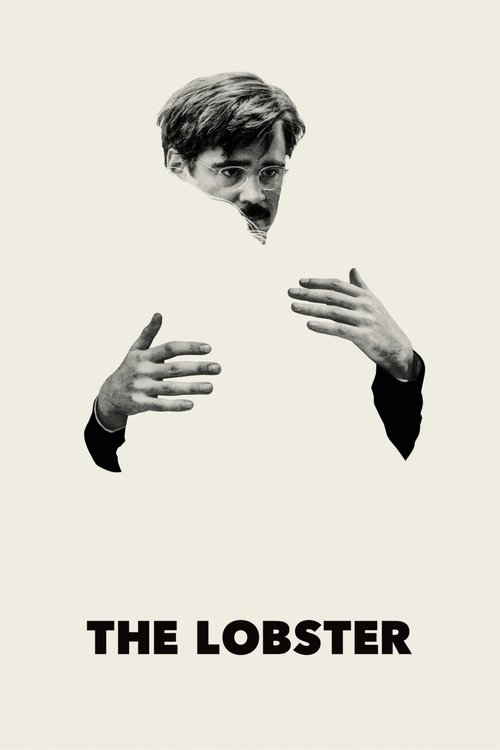
The Lobster
The Pair-Bond as Authoritarian Apparatus
Directed by Yorgos Lanthimos
Lanthimos filmed the most precise satire of compulsory romantic coupling ever made by suggesting that the institutional rules and the rebel underground use exactly the same enforcement mechanisms. The Hotel forces coupling. The Loners forbid it. Both are systems. Both punish deviation. The film's quiet horror is that the protagonist, having tried both, blinds himself to match his beloved because matching is the only available framework either side admits.
The Lobster is widely read as a satire of dating culture. The reading is correct but undershoots. Lanthimos has built a film whose actual subject is the structural identity between every system that organizes itself around the regulation of intimacy. The Hotel — which forces single people to find a romantic partner within forty-five days or be transformed into animals — and the Loners — the rebel commune in the woods that forbids any romantic contact and punishes infraction with mutilation — appear to be opposites. The film demonstrates, with surgical clarity, that they are the same system in inverted polarity. Both administer the heart by rule. Both expel those who deviate. Both produce subjects who can only think of intimacy in terms of permitted matching attributes — short-sightedness, nosebleeds, limp. The protagonist, David, attempts to navigate by inhabiting the rules of whichever side he finds himself on. His final action — preparing to blind himself in a diner so that he can match his blinded partner — is the film's most appalling image because it is what compatible coupling actually looks like under any system that requires legible matching: people inflicting wounds on themselves to remain inside the framework.
The Surface
In a near-future society, single adults are sent to the Hotel where they have forty-five days to find a romantic partner or be transformed into an animal of their choosing. Guests must demonstrate compatibility through a shared 'defining characteristic' — limp, nosebleed, short-sightedness, lisp. David arrives at the Hotel after his wife leaves him. He fails to fake a defining characteristic with the woman who is later revealed to be the most heartless guest. He escapes into the woods, joining the Loners — a rebel group led by the Loner Leader, whose rules forbid all flirtation and mandate punishment for breach. He falls in love with a woman who shares his short-sightedness. The Loner Leader, discovering the romance, takes the Short-Sighted Woman to a doctor and has her surgically blinded. David and the woman attempt to develop a new shared characteristic. The film ends with David in a diner bathroom, having ordered steak from a waitress, holding a steak knife, preparing to blind himself.
On release the film was praised as a brilliantly strange satire. Reviewers focused on the absurdist humor and the dating-app commentary. The film won the Cannes Jury Prize. Lanthimos's English-language debut established him as a major international director.
Underneath, the film is conducting a sustained inquiry into the structural condition of being a self under any system that requires legible compatibility for social membership. The Hotel and the Loners are the binary. The binary is the trap. The film is not endorsing either side. The film is naming the structure both sides share.
Two Systems, One Apparatus
Gnostic teaching has always understood that systems of social organization often appear to offer choice while actually offering only inverse versions of the same underlying structure. The Demiurge does not require a single dominant institution. The Demiurge requires that all available institutions enforce the same fundamental structure — the subject identified with their position, the position legible to the system, the system reproducing itself through the subject's continual self-classification.
The Hotel and the Loners look like options. They are not options. The Hotel enforces coupling. The Loners enforce singlehood. Both enforce. Both punish deviation. Both define the subject by a binary characteristic — coupled or single — that the subject is supposed to maintain consistently. The Loner Leader is the Hotel Manager's mirror, not her opposite.
The compatibility criteria are the film's most precise device. The Hotel requires a shared 'defining characteristic' as the basis for romantic legitimacy. This is dating apps reduced to their structural form — match by attribute, pair by category. The fact that the attributes are absurd — nosebleed, limp — is the film's joke. The structure is real. Most actual matching systems operate at this level of crudity. The film just makes it visible.
The Loners' rejection of intimacy is the same structure inverted. Their refusal of pairing is itself a pairing-based identity — they are organized by the negative of the Hotel's positive. They cannot let people couple because their organization is constituted by the non-coupling. They police the bodies of their members for signs of attraction. They mutilate transgressors. They are running the same software with the polarity flipped.
Defining Characteristics as the Death of Soul
Jung wrote about the persona as the social face the ego presents in order to be legible to others. A healthy person has a flexible persona, not identified with the role. An unhealthy person has fused with the persona until the persona is mistaken for the self. The fusion produces a brittleness — the persona must be defended at all costs because no self remains underneath to fall back on.
The Hotel's defining characteristics are the persona made operational. David's defining characteristic is short-sightedness. His brother John, transformed into a dog because he failed at the Hotel, was apparently defined by some characteristic we never learn. The Heartless Woman is defined by heartlessness. The Limping Man by limping. Each character is a single attribute promoted to identity. Each character is, in Jungian terms, persona-without-self.
This is what the modern dating apparatus actually does. It reduces the person to a profile. The profile is a selection of attributes presented as identity. Potential matches are evaluated by attribute compatibility. The match, if made, is then expected to perform the attributes consistently for the duration of the relationship. Lanthimos has filmed this reduction without exaggerating it. The film looks absurd because the reality is absurd. Most people just don't notice.
David's escape into the woods does not free him from the structure. The Loners require him to have no defining characteristic — which is itself a defining characteristic, just expressed as absence. When he meets the Short-Sighted Woman and they recognize their match, they have not escaped the Hotel's logic. They have re-imported it. The film's quiet despair is that the protagonist cannot conceive of love except as compatibility of attributes. The lovers fall in love because they match. They match because they have been formed by a culture that can only conceive of love as matching.
The Blinding Knife
The film's final image is David in a diner bathroom, holding a steak knife, preparing to blind himself. The Short-Sighted Woman, now blind, sits in the booth waiting for him. He has decided to match her by deliberately inflicting his own version of the wound she received involuntarily.
This is the most accurate image of compatible coupling in modern cinema. People injure themselves to remain compatible with the partner whose injury was inflicted by the world. The original wound was the system's. The matching wound is the self's. The matched pair is what the system recognizes as legitimate love.
Lanthimos refuses to show whether David goes through with it. The film cuts to black before the knife reaches the eye. The cut is the film's final, devastating choice. The viewer is forced to make the decision the film refused to make. Did David do it. Did he go through with the mutilation. Did he flee. Did he sit there forever, unable to do it and unable to leave.
The ambiguity is the diagnosis. Most people are sitting in some version of that diner. Most relationships involve some version of the bilateral self-mutilation by which both parties become compatible. The film does not preach against this. The film simply makes it visible. Visibility is what the film is for. The action one takes after the visibility is the viewer's responsibility.
The Transmission
The Lobster transmits an unfamiliar perception: that the social arrangements organizing intimacy in contemporary life are not natural conditions but engineered systems with specific mechanisms of enforcement. After this film, the dating app is harder to use without irony. The wedding registry is harder to attend without seeing the apparatus. The phrase 'looking for someone with similar interests' is harder to hear without the steak knife appearing in peripheral vision.
What the film leaves the viewer with is a sustained suspicion about every system that requires the self to declare a defining characteristic in order to receive membership. This includes the dating apparatus. It also includes the corporate identity apparatus, the political identity apparatus, the religious identity apparatus. The structure the film names is more general than the specific romantic application would suggest.
Lanthimos has continued this inquiry across Killing of a Sacred Deer, The Favourite, Poor Things, and Bugonia. The Lobster is the cleanest statement of the underlying program: the systems that claim to organize human flourishing tend, on inspection, to be elaborate mutilation rituals presented as care. The mutilations are mutual. The mutilations are voluntary. The mutilations leave the participants legible to each other and to the systems they inhabit. The film names the price. The price has been being paid for a long time. The film simply put it on the screen so that for ninety minutes one cannot pretend not to know.
Questions this film answers
What is the deeper meaning of The Lobster?
The Lobster is widely read as a satire of dating culture. The reading is correct but undershoots. Lanthimos has built a film whose actual subject is the structural identity between every system that organizes itself around the regulation of intimacy. The Hotel — which forces single people to find a romantic partner within forty-five days or be transformed into animals — and the Loners — the rebel commune in the woods that forbids any romantic contact and punishes infraction with mutilation — appear to be opposites. The film demonstrates, with surgical clarity, that they are the same system in inverted polarity. Both administer the heart by rule. Both expel those who deviate. Both produce subjects who can only think of intimacy in terms of permitted matching attributes — short-sightedness, nosebleeds, limp. The protagonist, David, attempts to navigate by inhabiting the rules of whichever side he finds himself on. His final action — preparing to blind himself in a diner so that he can match his blinded partner — is the film's most appalling image because it is what compatible coupling actually looks like under any system that requires legible matching: people inflicting wounds on themselves to remain inside the framework.
What is the hidden symbolism in The Lobster?
In a near-future society, single adults are sent to the Hotel where they have forty-five days to find a romantic partner or be transformed into an animal of their choosing. Guests must demonstrate compatibility through a shared 'defining characteristic' — limp, nosebleed, short-sightedness, lisp. David arrives at the Hotel after his wife leaves him. He fails to fake a defining characteristic with the woman who is later revealed to be the most heartless guest. He escapes into the woods, joining the Loners — a rebel group led by the Loner Leader, whose rules forbid all flirtation and mandate punishment for breach. He falls in love with a woman who shares his short-sightedness. The Loner Leader, discovering the romance, takes the Short-Sighted Woman to a doctor and has her surgically blinded. David and the woman attempt to develop a new shared characteristic. The film ends with David in a diner bathroom, having ordered steak from a waitress, holding a steak knife, preparing to blind himself.
What esoteric traditions appear in The Lobster?
The Lobster draws from Gnosticism, Jungian traditions. Lanthimos filmed the most precise satire of compulsory romantic coupling ever made by suggesting that the institutional rules and the rebel underground use exactly the same enforcement mechanisms. The Hotel forces coupling. The Loners forbid it. Both are systems. Both punish deviation. The film's quiet horror is that the protagonist, having tried both, blinds himself to match his beloved because matching is the only available framework either side admits.
What does The Lobster teach about two systems, one apparatus?
The Hotel and the Loners look like options. They are not options. They are the same software with the polarity flipped. Gnostic teaching has always understood that systems of social organization often appear to offer choice while actually offering only inverse versions of the same underlying structure. The Demiurge does not require a single dominant institution. The Demiurge requires that all available institutions enforce the same fundamental structure — the subject identified with their position, the position legible to the system, the system reproducing itself through the subject's continual self-classification.
Is The Lobster worth watching for spiritual seekers?
The Lobster (2015) directed by Yorgos Lanthimos is essential viewing for those interested in Gnosticism, Conformity, Lanthimos. The Pair-Bond as Authoritarian Apparatus. It rewards multiple viewings and contemplation.
Rewatch With New Eyes
Now that you've seen the architecture, experience it again. The same film becomes a different film when you know what to watch for.
This time, watch for:
- Watch for the false world vs. the real — who is asleep, who awakens
- Meet the shadow: what is rejected, projected, and finally integrated
Links may include affiliate partnerships that support Media Revelations
The Descent Continues
Where this thread leads next.

Bugonia 2025
The Conspiracy as Spiritual Diagnosis
Read the revelation →