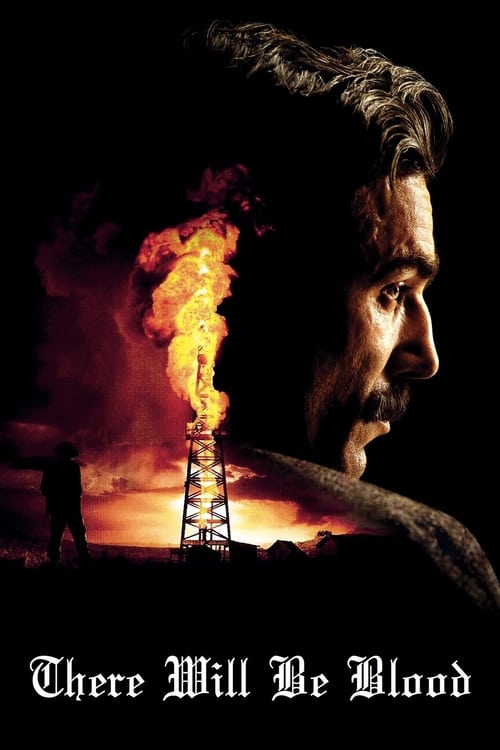
There Will Be Blood
I Have a Competition in Me (The Gospel of American Avarice)
Directed by Paul Thomas Anderson
Daniel Plainview is not greedy in the ordinary sense. He has more money than he can spend. He continues because he cannot stop — because competition is his religion, and there must always be someone to defeat. The oil is not the point. The winning is the point. And there is no final victory in a war against everyone.
There Will Be Blood is the definitive American film about the religion of competition — the belief that life is a zero-sum game and that winning means someone else must lose. Daniel Plainview is not a man who wants money. He is a man who wants victory. The distinction is everything. Plainview says it directly: 'I have a competition in me. I want no one else to succeed.' This is not strategy. This is theology. He has organized his entire existence around defeating others, and the accumulation of wealth is simply how he keeps score. He would be just as happy destroying others' success as creating his own. The confrontation with Eli Sunday — the preacher who represents a competing system of control — is the film's central conflict. Both men are in the business of domination: Plainview through capital, Sunday through religion. Their mutual hatred is the hatred of rivals who recognize each other as the same species. The final confrontation, in which Plainview beats Sunday to death with a bowling pin, is not just murder. It is the final triumph of capital over faith in the American soul.
The Surface
Daniel Plainview rises from silver miner to oil tycoon through a combination of genuine skill, ruthless dealing, and the appearance of family virtue. His adopted son H.W. — orphaned when his real father died in Plainview's mine — serves as prop and vulnerability both. When H.W. is deafened by an oil well explosion, Plainview's response reveals his true nature: the son is useful or he is nothing.
Paul Thomas Anderson constructed the film as a slow burn — nearly fifteen minutes pass before anyone speaks, and the rhythms of early industrial labor establish the world before any drama enters. When drama comes, it comes through Eli Sunday, the young preacher who demands his cut and his recognition, and whose neediness mirrors Plainview's own.
The film spans decades but feels concentrated, inevitable. We know from the title that blood is coming. The question is whose blood, and what it costs. By the final scene — Plainview drunk in his bowling alley, murdering the man who came to exploit him — we understand that Plainview was always heading here. The blood was never in question. The only question was whether anyone else would survive.
The Competition in Me
Plainview's confession to the man he believes is his brother is the film's diagnostic statement: 'I have a competition in me. I want no one else to succeed. I hate most people.' This is not psychological insight — Plainview is not asking to be fixed. This is self-knowledge without self-judgment. He knows what he is. He does not wish to be otherwise.
The 'competition' he describes is not rational self-interest. A rational capitalist would cooperate when cooperation increases returns. Plainview would rather earn less if it means others earn nothing. His pleasure is not in having but in winning — and winning requires losers.
This is the Shadow of capitalism made explicit. The system claims to be about mutual benefit, about rising tides lifting boats. Plainview demonstrates what actually drives the most successful players: not greed but dominance. The money is incidental to the victory. The victory is everything.
When Plainview looks at another human being, he sees a competitor or a tool. His son is a tool until he becomes a competitor. His brother-imposter is evaluated and executed. Eli Sunday is a competitor from the first moment they meet. There is no category in Plainview's psychology for relationship without hierarchy.
H.W. and the Uses of Family
H.W. is Plainview's adopted son, taken in after the boy's father died in Plainview's mine. The adoption serves strategic purposes: 'It makes people feel more comfortable.' A man with a child seems trustworthy. The family image is a business tool.
But Anderson complicates this. Plainview does seem to love H.W. — he panics when the boy is injured, he teaches him the business, he keeps him close when abandonment would be easier. The love and the use coexist. Plainview can feel genuine affection while simultaneously treating the boy as an asset.
When H.W. loses his hearing, Plainview's response is revealing. He cannot tolerate the disability because disability is weakness, and weakness is defeat. He sends H.W. away. Years later, when H.W. returns to start his own oil business — to compete — Plainview disowns him with vicious cruelty. The son has become a rival. That category overrides all others.
The disowning scene is unbearable because we see both men's pain. H.W. genuinely loves his father. Plainview may genuinely love his son. But the competition is non-negotiable. Blood means nothing when blood stands in your way.
Eli Sunday: The Mirror
Eli Sunday is Plainview's double — another man in the business of controlling people through performance and manipulation. Plainview controls through capital. Sunday controls through faith. Both are extractive. Both see the population as resource. Both recognize what the other is.
Their hatred is the hatred of competitors too similar to ignore. When Plainview forces Sunday to publicly renounce his faith — 'I am a false prophet, God is a superstition' — he is not attacking religion in the abstract. He is humiliating a rival, forcing the other system of control to bow to his.
Sunday represents the old American power: the preacher, the church, the moral authority that colonized the interior. Plainview represents the new American power: capital, industry, the extraction economy that cares nothing for souls and everything for resources. The conflict between them is the conflict of American history.
The final murder is not just personal vengeance. It is historical: capital literally beating religion to death, the new master destroying the old master, the American experiment reaching its logical conclusion in a rich man's bowling alley, blood spreading across the waxed floor.
The Sound and the Fury
Jonny Greenwood's score is one of the most unsettling in cinema — dissonant strings, industrial percussion, sounds that evoke machinery and suffering simultaneously. The music tells us what the images sometimes soften: this is a horror film about American capitalism.
Anderson's long takes and deliberate pacing create space for dread to accumulate. The oil derrick explosion — H.W.'s deafening — is foreshadowed by minutes of mounting tension, machinery sounds building, something wrong in the air before the fire erupts. The film makes extraction feel dangerous and wrong even when it succeeds.
The landscape itself is a character: the desert waiting to be drilled, the boom towns springing up, the infrastructure of extraction spreading across emptiness. This is beautiful and terrible — the sublime of industrial conquest, America making itself through the violation of land.
The silence of the opening sequence — Plainview alone in his mine, working by lamplight, suffering a broken leg, continuing anyway — establishes who he is before any dialogue can lie about it. This man will not stop. This man treats his own body as a tool to be used until it breaks. There is nothing in him that can surrender.
The Transmission
There Will Be Blood transmits the gospel of American avarice — the religion of competition that replaced or absorbed Christianity, that runs beneath the surface of all our institutions, that Plainview embodies without disguise.
The film is not a critique of capitalism from outside. It is a portrait from inside, showing us a man who has followed the logic to its end. Plainview wins. He has more money than he can spend. He has defeated all rivals. And he is miserable, drunk, alone in his mansion, killing the last person who bothered to visit.
This is the American nightmare: success without satisfaction, victory without peace, winning without anything left worth having. Plainview did everything right by the rules of the game. The game was the problem. The rules led here. The destination was always a bowling alley full of blood.
'I'm finished.' The final words are not victory. They are exhaustion. The competition finally ran out of competitors. But there is no one left to celebrate with, no one left to share the winnings, no one left at all. Just a rich man, alone, surrounded by blood, finished at last.
Questions this film answers
What is the deeper meaning of There Will Be Blood?
There Will Be Blood is the definitive American film about the religion of competition — the belief that life is a zero-sum game and that winning means someone else must lose. Daniel Plainview is not a man who wants money. He is a man who wants victory. The distinction is everything. Plainview says it directly: 'I have a competition in me. I want no one else to succeed.' This is not strategy. This is theology. He has organized his entire existence around defeating others, and the accumulation of wealth is simply how he keeps score. He would be just as happy destroying others' success as creating his own. The confrontation with Eli Sunday — the preacher who represents a competing system of control — is the film's central conflict. Both men are in the business of domination: Plainview through capital, Sunday through religion. Their mutual hatred is the hatred of rivals who recognize each other as the same species. The final confrontation, in which Plainview beats Sunday to death with a bowling pin, is not just murder. It is the final triumph of capital over faith in the American soul.
What is the hidden symbolism in There Will Be Blood?
Daniel Plainview rises from silver miner to oil tycoon through a combination of genuine skill, ruthless dealing, and the appearance of family virtue. His adopted son H.W. — orphaned when his real father died in Plainview's mine — serves as prop and vulnerability both. When H.W. is deafened by an oil well explosion, Plainview's response reveals his true nature: the son is useful or he is nothing.
What esoteric traditions appear in There Will Be Blood?
There Will Be Blood draws from Jungian, Gnosticism traditions. Daniel Plainview is not greedy in the ordinary sense. He has more money than he can spend. He continues because he cannot stop — because competition is his religion, and there must always be someone to defeat. The oil is not the point. The winning is the point. And there is no final victory in a war against everyone.
What does There Will Be Blood teach about the competition in me?
His pleasure is not in having but in winning — and winning requires losers. Plainview's confession to the man he believes is his brother is the film's diagnostic statement: 'I have a competition in me. I want no one else to succeed. I hate most people.' This is not psychological insight — Plainview is not asking to be fixed. This is self-knowledge without self-judgment. He knows what he is. He does not wish to be otherwise.
Is There Will Be Blood worth watching for spiritual seekers?
There Will Be Blood (2007) directed by Paul Thomas Anderson is essential viewing for those interested in Capitalism, Religion, Shadow. I Have a Competition in Me (The Gospel of American Avarice). It rewards multiple viewings and contemplation.
Rewatch With New Eyes
Now that you've seen the architecture, experience it again. The same film becomes a different film when you know what to watch for.
This time, watch for:
- Meet the shadow: what is rejected, projected, and finally integrated
- Watch for the false world vs. the real — who is asleep, who awakens
Links may include affiliate partnerships that support Media Revelations