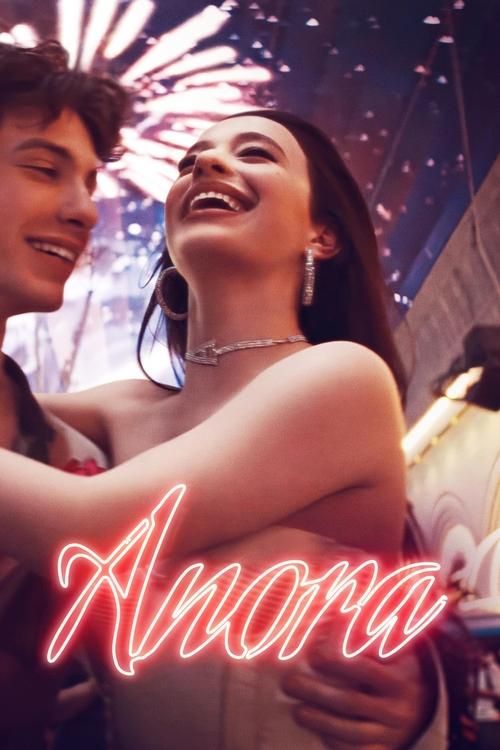
Anora is not a Cinderella story that goes wrong. It is a Cinderella story run in reverse, and the final scene is the whole film delivered in ninety seconds of silence.
Anora is not a Cinderella story that goes wrong. It is a Cinderella story run in reverse, and the final scene is the whole film delivered in ninety seconds of silence. Here is the anora ending explained at the only level that matters: Ani has built her entire self out of transaction, because as long as everything is exchange, nothing can reach the person underneath. Money touches the persona. Sex touches the persona. The persona is armor, and it works. Then a man returns her wedding ring expecting nothing in return, and the armor meets the one thing it cannot price. She tries to pay him the only way she knows. He tries to kiss her instead. And the whole structure of her survival breaks in a parked car in the snow. The kiss is refused because a kiss is the only currency she never sold. That refusal, and the collapse that follows it, is the point of the entire movie.
The Surface: A Sex Worker Marries a Russian Oligarch's Son and Loses
Anora, who insists everyone call her Ani, is a stripper and escort in Brighton Beach, Brooklyn.
She meets Ivan, the reckless young son of a Russian oligarch, when he pays for her time at the club. He hires her exclusively, then impulsively marries her in Las Vegas. For a week she lives the fairy tale: the mansion, the money, the ring, the belief that she has been chosen out of the ordinary and lifted into something permanent. Then Ivan's parents learn of the marriage and send their handlers to annul it. Ivan, a coward, flees the moment consequence arrives, and Ani spends the back half of the film being dragged around New York by three henchmen searching for the husband who abandoned her.
One of those henchmen is Igor, the quiet Armenian muscle who is gentle with her even while he is technically holding her captive. The marriage is destroyed. Ivan barely apologizes. Ani signs the annulment. The oligarch's world closes over the whole episode as if it never happened, and Ani is returned, with the ring surrendered and the fairy tale erased, to exactly where she started.
Critics called it a Palme d'Or winning screwball comedy, a Pretty Woman for the age of precarity, a wild ride with a gut punch at the end. All of that is true. It is also the surface. The film is not about whether Ani gets to keep the prince. The prince was never the prize and the palace was never real.
The Cinderella Structure Runs Backwards: The Palace Was the Illusion, the Pumpkin Was Real
Every element of the fairy tale is present, and every one is inverted.
In the Cinderella story, the girl in rags is secretly a princess, the ball reveals her true worth, and midnight is the cruelty that tears her back down to the ash before the prince restores her. Baker keeps the machinery and reverses the polarity. Ani's true life is the pumpkin: the small apartment, the shared bedroom with her sister, the club, the transactional grind of the body sold by the hour. The mansion and the marriage and the Vegas chapel are the coach that turns back into a vegetable at dawn. When midnight strikes in this film, it does not strip away the illusion of poverty to reveal a hidden princess. It strips away the illusion of the princess to reveal the ordinary woman who was always underneath.
This is the reversal the whole film is built to deliver. The palace was the spell. The pumpkin was the truth.
Watch how the movie treats wealth. The oligarch's mansion is enormous and cold and empty, filmed like a showroom nobody lives in. Ivan is not a prince but a boy playing one, buying experiences the way a child buys candy, incapable of a single act that costs him anything. The glass slipper here is the wedding ring, and the ring does not confirm Ani's worth. It marks her as a problem to be managed, a mistake to be papered over by people with lawyers. The fairy godmother figures, the handlers who arrive to fix everything, do not grant wishes. They revoke them.
So the arc most viewers feel as tragic, the loss of the dream, is the film handing Ani back her actual life. The dream was the trap. The tragedy is not that she loses the palace. The tragedy is that she ever believed a palace was owed to her, and the film has to break that belief all the way down before anything true can happen.
Ani Is the Persona, Anora Is the Soul, and the Name Is the Whole War
She corrects everyone. Her name is Ani. Not Anora. Ani.
In Jungian terms, the persona is the mask the psyche builds to meet the world, the face constructed for survival and transaction, distinct from the deeper self it protects. Anora is the name on the birth certificate, the given self, the soul underneath. Ani is the persona: sharper, harder, transactional, built for the club floor and the negotiation. When she insists on Ani, she is defending the armor. Anora is the girl who could be hurt. Ani is the woman who has arranged her entire life so that she cannot be.
The persona is not a lie. It is a strategy, and hers is a good one. Everything Ani does is exchange, and exchange is safety, because in a transaction both parties are protected by the terms. You pay, I perform, nothing is owed after, no one can reach past the contract to the person. This is why she is so fluent, so quick, so unbothered by intimacy that would wreck someone without her armor. She has monetized the very acts that are supposed to be the most vulnerable, which means those acts can no longer be used to vulnerate her. The body is for sale precisely so the soul stays sealed.
The marriage to Ivan looks like the persona winning its biggest jackpot, but it is really the persona overreaching. For one week Ani lets herself believe the transaction has become love, that the biggest deal of her life closed on real feeling. When it collapses, it does not just cost her money and a ring. It threatens the whole operating logic of her survival, because it proves the thing the persona exists to deny: that she wanted to be chosen, that under Ani there is an Anora who longed to be loved and not paid. The film spends its final act closing in on that buried want, and the last scene is where it finally surfaces.
Igor Returns the Ring Expecting Nothing, and Nothing Is What She Cannot Survive
Igor is the one person in the film who never tries to buy her, sell her, or win her.
He is gentle in a way that has no transactional logic, and that is exactly what makes him incomprehensible to her. When he protects her from the other henchmen, when he asks whether she is cold, when he treats her as a person rather than an asset or a problem, Ani reads it as a move, because every gesture in her world is a move. She keeps trying to locate the angle. There is no angle. He simply sees her, and being seen without a price attached is a language she does not speak.
In the final scene, Igor drives Ani home and gives her back the wedding ring that the oligarch's people had taken. He returns it expecting nothing. No sex, no money, no gratitude, no leverage. It is the first purely non transactional act anyone has offered her in the entire film, possibly in her entire life, and it lands on her armor like a key sliding into a lock she did not know she had.
In Sufi teaching, real love is the love that seeks nothing back, the gift with no ledger, and it is precisely this love that annihilates the false self. The lover offers everything and asks for nothing, and in that asymmetry the beloved's constructed self has nowhere to stand. Every defense Ani owns is built for a world of exchange. Igor's gesture comes from outside that world entirely. She has weapons for men who want to use her and weapons for men who want to save her, but she has no defense at all against a man who wants nothing from her except her presence. The gift with no invoice is the one attack her armor was never designed to stop.
The Kiss Is Refused Because a Kiss Is the Only Currency She Never Sold
So she does the only thing she knows how to do with a debt she cannot name. She tries to pay it.
Ani climbs onto Igor and initiates sex, straddling him in the parked car, converting his kindness into a transaction because a transaction is the only frame in which she is safe. This is not desire. It is a reflex of self protection. If she can make this exchange, then his gesture becomes payable, and if it is payable then it cannot touch the Anora underneath. She is reaching for her armor in the only form she has ever fully trusted, the sexual act priced and delivered, the thing she has done ten thousand times and survived every time because it was always for money and never for her.
Then Igor moves to kiss her, and she recoils.
This is the hinge of the entire film. She will give him her body without a flicker of hesitation, but she cannot let him kiss her, because the body was always for sale and the kiss never was. In her world sex is labor and a kiss is the withheld thing, the intimacy the persona kept off the market, the one act that means it is real and not paid. A kiss cannot be a transaction. It is the single currency she never learned to sell, which makes it the single act that could reach Anora directly, with no persona in between. When Igor tries to give her the one thing she cannot charge for, the armor has nothing left to convert it into, and it breaks.
She pulls back from his mouth and collapses forward against him, and the transaction she started dissolves into wracking, silent sobbing. The persona has finally met the one thing it cannot price, and it cracks to let the person out.
The Sacred Arrives in the Ordinary Once the Spectacle Is Stripped
Notice where this happens. Not in the mansion. In a car.
The entire first half of the film is spectacle: the club's neon, the Las Vegas lights, the oligarch's glass palace, the private jet fantasy of a life without limit. The revelation, when it finally comes, arrives in the smallest possible space. A used car parked at a curb, snow falling on the windshield, the wipers dragging back and forth, the engine idling. After all the mansions, the container of the true moment is a vehicle barely large enough for two people to sit in. That shrinking is the film's deepest structural claim, staged in the mise en scene.
Every genuine initiation ends the same way: the spectacle is stripped, the candidate is reduced to nothing, and only then can the real thing arrive. Ani has been stripped of the marriage, the money, the ring, the fantasy, the persona's biggest victory, everything the film gave her in the first act. She has been reduced to a woman crying in a stranger's car with nothing left to trade. And it is exactly there, in the ordinary and the small and the stripped down, that something true finally touches her. The palace could never have held this moment. The palace was built to keep it out.
The snow and the wipers do the work of the sacred made plain. The windshield wipers keep moving, mechanical and humble and ordinary, sweeping the same small arc over and over while the most important thing that has ever happened to Ani happens in the seat behind the glass. The sacred does not descend in a beam of light onto a throne. It arrives as snow on a used car while a rhythm keeps time, because the sacred was never in the spectacle. The spectacle was the thing hiding it. Only when everything glittering has been taken away is there finally room for something real.
This is the initiatory secret the film transmits without ever naming it. You cannot be met while you are still performing. The palace has to fall, the persona has to crack, the spectacle has to be stripped all the way down to a cold car in the snow, before the person underneath can be reached even once.
The Breakdown in the Car Is the Persona Cracking to Let Anora Out
The final image is Ani sobbing into Igor's chest while he holds her and the snow falls, and it is the first honest moment of her life.
Understand what is actually breaking here. For the entire film Ani has been unbreakable, and her invulnerability was the tragedy, not the strength. Nothing could touch her because she had arranged for nothing to be able to. The persona held through the wedding, the abandonment, the manhandling, the annulment, the humiliation, every blow the plot delivered, because the persona is armor and armor is what it does. What finally cracks it is not cruelty. It is kindness with no price on it. Ani could survive everything the hard world did to her. She cannot survive being simply held by someone who wants nothing.
That is why the breakdown is not despair. It is birth.
The sobbing is Anora coming out for the first time, the buried soul the persona was built to protect finally surfacing because the one condition it needed has finally been met: an act of love with no transaction attached, in a space with no spectacle to perform for. She is not crying because she lost the prince. The prince was always a boy. She is crying because for the first time in the entire film, and perhaps in her entire life, someone reached the person and not the mask, and the person has no idea how to be touched. The armor cracks and what pours out is everything it was holding in. Not weakness. Aliveness. The awful, unpriced aliveness she sold the body to keep sealed.
The film ends on the crack, not the healing, and that restraint is its integrity. It does not promise that Ani and Igor become anything. It does not resolve the sob into a happy ending or even a hopeful one. It simply shows the exact instant the persona failed and the person appeared, and then it cuts to black, because that instant is the whole revelation and anything after it would be a lie about how slow real change actually is.
What the Ending Means: The One Thing She Could Not Sell Was the One Thing That Was Real
The anora ending explained comes down to a single equation the whole film has been building toward. Ani sold everything the world calls intimate, the body, the time, the girlfriend experience, the wedding, in order to keep the one thing that was actually intimate off the market entirely. The kiss was the vault. The sob was what the vault was holding.
She spent the film believing the palace was the prize and the pumpkin was the punishment. The ending reveals she had it exactly backwards. The palace was the spell that kept her from her own life, and the pumpkin, the small real ordinary human life, was the thing the spell was hiding. Igor is not a rescue and he is not a replacement prince. He is the person who accidentally handed her back to herself by refusing to buy the only part of her she never put up for sale.
That is why the last shot is a woman crying in a cheap car in the snow and not a woman in a gown on a staircase. The gown was the illusion. The tears are the truth. And the film's final, quiet, devastating claim is that the truth was always going to arrive like this: small, cold, ordinary, unpaid, and impossible to survive without breaking open first.
Questions this film answers
What is the deeper meaning of Anora?
Anora is not a Cinderella story that goes wrong. It is a Cinderella story run in reverse, and the final scene is the whole film delivered in ninety seconds of silence. Here is the anora ending explained at the only level that matters: Ani has built her entire self out of transaction, because as long as everything is exchange, nothing can reach the person underneath. Money touches the persona. Sex touches the persona. The persona is armor, and it works. Then a man returns her wedding ring expecting nothing in return, and the armor meets the one thing it cannot price. She tries to pay him the only way she knows. He tries to kiss her instead. And the whole structure of her survival breaks in a parked car in the snow. The kiss is refused because a kiss is the only currency she never sold. That refusal, and the collapse that follows it, is the point of the entire movie.
What is the hidden symbolism in Anora?
Anora, who insists everyone call her Ani, is a stripper and escort in Brighton Beach, Brooklyn.
What esoteric traditions appear in Anora?
Anora draws from Jungian, Sufism, Initiation traditions. Anora is not a Cinderella story that goes wrong. It is a Cinderella story run in reverse, and the final scene is the whole film delivered in ninety seconds of silence.
Is Anora worth watching for spiritual seekers?
Anora (2024) directed by Sean Baker is essential viewing for those interested in Jungian, Sufism, Initiation. The Kiss Is the One Thing She Never Sold. It rewards multiple viewings and contemplation.
Rewatch With New Eyes
Now that you've seen the architecture, experience it again. The same film becomes a different film when you know what to watch for.
This time, watch for:
- Meet the shadow: what is rejected, projected, and finally integrated
- Feel the love that transforms: what the heart sees that the mind cannot
- Mark the threshold: the old self dies, the ordeal transforms, the new self returns
Links may include affiliate partnerships that support Media Revelations
The Descent Continues
Where this thread leads next.

Past Lives 2023
Past Lives Is About the Person You Had to Stop Being for This Life to Happen
Read the revelation →