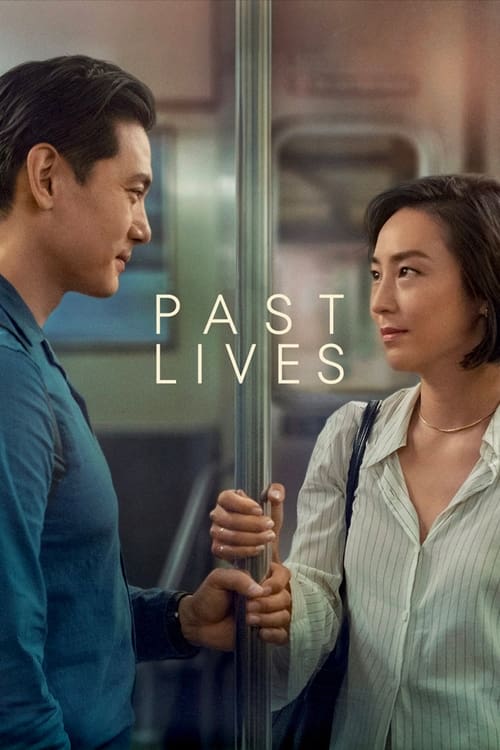
Past Lives
Past Lives Is About the Person You Had to Stop Being for This Life to Happen
Directed by Celine Song
In-yun, the Korean word the film hangs on, is not romance. It is the Buddhist arithmetic of how many crossings it took to sit beside someone once.
Nora and Hae Sung were twelve when her family emigrated and split them. They reconnect at twenty-four over video calls, then let each other go again. At thirty-six he flies to New York and they spend one weekend walking the city while her husband waits at home. The film is treated as a story about the one who got away. It is not. It is a story about the self who got left behind. When Nora left Korea she did not only leave Hae Sung. She left the Na Young she would have been, the Korean woman with a Korean life and a Korean name, and Hae Sung is the last living witness to that vanished person. He did not come for a woman. He came for a ghost, and the ghost is her, the version of her that died so this version could be born. What follows is what the film knows and never says out loud.
Buddhist Reading: In-Yun as the Ledger of Every Life That Brought You Here
Nora explains in-yun to her husband: if two strangers brush sleeves in passing, it is because in a past life they were something to each other, and eight thousand layers of in-yun are required for two people to marry. She offers it lightly, almost as a pickup line she once used. But the film is built entirely on this cosmology of accumulated crossings.
The teaching underneath is impermanence. Every life is one form arising and passing, and the person you are now is not the person you were, only karmically linked to her. Nora and Hae Sung keep meeting across incarnations of themselves: the children, the college-age near-lovers over Skype, the adults on the ferry to the Statue of Liberty. Each pair is a different life. The twelve-year-olds who parted are as gone as any past incarnation. When Hae Sung says at the end that maybe in a next life they will be together, he is not being romantic. He is stating the doctrine correctly. This life's in-yun has been spent. It brought them exactly here, to a sidewalk and a goodbye, and no further. The final shot of Nora walking back to her husband, weeping, is the completion of a karmic thread, not the failure of a love. The thread did what threads do. It ran out.
Jungian Reading: Hae Sung Is the Life Unlived, Standing on the Corner
Jung named the life-not-lived a real psychic force, the shadow of the road not taken that follows every deliberate choice. Nora chose ambition, English, New York, a writing life, an American husband. Each choice was also a subtraction, and the sum of the subtractions has a face, and the face flew in from Seoul.
Watch the bar scene near the end. Nora sits between the two men, translating, her husband on one side and Hae Sung on the other, English and Korean crossing over her body. She is literally positioned between the life she built and the life she declined. Hae Sung is not a rival for her marriage. He is the personification of everything she had to leave unlived to become the woman in that seat. The devastation is not that she might have chosen wrong. It is that choosing at all requires killing a self, and here that self has taken a fourteen-hour flight to look her in the eye before it lets her go.
Questions this film answers
What is the deeper meaning of Past Lives?
Nora and Hae Sung were twelve when her family emigrated and split them. They reconnect at twenty-four over video calls, then let each other go again. At thirty-six he flies to New York and they spend one weekend walking the city while her husband waits at home. The film is treated as a story about the one who got away. It is not. It is a story about the self who got left behind. When Nora left Korea she did not only leave Hae Sung. She left the Na Young she would have been, the Korean woman with a Korean life and a Korean name, and Hae Sung is the last living witness to that vanished person. He did not come for a woman. He came for a ghost, and the ghost is her, the version of her that died so this version could be born. What follows is what the film knows and never says out loud.
What is the hidden symbolism in Past Lives?
Nora explains in-yun to her husband: if two strangers brush sleeves in passing, it is because in a past life they were something to each other, and eight thousand layers of in-yun are required for two people to marry. She offers it lightly, almost as a pickup line she once used. But the film is built entirely on this cosmology of accumulated crossings.
What esoteric traditions appear in Past Lives?
Past Lives draws from Buddhism, Jungian traditions. In-yun, the Korean word the film hangs on, is not romance. It is the Buddhist arithmetic of how many crossings it took to sit beside someone once.
Is Past Lives worth watching for spiritual seekers?
Past Lives (2023) directed by Celine Song is essential viewing for those interested in Buddhism, Jungian. Past Lives Is About the Person You Had to Stop Being for This Life to Happen. It rewards multiple viewings and contemplation.
Rewatch With New Eyes
Now that you've seen the architecture, experience it again. The same film becomes a different film when you know what to watch for.
This time, watch for:
- See impermanence: what clings, what releases, what remains
- Meet the shadow: what is rejected, projected, and finally integrated
Links may include affiliate partnerships that support Media Revelations
The Descent Continues
Where this thread leads next.
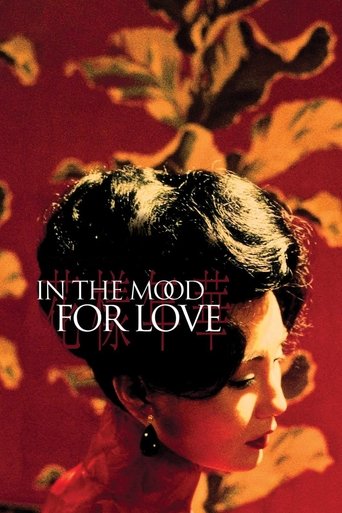
In the Mood for Love 2000
Restraint as the Only Consummation
Read the revelation →