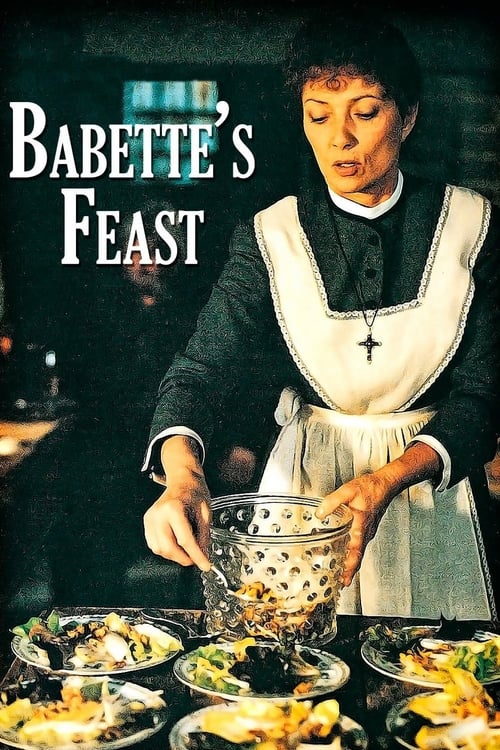
Babette's Feast
Babette's Feast Is Grace Served on a Plate to People Who Swore Off Pleasure to Reach Heaven
Directed by Gabriel Axel
Gabriel Axel filmed a single meal as a sacrament. The turtle soup is not a metaphor for grace. It is grace, and the villagers cannot tell the difference until it is inside them.
In a bleak Danish coastal village, two aging sisters lead the dwindling remnant of their late father's austere Protestant sect, a community that has renounced worldly pleasure so completely its members have forgotten how to taste. Babette, a French refugee who serves them for fourteen years, wins the lottery and spends every franc, ten thousand of them, on one impossibly lavish dinner. The surface reading is that art and pleasure redeem the joyless. True, and thin. What Axel actually films is a theological argument. These pious villagers believe that renouncing the senses brings them closer to God, and Babette proves, course by course, that the opposite is the case. The feast does not corrupt them. It reconciles them. Grace comes to these ascetics not as a reward for their denial but as a gift that overrides it, arriving through the very door they bolted shut.
Alchemical Reading: The Kitchen as Crucible, the Guests as Base Metal
Alchemy transmutes base substance into gold through fire, and its true subject was always the transformation of the soul that performs the work. Babette's kitchen is a literal alchemical laboratory, all flame and vessel and patient combination, where raw creatures, the live turtle, the quail, the wine, are subjected to heat and skill and turned into something that changes whoever consumes it. The old general who alone recognizes the meal's mastery stands and speaks the film's alchemical thesis without knowing it: that mercy and truth have met together, that grace makes no conditions.
The transformation is in the guests. They arrive as hardened, resentful people, hoarding decades of petty grievances, quarrels, a betrayal, a soured love. Course by course the wine and food dissolve the old grudges. By the end they are singing in the snow, hands joined around the well, confessions made and forgiven. The base metal has become gold, and the alchemist who worked the change is back in her kitchen, unseen, spent, and content. The feast was the opus. The village was the prima materia. The gold was there in them the whole time, waiting for fire.
Questions this film answers
What is the deeper meaning of Babette's Feast?
In a bleak Danish coastal village, two aging sisters lead the dwindling remnant of their late father's austere Protestant sect, a community that has renounced worldly pleasure so completely its members have forgotten how to taste. Babette, a French refugee who serves them for fourteen years, wins the lottery and spends every franc, ten thousand of them, on one impossibly lavish dinner. The surface reading is that art and pleasure redeem the joyless. True, and thin. What Axel actually films is a theological argument. These pious villagers believe that renouncing the senses brings them closer to God, and Babette proves, course by course, that the opposite is the case. The feast does not corrupt them. It reconciles them. Grace comes to these ascetics not as a reward for their denial but as a gift that overrides it, arriving through the very door they bolted shut.
What is the hidden symbolism in Babette's Feast?
Sufism holds that the true lover of God serves in secret, that the awliya, the friends of God, often move through the world unrecognized, pouring out their gift without any need to be seen as its source. Babette is that hidden saint. The villagers take her for a servant and a cook. They never learn that she was head chef at the Café Anglais in Paris, one of the greatest artists of her craft, a genius laboring anonymously in a kitchen at the edge of the world.
What esoteric traditions appear in Babette's Feast?
Babette's Feast draws from Sufism, Alchemy traditions. Gabriel Axel filmed a single meal as a sacrament. The turtle soup is not a metaphor for grace. It is grace, and the villagers cannot tell the difference until it is inside them.
Is Babette's Feast worth watching for spiritual seekers?
Babette's Feast (1987) directed by Gabriel Axel is essential viewing for those interested in Sufism, Alchemy. Babette's Feast Is Grace Served on a Plate to People Who Swore Off Pleasure to Reach Heaven. It rewards multiple viewings and contemplation.
Rewatch With New Eyes
Now that you've seen the architecture, experience it again. The same film becomes a different film when you know what to watch for.
This time, watch for:
- Feel the love that transforms: what the heart sees that the mind cannot
- Track the stages: blackening, whitening, reddening — death before rebirth
Links may include affiliate partnerships that support Media Revelations
The Descent Continues
Where this thread leads next.

Silence 2016
God Speaks Once in Silence, When Rodrigues Commits the Act He Fears Most
Read the revelation →