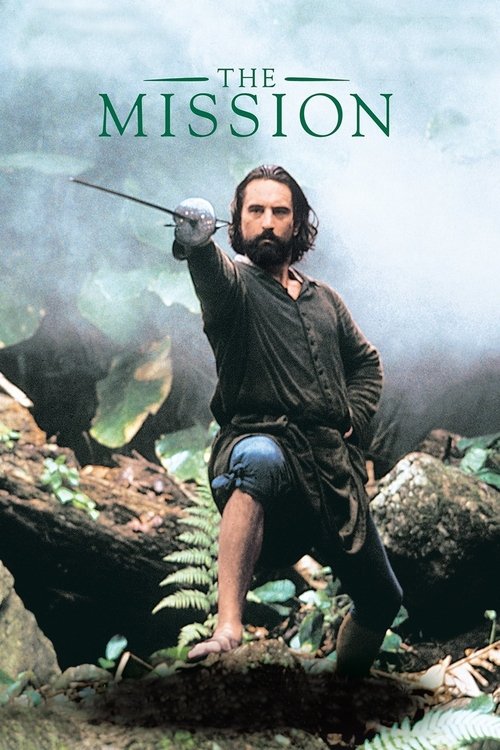
The Mission
The Mission Argues That the Sword and the Cross Are Two Answers to the Same Wound, and Only One of Them Survives Contact With God
Directed by Roland Joffé
Two men climb the same waterfall carrying opposite penances. The film watches which repentance holds when the guns arrive.
Roland Joffé built The Mission as a single question asked twice. Mendoza the slaver kills his own brother and drags a net of armor and swords up a cliff face to the very people he once hunted, letting them decide whether he lives. Father Gabriel the Jesuit climbs the same falls carrying only an oboe, and disarms a hostile tribe with a melody. When the Portuguese come to destroy the mission of San Carlos, these two men who found God by opposite roads reach opposite conclusions about how to defend Him: Gabriel walks into the massacre holding the Blessed Sacrament, Mendoza takes up the sword he thought he had renounced. The film refuses to tell you which one was right. It shows you only that both men die and the mission is still burned, and it leaves you inside the gap between martyrdom and resistance where no answer is clean.
Sufism Reading: Mendoza's Bundle of Armor Is the Nafs He Cannot Simply Drop
In Sufi teaching the nafs is the lower self, the ego bound to violence and pride, and the path does not ask you to pretend it never existed. It asks you to carry it consciously until grace cuts it loose. Mendoza does exactly this. When he ascends the falls he ties his own armor and weapons into a bundle and hauls the dead weight of everything he was up the rock, refusing to let anyone lighten the load. This is not theater. It is the literal enactment of a soul that will not be forgiven cheaply, that insists on feeling the full mass of what it did to its brother and to the slaves it sold.
The transformation comes when one of the Guaraní, the very people Mendoza enslaved, walks up behind him with a knife. The tribesman does not kill him. He cuts the ropes and hurls the bundle of armor off the cliff into the river below, and Mendoza collapses into weeping laughter. This is the Sufi moment exactly: the ego is not destroyed by the penitent's own will but severed by an act of mercy from the one who had every right to vengeance. Grace arrives wearing the face of the wounded. Mendoza did not earn his release. He only carried the weight until someone else chose to end it.
Initiation Reading: Gabriel and Mendoza Cross the Same Threshold and Are Sent Back as Opposites
Every true initiation reorders a man around what he encountered, and no two initiates return identical. Gabriel and Mendoza are shown descending into the same underworld: the jungle above the falls, a world outside colonial law where the Guaraní live and where the sacred is still intact. Both men are undone there. Both are remade. But the mission's destruction is the second threshold, the one that reveals what each initiation actually forged.
Gabriel returns as pure contemplative surrender. He leads the children in procession toward the soldiers, carrying the monstrance, and when he is shot the Sacrament falls and a child lifts it and keeps walking. Mendoza returns as the warrior who now fights for what he once destroyed, dying in an ambush he set to protect the people he sold. The film places these two deaths against each other without resolving them because initiation does not standardize souls. The waterfall gave each man back to himself amplified: the priest more priest, the soldier more soldier, both consumed.
Questions this film answers
What is the deeper meaning of The Mission?
Roland Joffé built The Mission as a single question asked twice. Mendoza the slaver kills his own brother and drags a net of armor and swords up a cliff face to the very people he once hunted, letting them decide whether he lives. Father Gabriel the Jesuit climbs the same falls carrying only an oboe, and disarms a hostile tribe with a melody. When the Portuguese come to destroy the mission of San Carlos, these two men who found God by opposite roads reach opposite conclusions about how to defend Him: Gabriel walks into the massacre holding the Blessed Sacrament, Mendoza takes up the sword he thought he had renounced. The film refuses to tell you which one was right. It shows you only that both men die and the mission is still burned, and it leaves you inside the gap between martyrdom and resistance where no answer is clean.
What is the hidden symbolism in The Mission?
In Sufi teaching the nafs is the lower self, the ego bound to violence and pride, and the path does not ask you to pretend it never existed. It asks you to carry it consciously until grace cuts it loose. Mendoza does exactly this. When he ascends the falls he ties his own armor and weapons into a bundle and hauls the dead weight of everything he was up the rock, refusing to let anyone lighten the load. This is not theater. It is the literal enactment of a soul that will not be forgiven cheaply, that insists on feeling the full mass of what it did to its brother and to the slaves it sold.
What esoteric traditions appear in The Mission?
The Mission draws from Sufism, Initiation traditions. Two men climb the same waterfall carrying opposite penances. The film watches which repentance holds when the guns arrive.
Is The Mission worth watching for spiritual seekers?
The Mission (1986) directed by Roland Joffé is essential viewing for those interested in Sufism, Initiation. The Mission Argues That the Sword and the Cross Are Two Answers to the Same Wound, and Only One of Them Survives Contact With God. It rewards multiple viewings and contemplation.
Rewatch With New Eyes
Now that you've seen the architecture, experience it again. The same film becomes a different film when you know what to watch for.
This time, watch for:
- Feel the love that transforms: what the heart sees that the mind cannot
- Mark the threshold: the old self dies, the ordeal transforms, the new self returns
Links may include affiliate partnerships that support Media Revelations
The Descent Continues
Where this thread leads next.
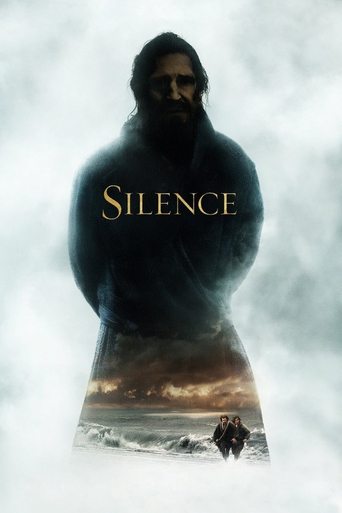
Silence 2016
God Speaks Once in Silence, When Rodrigues Commits the Act He Fears Most
Read the revelation →