Ordet
Faith in Ordet Is Not a Belief, It Is a Substance That Can Resurrect the Dead
Directed by Carl Theodor Dreyer
Carl Theodor Dreyer's 1955 film looks like a domestic tragedy about religious disagreement. The last three minutes reveal what it actually is: a demonstration.
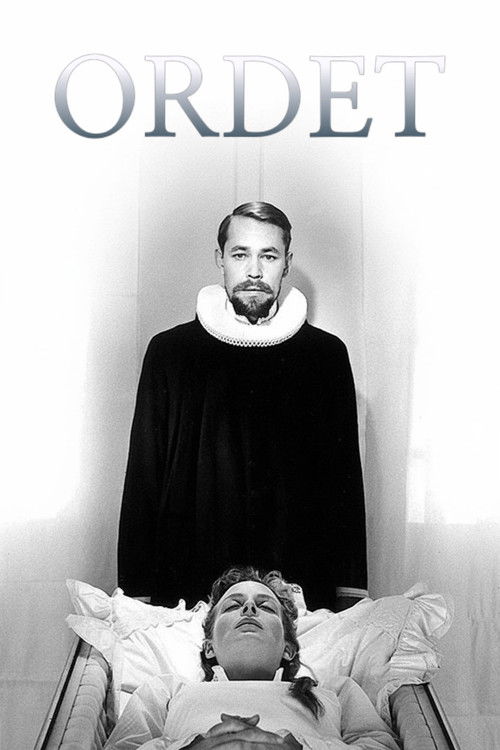
Morten Borgen, patriarch of a Jutland farm, has three sons with three different relationships to God. Mikkel has lost his faith entirely. Anders holds a timid, sectarian piety. Johannes has returned from theological study in a state of full psychic rupture, believing himself to be Jesus Christ. The film watches this family negotiate faith, death, birth, and marriage across four days of Danish winter light. Then Inger, Mikkel's wife, dies in childbirth. And Johannes, the madman, speaks a single sentence over her body. She opens her eyes. Dreyer does not frame the resurrection as a question. The camera holds steady. The light does not change. There are no special effects. What rises is what was dead, and the film requires you to look at that fact without softening it.
Gnostic Reading: The Church Is Dead Letter, Johannes Carries Living Logos
In Gnostic cosmology, the pneumatic carries divine spark in a material world ruled by dead law. Institutional religion is the archontic structure: correct in form, empty of life, capable of describing the Logos but incapable of transmitting it. Morten's faith is sincere. The visiting pastor from the revivalist sect is sincerely earnest. But both operate inside theological argument, which is dead letter trading places with itself. Johannes operates somewhere else entirely.
Watch the scene where Morten lies ill and the men of faith gather to pray for him. They pray correctly. The room fills with the right words directed at the right God through the right postures. Nothing moves. Johannes stands at the threshold looking in, excluded because he is considered insane, and the film holds his face for a long moment. He is outside the prayer meeting and outside the room. He is the only one in the film who talks to God as though God is listening. The pneumatic is always eccentric to the institution because the institution is built to preserve the form of the encounter, not the encounter itself. Dreyer understood this. He films it with the patience of someone who has waited for everyone else to stop talking.
Alchemical Reading: Inger's Death as Nigredo, the Resurrection as Rubedo Earned
The alchemical Great Work moves through three phases. Nigredo: the blackening, dissolution, the death of what was. Albedo: the white stillness, the purified matter waiting. Rubedo: the reddening, the return of life in transformed state. Dreyer has the same structure and he films each stage with a distinct visual grammar.
When Inger dies, the farmhouse enters nigredo. The light dims. The infant is buried with her. The one person in the family who held everyone's disparate pieties together is gone, and the film lets the grief accumulate in real time. The family sits in the white-walled room with her body, lit so flatly it looks like albedo itself: pure, cold, arrested. Then Anne, the young daughter, asks Johannes to bring her mother back. Johannes has been wandering in confusion since early in the film, his madness lifting and returning in waves. Anne's request clears him. He stands over Inger's body and speaks the Word. The rubedo in Dreyer is not spectacle, it is a child's trust completing a circuit the adults had broken with their arguments about which denomination of faith was correct. Anne believes without theology. The transformation happens through her, not around her.
Other films where faith is tested against death rather than argued from safety: The Seventh Seal (God's silence as the medieval soul's only companion), Diary of a Country Priest (faith persisting inside a body that refuses it), Breaking the Waves (belief taken to the place where no institution follows).
Questions this film answers
What is the deeper meaning of Ordet?
Morten Borgen, patriarch of a Jutland farm, has three sons with three different relationships to God. Mikkel has lost his faith entirely. Anders holds a timid, sectarian piety. Johannes has returned from theological study in a state of full psychic rupture, believing himself to be Jesus Christ. The film watches this family negotiate faith, death, birth, and marriage across four days of Danish winter light. Then Inger, Mikkel's wife, dies in childbirth. And Johannes, the madman, speaks a single sentence over her body. She opens her eyes. Dreyer does not frame the resurrection as a question. The camera holds steady. The light does not change. There are no special effects. What rises is what was dead, and the film requires you to look at that fact without softening it.
What is the hidden symbolism in Ordet?
In Gnostic cosmology, the pneumatic carries divine spark in a material world ruled by dead law. Institutional religion is the archontic structure: correct in form, empty of life, capable of describing the Logos but incapable of transmitting it. Morten's faith is sincere. The visiting pastor from the revivalist sect is sincerely earnest. But both operate inside theological argument, which is dead letter trading places with itself. Johannes operates somewhere else entirely.
What esoteric traditions appear in Ordet?
Ordet draws from Gnosticism, Alchemy traditions. Carl Theodor Dreyer's 1955 film looks like a domestic tragedy about religious disagreement. The last three minutes reveal what it actually is: a demonstration.
Is Ordet worth watching for spiritual seekers?
Ordet (1955) directed by Carl Theodor Dreyer is essential viewing for those interested in Gnosticism, Alchemy. Faith in Ordet Is Not a Belief, It Is a Substance That Can Resurrect the Dead. It rewards multiple viewings and contemplation.
Rewatch With New Eyes
Now that you've seen the architecture, experience it again. The same film becomes a different film when you know what to watch for.
This time, watch for:
- Watch for the false world vs. the real — who is asleep, who awakens
- Track the stages: blackening, whitening, reddening — death before rebirth
Links may include affiliate partnerships that support Media Revelations