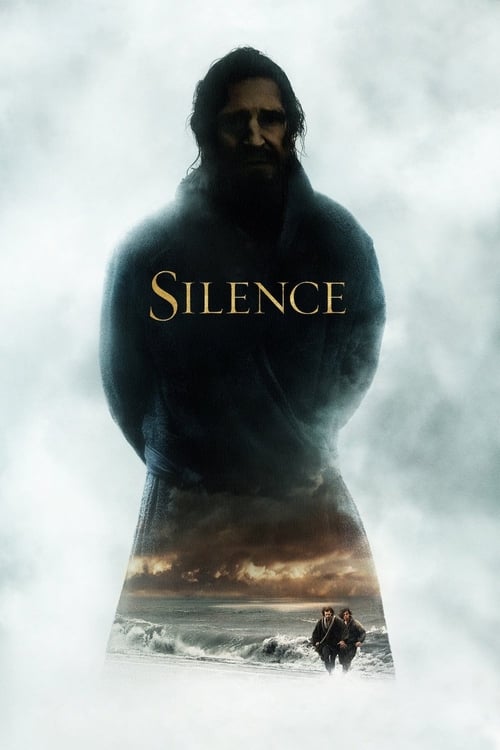
Silence
God Speaks Once in Silence, When Rodrigues Commits the Act He Fears Most
Directed by Martin Scorsese
Scorsese spent twenty-eight years trying to make this film. The delay was the preparation. You cannot rush a koan.
Silence is a theology of abandonment, and its central question is whether God's silence is absence or instruction. Father Rodrigues arrives in Japan carrying a perfect image of Christ, serene, European, unshattered, and the film's three hours are devoted to breaking it. The breaking is the teaching. When Rodrigues finally presses his foot onto the fumie, the bronze face of Christ, he hears a voice: "Trample. It is to allow your stepping on me that I was born into this world. It is to share your pain." God speaks once in this film. He speaks in the moment Rodrigues does the one thing his faith forbids. That is the whole koan, delivered in one image.
The Apophatic Reading: God Found in the Abandonment of God
The mystical tradition Scorsese is working inside has a precise name for what happens at that fumie: the via negativa, the apophatic path, the dark night of the soul. John of the Cross wrote from a prison cell. Meister Eckhart preached that God is found not in the images of God but beyond them. Teresa of Avila described a place in prayer where even the consolation of God disappears, and in that desolation, something truer arrives.
Rodrigues has built his priesthood around the image: Christ's face, beautiful and intact, the face he sees reflected in still water early in the film when he imagines himself as the suffering Christ. That mirror-scene is the trap. He has made an idol of his spiritual self-concept. The idol must be broken before the real thing can appear.
When he steps on the fumie, the wood-and-bronze object is the idol he must finally destroy. The voice that answers him from the image he just desecrated is God speaking from outside the image, from the place the image was always pointing toward. This is apophatic theology at its most ruthless: you cannot reach the living God by protecting your picture of him. You reach him by releasing it, even at great cost, even as apostasy.
Scorsese's Ferreira tells Rodrigues: "I was not defeated. I saw the truth." That line is either the lie of a broken man or the hardest spiritual teaching in the film. The apophatic tradition refuses to decide for you.
Questions this film answers
What is the deeper meaning of Silence?
Silence is a theology of abandonment, and its central question is whether God's silence is absence or instruction. Father Rodrigues arrives in Japan carrying a perfect image of Christ, serene, European, unshattered, and the film's three hours are devoted to breaking it. The breaking is the teaching. When Rodrigues finally presses his foot onto the fumie, the bronze face of Christ, he hears a voice: "Trample. It is to allow your stepping on me that I was born into this world. It is to share your pain." God speaks once in this film. He speaks in the moment Rodrigues does the one thing his faith forbids. That is the whole koan, delivered in one image.
What is the hidden symbolism in Silence?
The mystical tradition Scorsese is working inside has a precise name for what happens at that fumie: the via negativa, the apophatic path, the dark night of the soul. John of the Cross wrote from a prison cell. Meister Eckhart preached that God is found not in the images of God but beyond them. Teresa of Avila described a place in prayer where even the consolation of God disappears, and in that desolation, something truer arrives.
What esoteric traditions appear in Silence?
Silence draws from Gnosticism traditions. Scorsese spent twenty-eight years trying to make this film. The delay was the preparation. You cannot rush a koan.
Is Silence worth watching for spiritual seekers?
Silence (2016) directed by Martin Scorsese is essential viewing for those interested in Gnosticism. God Speaks Once in Silence, When Rodrigues Commits the Act He Fears Most. It rewards multiple viewings and contemplation.
Rewatch With New Eyes
Now that you've seen the architecture, experience it again. The same film becomes a different film when you know what to watch for.
This time, watch for:
- Watch for the false world vs. the real — who is asleep, who awakens
Links may include affiliate partnerships that support Media Revelations