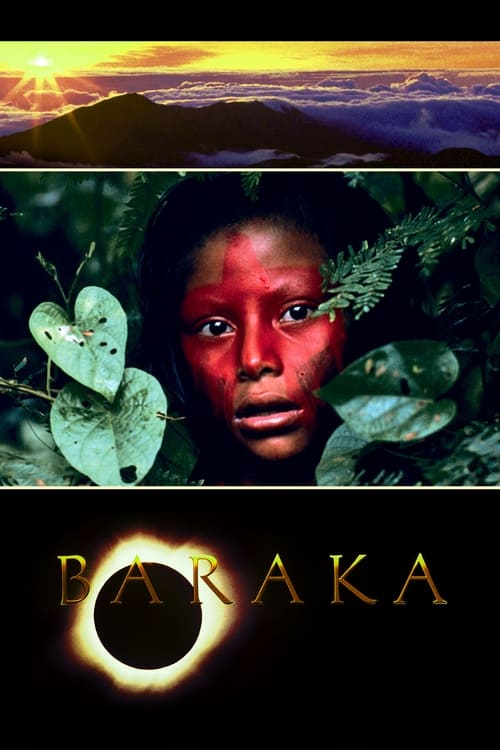
Baraka is not a documentary. It is a meditation, photographed on 70mm, designed to do to your nervous system what the dervish does to his own. Fricke removed language because language interrupts. What's left is the world breathing — and the recognition, frame by frame, that you have always been inside what the film is showing you.
Baraka is the rare film designed to operate as a meditation practice rather than as a depiction of one. Ron Fricke removed everything cinema usually uses to organize attention — dialogue, narration, named characters, plot — and replaced them with a single instrument: the long, slow, 70mm look. The Arabic word baraka means blessing, breath, the felt presence of the divine that flows through what is sacred. Fricke is not making a film about places that have baraka. He is using the camera to transmit baraka. The film is a Sufi practice in projector form. Watching it correctly is participation, not consumption.
The Surface
A wordless 96-minute film shot in 24 countries on six continents. Aboriginal dancers. Monks in Tibet. Pilgrims at the Kaaba. Factory workers in Indonesia. Tokyo subways shot at sped time-lapse. Desert wind on stone faces. Whirling Sufis at Konya. There is no narrator. There are no subtitles. There is music, mostly contemplative, sometimes ecstatic.
The film is often called a documentary. It is technically nonfiction. It also has no thesis, no argument, no information it is trying to deliver. Fricke had worked as cinematographer on Koyaanisqatsi and learned from Reggio what cinema becomes when it stops trying to inform and starts trying to alter. Baraka is the next step. The argument is removed entirely. Only the practice remains.
The film fails if approached as documentary. It works if approached as zazen. The instructions are the same: do not interpret, do not pursue, do not turn away. Sit with what is being shown until the showing changes what is sitting.
The Camera as Sufi Practice
In Sufi practice, baraka is the felt blessing that flows through saints, places of pilgrimage, holy lineages, and ritual practice. It is not theoretical. It is somatic. You feel it or you do not. The Sufi spends a lifetime developing the sensitivity required to detect it and the integrity required to transmit it.
Fricke turned a 70mm camera into an instrument tuned for the detection of baraka. The film cuts between locations chosen because baraka was present in them — but the editing does not assert this. It just keeps showing. The viewer, sitting in the dark for ninety-six minutes, develops the same sensitivity by induction. By the third reel, the viewer can feel which shots carry it and which are documentary in the ordinary sense.
This is the unusual thing the film does. It teaches a perceptual skill that almost no other film teaches: the ability to feel the quality of presence in a place or a face. Once installed, this skill is portable. After Baraka, you walk through your city differently. You feel which buildings are alive. You feel which people carry it. The camera taught you, and you cannot un-see what the camera trained you to see.
This is what the Sufi orders have always meant by transmission. Not information. A capacity. Baraka the word, baraka the film, baraka the experience — all converging into the same operation, performed through cinema instead of through a teacher's hand.
The Mevlana and the Machine
The film's most striking sequence pairs whirling dervishes at Konya with time-lapse footage of Japanese commuters. The dervishes spin slowly, deliberately, one hand to the sky and one to the earth, accepting the divine flow and grounding it through their bodies. The commuters move in fast jittery streams through subway stations, also turning, also crossing, but with no center, no axis, no awareness of the gesture they are performing.
Fricke does not editorialize. The juxtaposition is the teaching. The Mevlana whirl and the rush-hour swarm are the same human motion at different states of consciousness. One is prayer. The other is congestion. The film insists that the difference is not what you do but what you know you are doing.
This is the Sufi diagnosis of the modern condition. The world is full of unwitnessed turning. Every commute, every queue, every assembly line is a dance somebody is performing without permission to know that they are dancing. The factory worker rolling cigarettes by hand at impossible speed is doing zikr without the zikr. The chicken-processing line is a slaughter ritual without the priest. The film lets you see this and trusts you to draw the inference about your own life.
Baraka is not nostalgic for the dervishes. It is also not contemptuous of the commuters. It is showing you that the spiritual technology has always been the same technology. It is showing you that you are using it constantly. The question is whether you know you are.
Stones That Remember
Some of the film's most powerful images are not of people but of places. The eroded stone faces at Angkor Wat. The shrines at Bhaktapur. The mass graves at the Holocaust memorials. The smoking ruins of oil fires after the first Gulf War. Fricke holds on these for long passages with no intervention.
What he is photographing is what shamanic and animist traditions have always known: places hold the imprint of what happened in them. The camera is patient enough to receive it. The viewer is being given the same patience. The trauma at the Auschwitz crematoria comes through the film stock. So does the long peace at the Tibetan monastery. So does the catastrophe of the burning oil wells. None of this is captioned. None of it needs to be.
This is the film's most morally serious move. It refuses to interpret these places for you, because interpretation would short-circuit the perception. It just shows them at length and lets the place itself speak. The viewer leaves Baraka with the felt sense that the planet is a memory device. Different places carry different weights. The camera proved it. The proof cannot be undone.
The Transmission
Baraka has no plot to spoil. It has only effect. The effect is hard to describe in words because the film deliberately operates beneath the level at which words function. The closest description is: after Baraka, the viewer's perceptual frame rate slows down for a while. The world looks more like the film than it did before. People's faces become more visible as faces. Architecture becomes more visible as gesture.
This is not poetry. It is something the film actually does to the nervous system through ninety-six minutes of trained attention. Fricke and his composer Michael Stearns calibrated every frame, every cut, every musical interval to induce a specific state. You leave the theater in that state. You carry it for hours, sometimes days. Repeat viewings deepen and extend it.
The film is the closest cinema has come to functioning as Sufi practice. It does not require belief. It does not even require interpretation. It only requires that you sit with it the way the dervish sits before the turning begins. If you can do that, Baraka transmits. If you cannot, the film looks like a slideshow. The difference between the two viewers is exactly the difference the film is teaching you to notice.
Questions this film answers
What is the deeper meaning of Baraka?
Baraka is the rare film designed to operate as a meditation practice rather than as a depiction of one. Ron Fricke removed everything cinema usually uses to organize attention — dialogue, narration, named characters, plot — and replaced them with a single instrument: the long, slow, 70mm look. The Arabic word baraka means blessing, breath, the felt presence of the divine that flows through what is sacred. Fricke is not making a film about places that have baraka. He is using the camera to transmit baraka. The film is a Sufi practice in projector form. Watching it correctly is participation, not consumption.
What is the hidden symbolism in Baraka?
A wordless 96-minute film shot in 24 countries on six continents. Aboriginal dancers. Monks in Tibet. Pilgrims at the Kaaba. Factory workers in Indonesia. Tokyo subways shot at sped time-lapse. Desert wind on stone faces. Whirling Sufis at Konya. There is no narrator. There are no subtitles. There is music, mostly contemplative, sometimes ecstatic.
What esoteric traditions appear in Baraka?
Baraka draws from Sufism, Shamanism traditions. Baraka is not a documentary. It is a meditation, photographed on 70mm, designed to do to your nervous system what the dervish does to his own. Fricke removed language because language interrupts. What's left is the world breathing — and the recognition, frame by frame, that you have always been inside what the film is showing you.
What does Baraka teach about the camera as sufi practice?
Baraka teaches a perceptual skill almost no other film teaches: the ability to feel the quality of presence in a place or a face. In Sufi practice, baraka is the felt blessing that flows through saints, places of pilgrimage, holy lineages, and ritual practice. It is not theoretical. It is somatic. You feel it or you do not. The Sufi spends a lifetime developing the sensitivity required to detect it and the integrity required to transmit it.
What does Baraka teach about stones that remember?
The planet is a memory device. Different places carry different weights. The camera proved it. The proof cannot be undone. Some of the film's most powerful images are not of people but of places. The eroded stone faces at Angkor Wat. The shrines at Bhaktapur. The mass graves at the Holocaust memorials. The smoking ruins of oil fires after the first Gulf War. Fricke holds on these for long passages with no intervention.
Is Baraka worth watching for spiritual seekers?
Baraka (1992) directed by Ron Fricke is essential viewing for those interested in Sufism, Contemplation, Meditation. The Camera as Sufi Practice. It rewards multiple viewings and contemplation.
Rewatch With New Eyes
Now that you've seen the architecture, experience it again. The same film becomes a different film when you know what to watch for.
This time, watch for:
- Feel the love that transforms: what the heart sees that the mind cannot
- Follow the descent: what dies, what guides, what returns transformed
Links may include affiliate partnerships that support Media Revelations