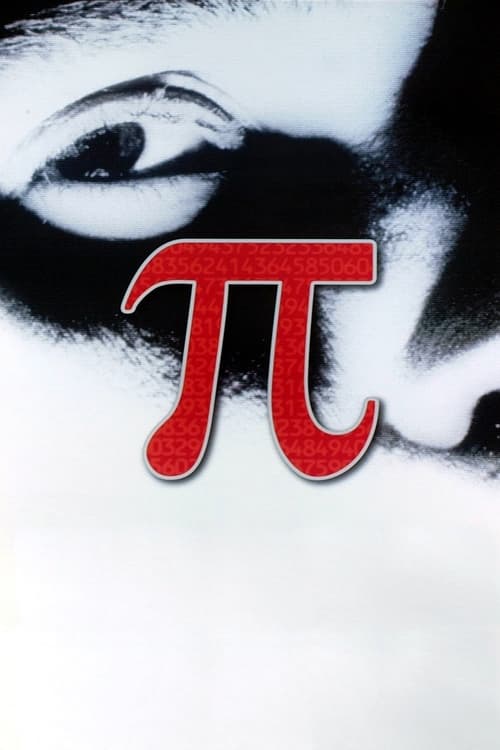
Aronofsky made a film about a man who finds the Name of God and discovers his nervous system was never designed to hold it. Max is the kabbalist whose seeking has run ahead of his preparation. The Hasidim are right. Wall Street is right. The mind is the thing that breaks.
Pi is the most accurate film ever made about kabbalistic seeking gone wrong. Aronofsky disguised it as a paranoid math thriller. The actual subject is the encounter between a human mind and the patterns underneath the patterns — what Kabbalah calls the Shem HaMephorash, the explicit Name of God, the 216 digits that contain the universe's encryption key. Max finds the number. The number breaks him. The Hasidim want it. Wall Street wants it. Max wants to disappear. The film's diagnosis is one Aronofsky would spend his career refining: revelation without preparation is indistinguishable from psychosis, and the difference between a mystic and a madman is the strength of the container.
The Surface
Max Cohen is a number theorist living in chronic migraine in a small Chinatown apartment. He believes everything in the universe can be described and predicted by mathematics. He builds a computer and uses it to model the stock market. The computer prints a 216-digit number and dies. A Hasidic Jew approaches him on the subway and tells him the number is the true name of God, that Kabbalists have been searching for centuries for the form in which it could be reconstructed. Wall Street thugs also want the number. Max's mentor warns him that the number cannot be received by an unprepared mind without consequence.
On surface, the film reads as a paranoid thriller about a math savant in over his head. Aronofsky's black-and-white reversal stock and grain-heavy texture give it the look of a low-budget descent into madness. Most discussions stop here.
Pi is actually a kabbalistic film made with kabbalistic seriousness. Aronofsky researched Hebrew mysticism. He understood gematria. He knew what the 216-digit name is in Kabbalistic tradition — the 72 three-letter names of God assembled into the explicit Name, the one that is never to be spoken aloud. The film is structured around the consequences of speaking it anyway.
The Name and the Vessel
In Lurianic Kabbalah, the universe was created through divine emanation. The vessels that were supposed to hold the emanations were too small. They shattered. The work of human beings — tikkun olam, the repair of the world — is to gather the divine sparks scattered in the breakage and return them to their proper vessels. The names of God are the technology for this. To know the Name is to participate in the repair.
But the Names require vessels. The kabbalist spends decades preparing the body, the prayer life, the moral conduct, the relationship to community — building the vessel that can hold the energy the Name carries. Without the vessel, the same Name that heals destroys. The same number that organizes the universe scrambles the brain that receives it without scaffolding.
Max has no vessel. He is brilliant. He is alone. He eats irregularly. He has no community. He has no prayer practice. He has no relationship to his teacher except theft of his teacher's warnings. He is the kabbalist who skipped the vessel-building and went straight for the prize. He finds the prize. The vessel cannot hold it. The migraines escalate. His brain begins to bleed.
Sol, the mentor, has been here before. Sol's stroke, his withdrawal from mathematics, his refusal to speak about pi — these are the marks of someone who got further than he could afford to and pulled back in time. Sol is trying to save Max. Max cannot hear him because Max's vessel is already cracking and the cracking sounds, from inside, like clarity.
Wall Street and the Hasidim
Two factions chase the number. Wall Street wants it as predictive financial model. The Hasidim want it as recovered Name. The film does not resolve which is correct because both are correct simultaneously, and the simultaneity is the point.
The Kabbalistic understanding has always been that the same pattern undergirds both the cosmic and the mundane. The Sefirot are the structure of God and the structure of the market. The Names that order the universe also order the flow of money. Aronofsky's brilliance is refusing to choose between sacred and profane interpretations of the same code, because Kabbalah never made that choice in the first place. The mystic and the speculator are looking at the same underlying pattern with different priorities.
Max is being asked to hand the Name to one of them. Both would weaponize it. Wall Street would use it to extract wealth at planetary scale. The Hasidim, in this version, would use it to force the messianic age before the world is ready. Neither faction is ready to be a vessel either. They are both larger Maxes — institutional egos that want the prize without the preparation.
This is why Max ends the film by destroying his own capacity to access the number. He drills into his own head — into the part of him where the pattern lives. He cannot be trusted with the Name. The factions cannot be trusted with the Name. The only safe move is to make the receiver no longer capable of receiving. This is not victory. It is amputation.
The Drill
The final scene is one of the most precise images of failed alchemy in cinema. Max sits on a bench in the sun with his niece. She asks him math questions he used to answer instantly. He cannot. He smiles. The pattern is gone. The migraines are gone. He has performed surgery on his own consciousness with a power drill.
Most viewers read this as madness or self-destruction. Read alchemically, it is the only honest move available to an initiate who has gone too far. Nigredo without albedo. Solve without coagula. The dissolution has happened. The recombination cannot, because the vessel was never built. The only thing left is to destroy the instrument of seeking so that the seeker can survive at lower resolution.
Aronofsky would refine this image across his career — Requiem for a Dream, The Wrestler, Mother!, The Whale. He keeps returning to characters who have pursued something to the edge and discovered that the edge was the wrong place to arrive. Pi is the original statement. The seeker who could not be a vessel chose to no longer be a seeker.
There is a small grace in the ending. Max can be in the sun. He can be with his niece. The amputation purchased a life. It is not the life he wanted. But it is a life, and the alternative was not life. He chose down. The film does not judge him for it. The film knows that, sometimes, the honorable response to revelation is to give the receiver back.
The Transmission
Pi is the film Aronofsky made before he was allowed to make any other film. Shot for less than $60,000 in grainy reversal stock with hand-built equipment. The poverty is part of what works. The film looks the way Max's nervous system feels. It is rough, jittery, claustrophobic, lit by computer monitors and migraines.
What it transmits is the most precise warning ever issued in American cinema about premature mystical pursuit. The pattern is there. The Name is real. The factions are real. The migraines are what happens when you find the Name without the vessel. This is true in the literal Kabbalistic sense. It is true in every analogous sense — the trader who finds an edge before he has the temperament to hold it, the founder who finds the product before he has the company to scale it, the meditator who finds the silence before she has the practice to live inside it.
Pi is what Aronofsky wishes someone had given him before he started chasing what he chases. He gives it now to whoever can receive it. The receiver should notice their own vessel before they receive any further. That is the film's gift.
Questions this film answers
What is the deeper meaning of Pi?
Pi is the most accurate film ever made about kabbalistic seeking gone wrong. Aronofsky disguised it as a paranoid math thriller. The actual subject is the encounter between a human mind and the patterns underneath the patterns — what Kabbalah calls the Shem HaMephorash, the explicit Name of God, the 216 digits that contain the universe's encryption key. Max finds the number. The number breaks him. The Hasidim want it. Wall Street wants it. Max wants to disappear. The film's diagnosis is one Aronofsky would spend his career refining: revelation without preparation is indistinguishable from psychosis, and the difference between a mystic and a madman is the strength of the container.
What is the hidden symbolism in Pi?
Max Cohen is a number theorist living in chronic migraine in a small Chinatown apartment. He believes everything in the universe can be described and predicted by mathematics. He builds a computer and uses it to model the stock market. The computer prints a 216-digit number and dies. A Hasidic Jew approaches him on the subway and tells him the number is the true name of God, that Kabbalists have been searching for centuries for the form in which it could be reconstructed. Wall Street thugs also want the number. Max's mentor warns him that the number cannot be received by an unprepared mind without consequence.
What esoteric traditions appear in Pi?
Pi draws from Kabbalah, Alchemy traditions. Aronofsky made a film about a man who finds the Name of God and discovers his nervous system was never designed to hold it. Max is the kabbalist whose seeking has run ahead of his preparation. The Hasidim are right. Wall Street is right. The mind is the thing that breaks.
What does Pi teach about the name and the vessel?
Max is the kabbalist who skipped the vessel-building and went straight for the prize. In Lurianic Kabbalah, the universe was created through divine emanation. The vessels that were supposed to hold the emanations were too small. They shattered. The work of human beings — tikkun olam, the repair of the world — is to gather the divine sparks scattered in the breakage and return them to their proper vessels. The names of God are the technology for this. To know the Name is to participate in the repair.
What does Pi teach about the drill?
Sometimes the honorable response to revelation is to give the receiver back. The final scene is one of the most precise images of failed alchemy in cinema. Max sits on a bench in the sun with his niece. She asks him math questions he used to answer instantly. He cannot. He smiles. The pattern is gone. The migraines are gone. He has performed surgery on his own consciousness with a power drill.
Is Pi worth watching for spiritual seekers?
Pi (1998) directed by Darren Aronofsky is essential viewing for those interested in Kabbalah, Mathematics, Mysticism. The 216-Digit Name of God. It rewards multiple viewings and contemplation.
Rewatch With New Eyes
Now that you've seen the architecture, experience it again. The same film becomes a different film when you know what to watch for.
This time, watch for:
- Notice the vessels: what contains, what shatters, what repairs
- Track the stages: blackening, whitening, reddening — death before rebirth
Links may include affiliate partnerships that support Media Revelations
The Descent Continues
Where this thread leads next.
Requiem for a Dream 2000
Four Descents and the American Dream as Possession
Read the revelation →