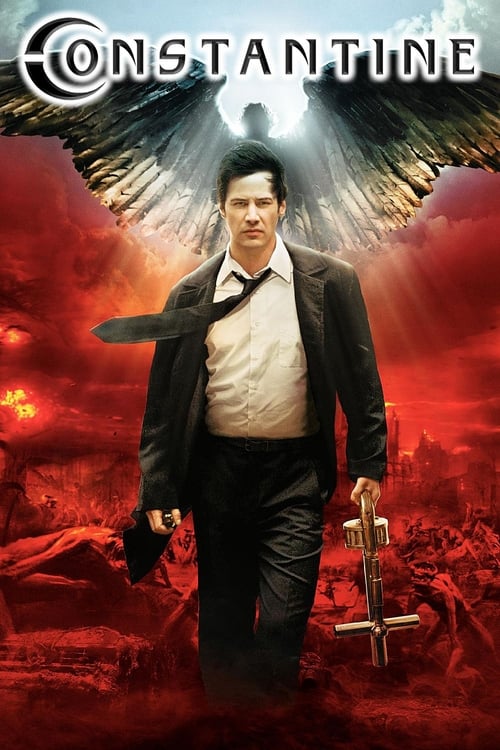
Constantine
Constantine Damns Himself by Trying to Buy Heaven, Then Gets Saved the One Way That Cannot Be Purchased
Directed by Francis Lawrence
A man dying of lung cancer exorcises demons to earn a ticket upstairs. The film is about why that ledger never balances.
John Constantine has been to Hell and knows exactly where he is going back to. He committed suicide as a boy, was revived, and has spent his adult life deporting half-breed demons from Los Angeles in the hope that God will notice the tally and commute his sentence. The film's engine is not the demon-hunting. It is the accounting. Constantine treats salvation as a transaction: enough good works, enough monsters sent home, and the scale tips. Gabriel, the androgynous archangel played by Tilda Swinton, states the wound plainly when she tells him his acts are self-interested, and self-interest cannot buy grace. Constantine is a Pelagian trying to earn heaven in a Catholic universe that does not sell it. Everything he does to save himself is the exact thing that keeps him condemned.
Demonology Reading: The Rules Are the Horror
The cosmology of Constantine is legalistic to the point of bureaucracy, and that is the point. Heaven and Hell do not invade Earth directly. They work through half-breeds, through influence, through a contract system God and Lucifer both signed. Constantine wins his early confrontations because he knows the statutes better than the demons do. He traps a soldier demon in a mirror. He weaponizes holy relics like a lawyer citing precedent. The film builds a world where the supernatural runs on enforceable law, and the terror is not that the rules might break but that they hold perfectly.
This is why Mammon's attempted breach matters. Lucifer's son tries to cross into our world through Angela, using the Spear of Destiny and a psychic twin's suicide as the loophole. The whole plot is contract fraud: a demon prince trying to void the agreement that keeps Hell out. Gabriel enables it because Gabriel has decided humanity deserves damnation and wants to force God's hand. The demonological horror here is theological. The angel is the traitor, and the Devil is the one who honors the deal.
Gnostic Reading: The Prison Where the Warden Signs His Own Release
Peel back the Catholic set dressing and Constantine describes a Gnostic condition exactly. Two vast powers wager over human souls, and the humans are chips, not players. Angela's psychic gifts are precisely the trait the archons want to harvest and suppress. Constantine spends the film as a man who sees the machinery, the mirror-world beneath Los Angeles where demons scuttle, and is tormented by seeing it. Gnostic sight is a curse before it is a gift. He knows the cage is real, which is worse than not knowing.
The film's climax delivers the one Gnostic move that breaks the machine. Cornered, damned, Mammon rising, Constantine slits his wrists so Lucifer will come personally to collect his prize soul. Then, dying, he sacrifices himself to save Angela and undo Mammon's crossing. In that instant of genuine self-abandonment, with nothing left to gain, Constantine is redeemed. His soul begins to rise, and Lucifer, furious, yanks the cancer from his lungs to keep him alive, because a living Constantine can still sin. The archon's own greed frees the prisoner. Grace arrives the moment the ledger is torn up. The one act that cannot be transacted is the only currency that spends.
Questions this film answers
What is the deeper meaning of Constantine?
John Constantine has been to Hell and knows exactly where he is going back to. He committed suicide as a boy, was revived, and has spent his adult life deporting half-breed demons from Los Angeles in the hope that God will notice the tally and commute his sentence. The film's engine is not the demon-hunting. It is the accounting. Constantine treats salvation as a transaction: enough good works, enough monsters sent home, and the scale tips. Gabriel, the androgynous archangel played by Tilda Swinton, states the wound plainly when she tells him his acts are self-interested, and self-interest cannot buy grace. Constantine is a Pelagian trying to earn heaven in a Catholic universe that does not sell it. Everything he does to save himself is the exact thing that keeps him condemned.
What is the hidden symbolism in Constantine?
The cosmology of Constantine is legalistic to the point of bureaucracy, and that is the point. Heaven and Hell do not invade Earth directly. They work through half-breeds, through influence, through a contract system God and Lucifer both signed. Constantine wins his early confrontations because he knows the statutes better than the demons do. He traps a soldier demon in a mirror. He weaponizes holy relics like a lawyer citing precedent. The film builds a world where the supernatural runs on enforceable law, and the terror is not that the rules might break but that they hold perfectly.
What esoteric traditions appear in Constantine?
Constantine draws from Gnosticism, Demonology traditions. A man dying of lung cancer exorcises demons to earn a ticket upstairs. The film is about why that ledger never balances.
Is Constantine worth watching for spiritual seekers?
Constantine (2005) directed by Francis Lawrence is essential viewing for those interested in Gnosticism, Demonology. Constantine Damns Himself by Trying to Buy Heaven, Then Gets Saved the One Way That Cannot Be Purchased. It rewards multiple viewings and contemplation.
Rewatch With New Eyes
Now that you've seen the architecture, experience it again. The same film becomes a different film when you know what to watch for.
This time, watch for:
- Watch for the false world vs. the real — who is asleep, who awakens
- Identify the hierarchy: which demon, which rank, which grimoire it comes from
Links may include affiliate partnerships that support Media Revelations
The Descent Continues
Where this thread leads next.
Angel Heart 1987
Harry Angel Is Already Damned When the Film Begins. The Investigation Is the Proof.
Read the revelation →