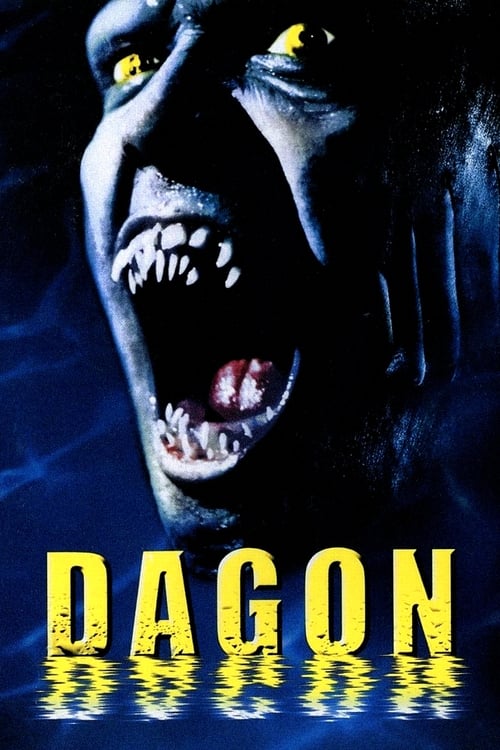
Dagon
Dagon Is a Baptism Story Where the Water God Is Real and Claims His Own
Directed by Stuart Gordon
Stuart Gordon adapts Lovecraft's Deep Ones into a fable of blood remembering water. The horror is that Paul was always one of them.
A boating accident strands Paul and his girlfriend Barbara in Imboca, a rotting Spanish fishing village where the townsfolk have webbed hands, no eyes, and gills opening beneath the skin. They worship Dagon, a sea god who trades fish and gold for human brides and human sacrifice, and they are slowly transforming into his children. Paul flees through the drowned streets while the whole town hunts him. The surface reading is a competent creature feature about a cult. What Gordon actually filmed, faithful to Lovecraft's "The Shadow Over Innsmouth," is the horror of heredity as destiny. Paul keeps dreaming of a golden-scaled woman underwater before he ever reaches Imboca. He is not a tourist who stumbled into the wrong town. He is a son returning to a bloodline that has been waiting in the deep for him to come home.
Gnostic Reading: The Body Is the Trap and the Water Is the Demiurge Reclaiming Its Property
Gnosticism names the material world a prison built by a lesser, jealous god who mistakes himself for the true one, and it names the human predicament as a spark of light stitched into flesh that wants it back. Dagon is exactly such a demiurge: a maker who created a people in his own aquatic image and demands their bodies as tribute, offering not liberation but a deeper, wetter enslavement. The town's transformation is anti-gnosis. Where the true path frees the spark from matter, Dagon's covenant dissolves the human upward into the god's own hungering flesh.
Paul's tragedy is that his flesh remembers a covenant his mind never agreed to. When Uxía, the priestess, reveals herself as the golden woman of his dreams and tells him they share a father, the horror lands: his revulsion at the town is his own body arguing against its origin. The film denies him the gnostic exit. There is no true world above to ascend to, only the sea below, and in the final shots Paul burns away his human skin and swims down into it, embracing the trap because the trap is his mother. The demiurge wins because the prison was never a prison to the thing that was made for it.
Initiatory Reading: The Village Is a Threshold and Paul Was Sent For
Read as initiation, every element of Imboca is a stage of a rite Paul does not know he entered. The shipwreck is the summons that strips him of the ordinary world. The village is the liminal ground where the rules of the surface no longer hold. Uxía is the initiatrix who has already claimed him in dream before the body arrives, the guide who knows his name before he does.
The difference from a redemptive initiation is that this one has no ascent, only submersion. Paul is offered the classic threshold choice, join or die, and he chooses to reject the god, only to learn there is no self on the far side of that rejection that was ever fully human. His final descent into the sea is the completion of the rite in its darkest key: transformation without transcendence, belonging without freedom. He is initiated. He simply cannot survive as what he was.
Questions this film answers
What is the deeper meaning of Dagon?
A boating accident strands Paul and his girlfriend Barbara in Imboca, a rotting Spanish fishing village where the townsfolk have webbed hands, no eyes, and gills opening beneath the skin. They worship Dagon, a sea god who trades fish and gold for human brides and human sacrifice, and they are slowly transforming into his children. Paul flees through the drowned streets while the whole town hunts him. The surface reading is a competent creature feature about a cult. What Gordon actually filmed, faithful to Lovecraft's "The Shadow Over Innsmouth," is the horror of heredity as destiny. Paul keeps dreaming of a golden-scaled woman underwater before he ever reaches Imboca. He is not a tourist who stumbled into the wrong town. He is a son returning to a bloodline that has been waiting in the deep for him to come home.
What is the hidden symbolism in Dagon?
Gnosticism names the material world a prison built by a lesser, jealous god who mistakes himself for the true one, and it names the human predicament as a spark of light stitched into flesh that wants it back. Dagon is exactly such a demiurge: a maker who created a people in his own aquatic image and demands their bodies as tribute, offering not liberation but a deeper, wetter enslavement. The town's transformation is anti-gnosis. Where the true path frees the spark from matter, Dagon's covenant dissolves the human upward into the god's own hungering flesh.
What esoteric traditions appear in Dagon?
Dagon draws from Gnosticism, Initiation traditions. Stuart Gordon adapts Lovecraft's Deep Ones into a fable of blood remembering water. The horror is that Paul was always one of them.
Is Dagon worth watching for spiritual seekers?
Dagon (2001) directed by Stuart Gordon is essential viewing for those interested in Gnosticism, Initiation. Dagon Is a Baptism Story Where the Water God Is Real and Claims His Own. It rewards multiple viewings and contemplation.
Rewatch With New Eyes
Now that you've seen the architecture, experience it again. The same film becomes a different film when you know what to watch for.
This time, watch for:
- Watch for the false world vs. the real — who is asleep, who awakens
- Mark the threshold: the old self dies, the ordeal transforms, the new self returns
Links may include affiliate partnerships that support Media Revelations
The Descent Continues
Where this thread leads next.
From Beyond 1986
From Beyond Is About What the Pineal Gland Sees When You Stop Pretending It Is Blind
Read the revelation →